In the realm of industrial automation and control systems, proximity sensors are indispensable components for non-contact object detection. Among the various configurations available, the three-wire proximity sensor stands out as one of the most common and reliable types. This article delves into the fundamental working principle of these sensors, exploring their internal circuitry, operational modes, and key characteristics that make them a staple in electrical engineering applications.
At its core, a three-wire proximity sensor is a solid-state electronic device designed to detect the presence or absence of a target object without physical contact. It operates based on the principle of electromagnetic induction or capacitive coupling, depending on whether it is an inductive or capacitive type. The inductive type, more prevalent for metal detection, utilizes a coil and oscillator circuit. When a metallic target enters the sensor's electromagnetic field, it induces eddy currents in the target. These eddy currents draw energy from the oscillator, causing its amplitude to decrease. This change is detected by a threshold circuit, which subsequently triggers a change in the state of the sensor's output switch.
The "three-wire" designation refers to its power and output connection scheme, which is a significant evolution from two-wire sensors. The three wires typically consist of a positive supply voltage wire (often brown), a negative or ground wire (often blue), and a signal output wire (often black). This configuration separates the power supply circuit from the output switching circuit, offering distinct advantages. The sensor requires a DC power supply, commonly 10-30 VDC, to energize its internal oscillator, amplifier, and switching circuitry. The output wire provides a switched signal to the load, such as a programmable logic controller (PLC) input, relay, or indicator lamp.
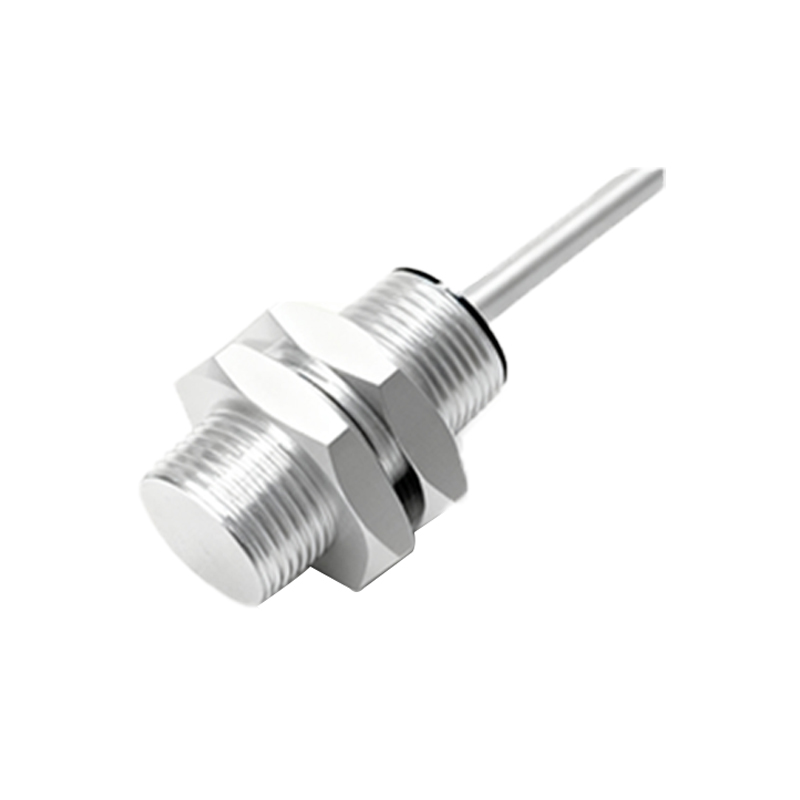
The output stage of a three-wire sensor can be configured in two primary types: NPN (sinking) and PNP (sourcing). This is a critical distinction for proper integration into control systems. An NPN output sensor switches the negative or ground side of the load. In its active state, it connects the output wire (black) to the negative supply wire (blue), effectively sinking current from the load to ground. Conversely, a PNP output sensor switches the positive side. When active, it connects the output wire (black) to the positive supply wire (brown), sourcing current from the supply to the load. The choice between NPN and PNP depends on the input configuration of the controller or device receiving the signal.
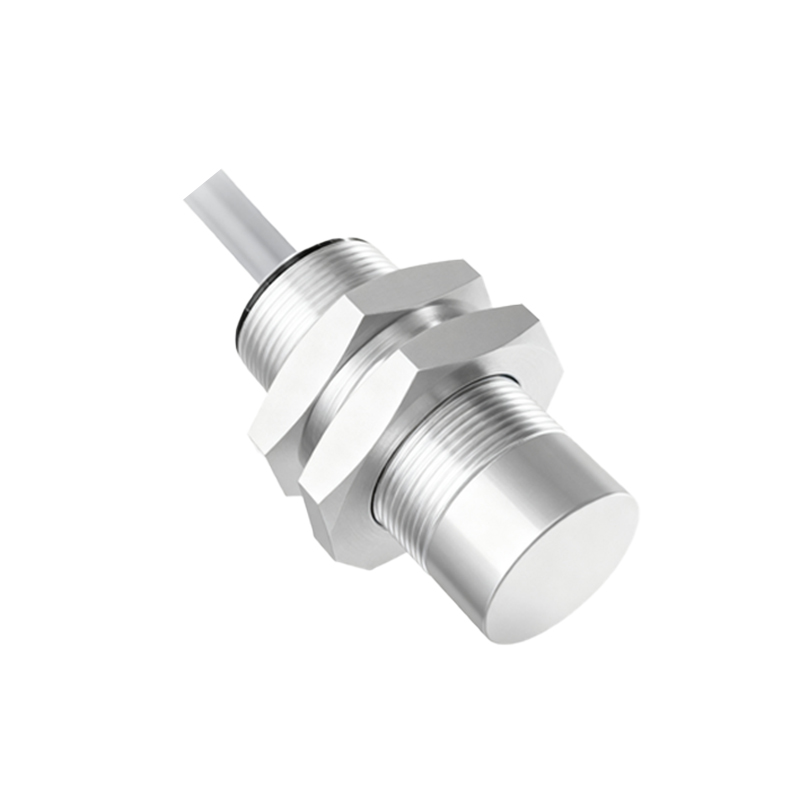
The internal architecture of a three-wire sensor includes several key components. The oscillator generates a high-frequency electromagnetic field at the sensing face. The demodulator converts the AC signal from the oscillator into a DC level. The trigger circuit compares this DC level to a preset threshold. Finally, the output amplifier drives the solid-state switch, which is typically a transistor (either NPN or PNP type). This transistor acts as the electronic switch, toggling the output state based on the trigger circuit's command. The presence of a separate power supply allows for a more stable and powerful output signal with lower leakage current compared to two-wire versions, enabling them to drive a wider range of loads directly.
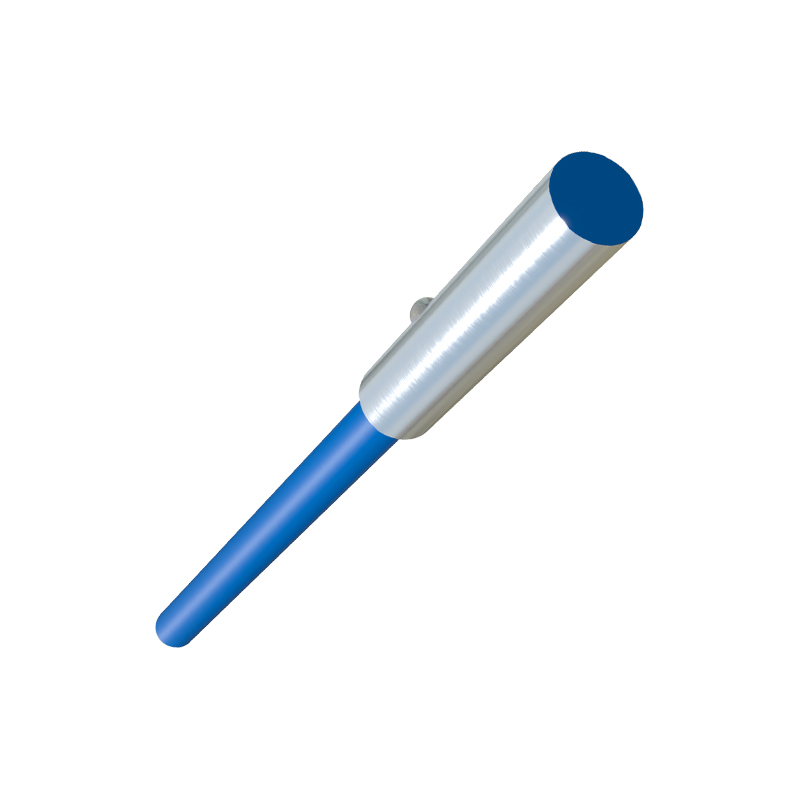
Key performance parameters include sensing distance, which is nominal and can be affected by target material, size, and shape; repeatability, which is the sensor's precision in detecting a target at the same point; and response frequency, indicating how quickly it can detect objects passing by. Housing materials are typically robust (e.g., nickel-plated brass or stainless steel) to withstand harsh industrial environments involving dust, moisture, and mechanical stress.
In application, three-wire sensors are deployed for tasks like counting, positioning, end-of-travel detection, and part presence verification on assembly lines, packaging machinery, and material handling systems. Their non-contact nature ensures no wear and tear, leading to long operational life and high reliability. When wiring, it is paramount to consult the manufacturer's datasheet to correctly identify wire colors (as standards can vary), connect the appropriate power polarity, and ensure the load is compatible with the sensor's output type (NPN/PNP) and current rating. A flyback or freewheeling diode is often recommended across inductive loads (like relay coils) to protect the sensor's output transistor from voltage spikes generated when the load is switched off.
In summary, the three-wire proximity sensor functions as a self-contained, amplified electronic switch. Its operation hinges on the disturbance of an electromagnetic or electrostatic field by a target object, which is electronically processed to control a discrete DC output. The three-wire design provides superior performance, electrical isolation, and flexibility, solidifying its role as a fundamental building block in modern automated electrical systems.