In industrial automation, proximity sensors are widely used for non-contact detection of objects. However, there are scenarios where converting these sensors to manual switches becomes necessary due to maintenance needs, system overhauls, or specific operational requirements. This article explores the technical considerations, steps, and best practices for such conversions while maintaining system integrity and safety.
Proximity sensors, including inductive, capacitive, and photoelectric types, operate by detecting the presence or absence of an object without physical contact. They are integral to automated systems for tasks like positioning, counting, or safety interlocks. However, manual switches—such as push buttons, toggle switches, or selector switches—offer direct human control, which can be crucial during troubleshooting, manual testing, or when automation fails.
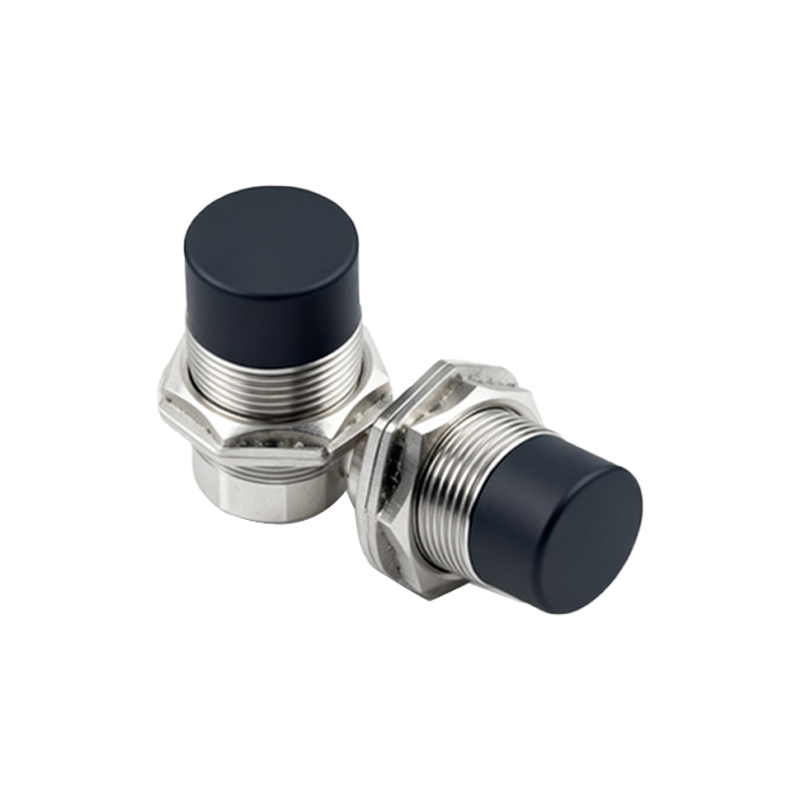
The conversion process begins with a thorough assessment of the existing system. Identify the sensor type, its electrical specifications (e.g., voltage, current, output type like PNP or NPN), and its role in the control circuit. For instance, a normally open (NO) proximity sensor used to activate a machine might be replaced with a normally open momentary push button. Ensure compatibility by checking voltage ratings (commonly 12-24V DC or 110-240V AC) and current capacity to avoid overloading the switch or control module.
Next, de-energize the equipment following lockout-tagout (LOTO) procedures to prevent electrical hazards. Remove the proximity sensor from its mounting, noting the wiring configuration. Typically, proximity sensors have three wires: power (brown or red), ground (blue or black), and signal (black or white). In contrast, manual switches often have two terminals for simple on/off control. To integrate a manual switch, connect it in place of the sensor’s signal line. For example, wire the switch between the power source and the control input, ensuring the circuit mimics the sensor’s logic (e.g., closing the switch simulates an object detected).
In programmable logic controller (PLC) systems, adjustments may be needed in the software. If the sensor input is programmed for automatic operation, modify the logic to accept manual input. This might involve adding a bypass routine or changing the input address in the ladder logic. Always document changes and test the system in a controlled environment before full deployment.
Safety is paramount. Manual switches should be installed in accessible locations, with clear labeling to indicate their function. Consider using waterproof or dustproof enclosures for harsh environments. Additionally, incorporate fail-safes, such as emergency stop circuits, to mitigate risks from unintended activation.
While conversion offers flexibility, it may reduce efficiency in high-speed applications. Manual switches are slower than sensors and prone to human error. Therefore, this approach is best suited for temporary setups, training, or low-frequency operations. For permanent conversions, evaluate if hybrid systems—combining sensors with manual override switches—are more effective.
In summary, converting proximity sensors to manual switches requires careful planning, electrical expertise, and adherence to safety standards. By following these guidelines, engineers can adapt industrial systems to meet evolving needs without compromising reliability.