Proximity sensors are essential components in modern industrial automation, enabling non-contact detection of objects within a specified range. These devices are widely used in manufacturing, robotics, automotive systems, and safety applications due to their reliability, durability, and ability to operate in harsh environments. Understanding the different types of proximity sensors and their underlying technologies is crucial for selecting the right sensor for specific applications. This article explores the primary categories of proximity sensors, detailing their working principles, advantages, and typical use cases.
Inductive proximity sensors are among the most common types, designed to detect metallic objects without physical contact. They operate based on the principle of electromagnetic induction. The sensor generates an oscillating electromagnetic field from a coil wound around a ferrite core. When a metallic object enters this field, eddy currents are induced on the object's surface, causing a change in the oscillation amplitude. This change is detected by the sensor's circuitry, triggering an output signal. Inductive sensors are highly reliable, resistant to environmental factors like dust and moisture, and ideal for detecting ferrous and non-ferrous metals. Typical applications include position sensing in machinery, metal detection in conveyor systems, and part counting in assembly lines.
Capacitive proximity sensors can detect both metallic and non-metallic objects, including liquids, plastics, and wood. They function by measuring changes in capacitance between the sensor's electrode and the target object. The sensor generates an electrostatic field, and when an object enters this field, it alters the dielectric constant, leading to a capacitance change. This variation is processed to activate the output. Capacitive sensors are versatile and suitable for level detection of liquids or granular materials, material handling, and presence sensing of non-metallic objects. However, they can be sensitive to environmental factors like humidity and temperature, requiring careful calibration.
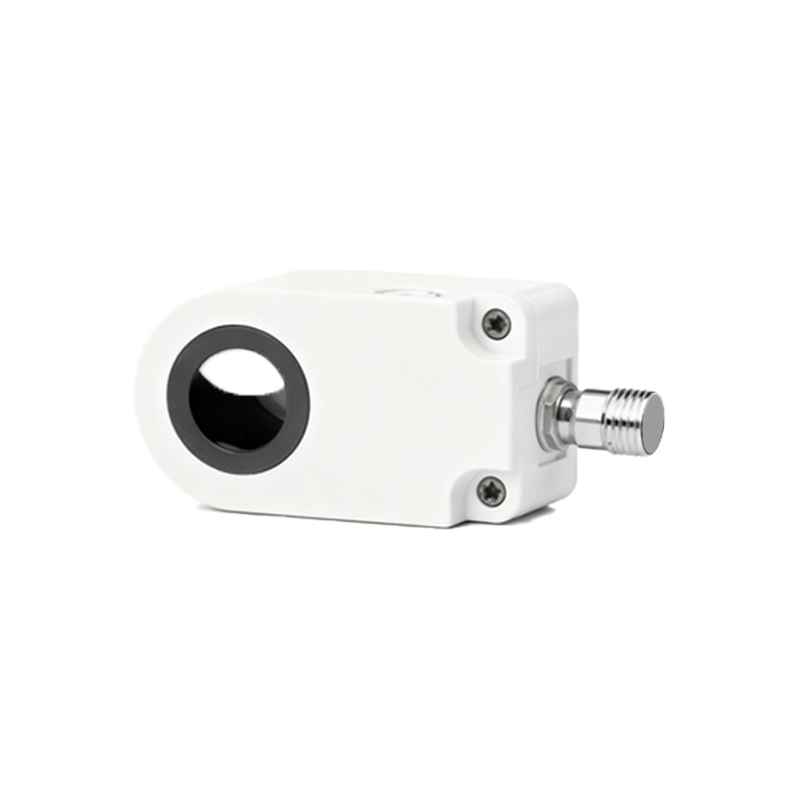
Ultrasonic proximity sensors utilize sound waves beyond the human hearing range (typically 20 kHz to 200 kHz) to detect objects. They consist of a transmitter that emits ultrasonic pulses and a receiver that captures the reflected waves. The sensor calculates the time-of-flight (TOF) between emission and reception to determine the distance to the object. Ultrasonic sensors are effective for detecting objects of various materials, shapes, and colors, and they perform well in challenging conditions such as dust, smoke, or transparent surfaces. Common applications include distance measurement, object detection in automated guided vehicles (AGVs), and liquid level monitoring in tanks.
Magnetic proximity sensors, also known as reed switches or Hall effect sensors, detect magnetic fields generated by permanent magnets or electromagnets. Reed switches consist of two ferromagnetic reeds sealed in a glass tube; when a magnetic field is applied, the reeds attract and close the circuit. Hall effect sensors, on the other hand, produce a voltage proportional to the magnetic field strength. Magnetic sensors are highly durable, with no moving parts in Hall effect types, making them suitable for harsh environments. They are commonly used in position sensing for cylinders, door and window security systems, and speed detection in rotational equipment.
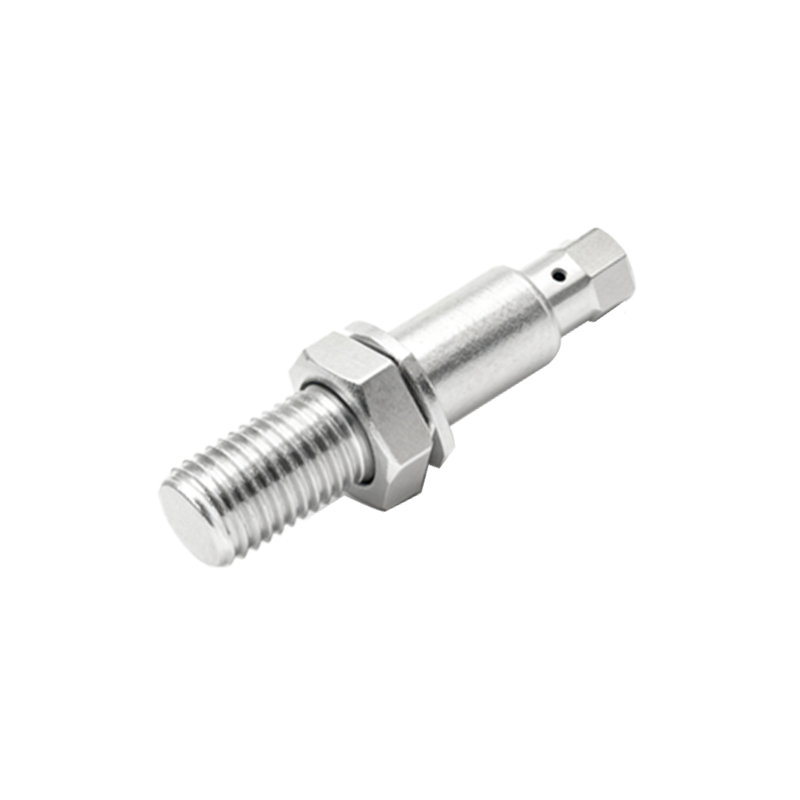
Optical proximity sensors employ light beams, typically infrared (IR) or laser, to detect objects. They include a light emitter and a photodetector. In through-beam sensors, the emitter and detector are separate units, and an object is detected when it interrupts the light beam. In retro-reflective sensors, the emitter and detector are housed together, and a reflector bounces the light back; detection occurs when the beam is blocked. Diffuse sensors rely on light reflected directly from the object. Optical sensors offer high precision and fast response times, ideal for small object detection, packaging automation, and safety curtains. However, they can be affected by ambient light or dirty lenses.
Each type of proximity sensor has distinct characteristics that make it suitable for specific scenarios. Inductive sensors excel in metal detection, capacitive sensors handle diverse materials, ultrasonic sensors provide reliable distance measurement, magnetic sensors offer durability in extreme conditions, and optical sensors deliver precision. When selecting a proximity sensor, factors such as target material, sensing range, environmental conditions, and cost must be considered. Advances in technology continue to enhance sensor performance, with integrated smart features like self-diagnostics and communication protocols (e.g., IO-Link) improving integration into Industry 4.0 systems. By leveraging the appropriate sensor technology, industries can optimize automation processes, enhance safety, and increase operational efficiency.