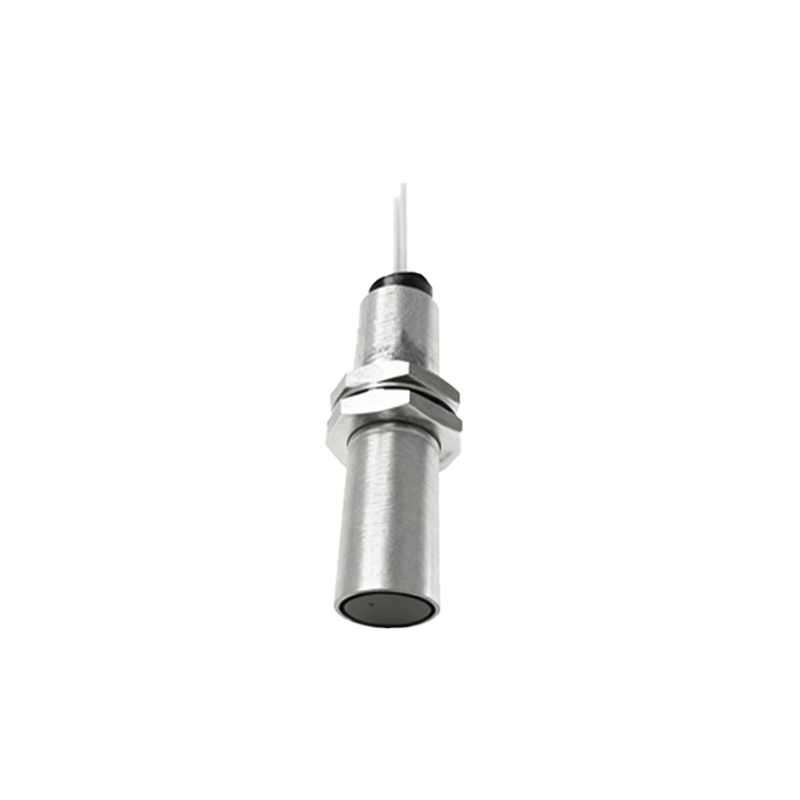
In the intricate world of industrial automation and control systems, the inductive proximity sensor stands as a fundamental and indispensable component. Its primary function is to detect the presence or absence of metallic objects without any physical contact, a capability that underpins countless processes across manufacturing, packaging, automotive, and robotics. Operating on the principle of electromagnetic induction, these sensors generate an oscillating electromagnetic field from a coil within an oscillator circuit. When a conductive metal target enters this active field, eddy currents are induced on the target's surface. This causes a measurable change in the oscillation amplitude or frequency within the sensor's circuit. An integrated evaluation circuit then detects this change and triggers a solid-state output signal, typically switching it on or off.
The core advantages of inductive proximity sensors are their robustness, reliability, and longevity. Being non-contact devices, they eliminate mechanical wear and tear associated with limit switches, leading to significantly reduced maintenance and higher operational uptime. They are exceptionally well-suited for harsh industrial environments, as their sensing face is often made of a rugged material like PTFE or nickel-plated brass, offering resistance to dust, dirt, moisture, oils, and coolants. Furthermore, their response time is extremely fast, often in the microsecond range, enabling high-speed counting, positioning, and detection tasks that would be impossible for mechanical alternatives. Common applications include detecting the position of a machine part (like a cylinder piston), monitoring the presence of metal components on a conveyor belt, ensuring proper indexing in assembly lines, and providing end-of-travel limits.
Several key specifications define their performance and suitability for a given task. Sensing range, typically from 1 to 60 millimeters, is a critical parameter and is standardized for different sensor sizes (e.g., M8, M12, M18, M30). It's important to note that the sensing distance can vary slightly depending on the target material's properties; steel provides the standard sensing distance, while non-ferrous metals like aluminum or copper may reduce it. Another vital characteristic is the switching frequency, which denotes how many on/off cycles the sensor can perform per second. For high-speed applications, such as monitoring gear teeth or small parts on a fast-moving line, a high switching frequency is essential. The output configuration is also crucial, with common types being NPN (sinking) or PNP (sourcing) DC outputs, and 2-wire or 3-wire AC/DC variants, which must be matched correctly with the control system's input module (like a PLC).
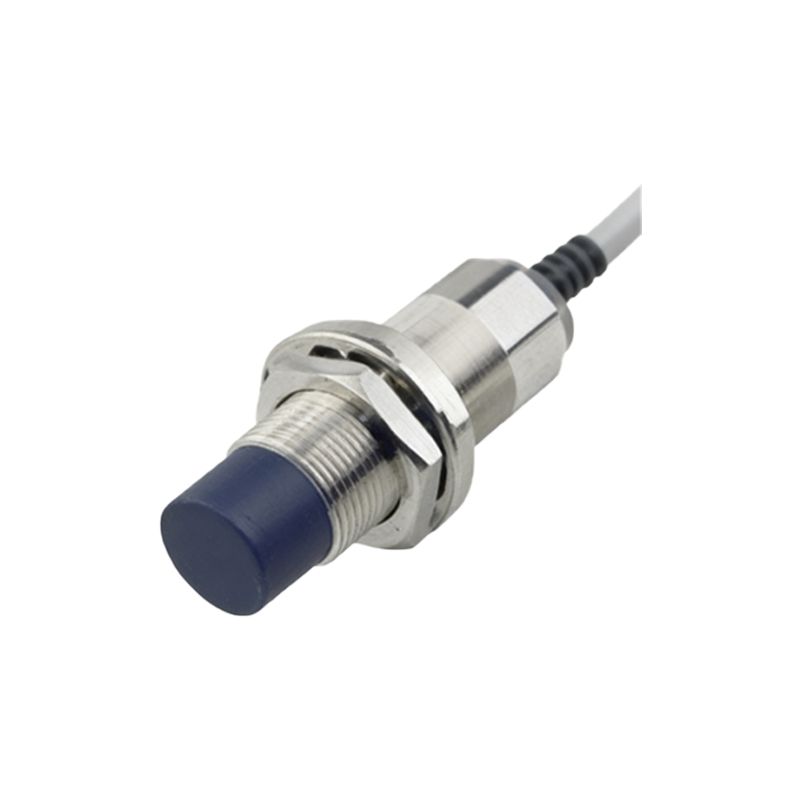
When selecting an inductive proximity sensor, engineers must consider the operating environment, target material, required sensing distance, mounting constraints, and the electrical interface. Shielded (flush-mountable) sensors can be installed flush in metal without affecting their sensing field, while unshielded (non-flush) versions offer a longer sensing range but require clearance from surrounding metal. Modern advancements have led to specialized variants, including analog output sensors that provide a continuous signal proportional to the distance to the target, all-metal detection sensors that ignore installation metal, and factor-1 sensors designed to detect all metals at the same range as steel.
In summary, the inductive proximity sensor is a workhorse of industrial sensing. Its ability to provide precise, wear-free, and reliable detection of metallic objects forms the backbone of automated system logic, safety interlocks, and quality control checks. By converting a simple physical presence into a definitive electrical signal, it acts as the critical "eyes" of machinery, enabling the seamless, efficient, and intelligent operation that defines modern manufacturing and beyond. A thorough understanding of its operating principles, types, and application considerations is essential for any engineer designing, maintaining, or optimizing automated systems.