Multi-function proximity sensors represent a significant advancement in industrial automation, offering versatile detection capabilities within a single compact device. These sensors integrate multiple sensing technologies and intelligent processing to detect the presence, position, or composition of objects without physical contact. Understanding their structural principles is essential for engineers to optimize their application in complex environments such as manufacturing lines, robotics, and safety systems.
The core architecture of a multi-function proximity sensor typically comprises three main subsystems: the sensing element, the signal processing unit, and the output interface. The sensing element is the frontline component, responsible for generating a detection field or beam. Common technologies include inductive, capacitive, ultrasonic, and optical methods, each with distinct structural implementations. Inductive sensors, for instance, incorporate a coil wound around a ferrite core, which generates an electromagnetic field. When a metallic object enters this field, eddy currents are induced, altering the coil's inductance and triggering detection. Capacitive sensors, on the other hand, feature electrode plates that create an electrostatic field. Changes in capacitance due to the proximity of any material (conductive or non-conductive) are measured to determine object presence. Ultrasonic sensors utilize a piezoelectric transducer to emit high-frequency sound waves and receive echoes, with the time-of-flight calculation enabling distance measurement. Optical variants employ LEDs or laser diodes paired with photodetectors, often arranged in through-beam, retro-reflective, or diffuse configurations to sense light interruption or reflection.
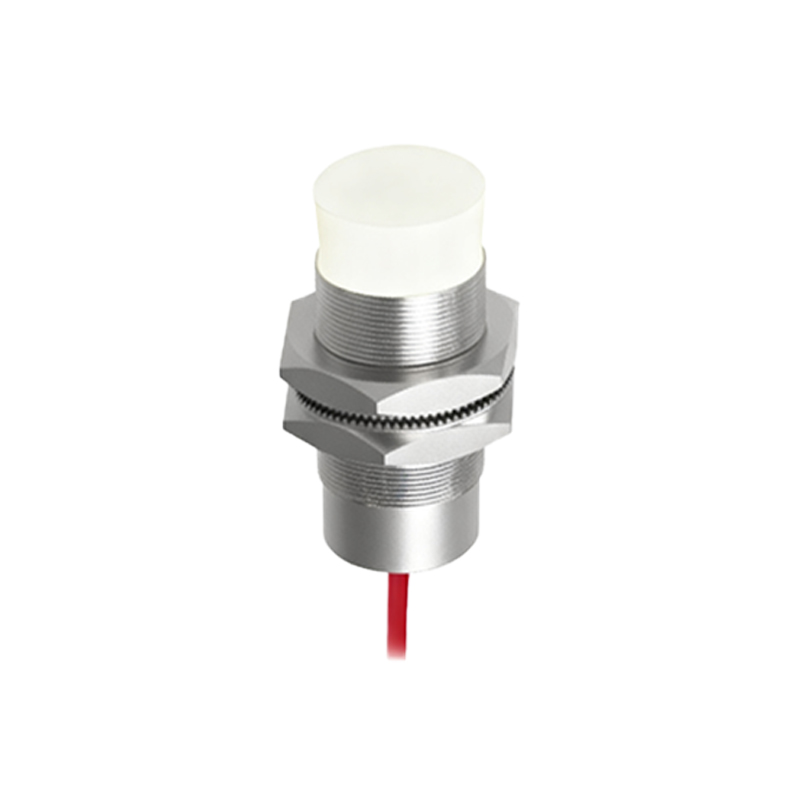
The signal processing unit is the brain of the multi-function sensor, embedded within a microcontroller or application-specific integrated circuit (ASIC). This unit conditions raw signals from the sensing element through amplification, filtering, and analog-to-digital conversion. Advanced algorithms are implemented to differentiate between object types, compensate for environmental interferences (e.g., temperature fluctuations or ambient light), and enable programmable functions such as adjustable sensing ranges or output delays. For example, in a sensor combining inductive and capacitive modes, the processor can switch between technologies based on user settings or auto-detection routines, allowing one device to handle both metal and plastic objects efficiently. The integration of digital signal processing (DSP) enhances accuracy by minimizing noise and enabling real-time data analysis.
The output interface provides the means to communicate detection results to external control systems. Structurally, this includes electrical connections for power supply (typically 10-30 V DC) and output signals, which may be in the form of discrete switching (PNP/NPN), analog voltage/current (0-10 V, 4-20 mA), or digital protocols like IO-Link or PROFINET. Housing materials, such as stainless steel or rugged polymers, are designed to meet IP67 or higher ingress protection ratings, ensuring durability in harsh industrial settings. Additionally, some models incorporate diagnostic LEDs or display screens for status indication, facilitating easy setup and maintenance.
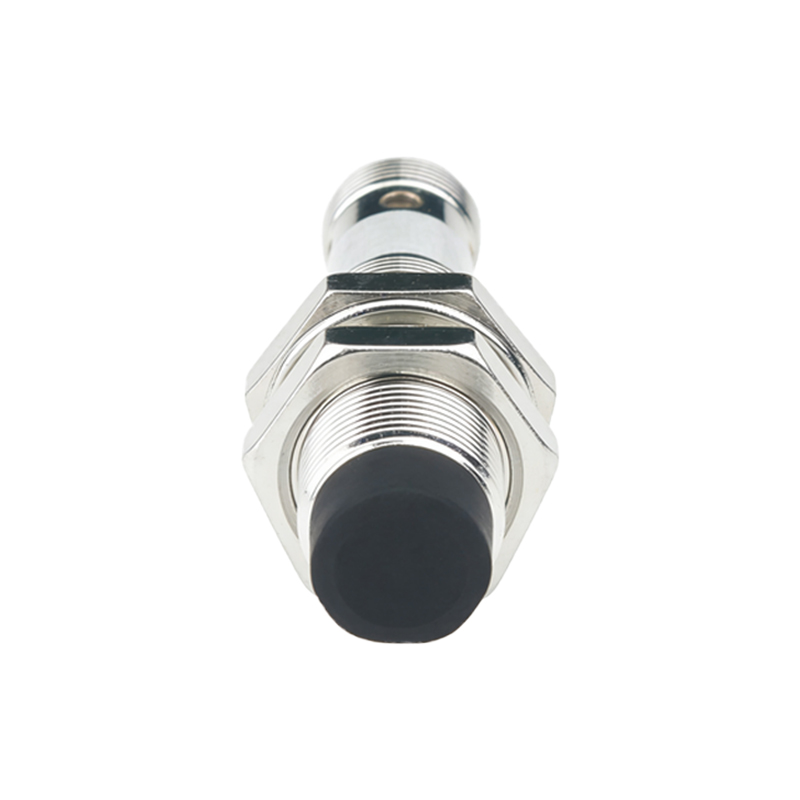
A key structural innovation in multi-function proximity sensors is the modular design, which allows customization through interchangeable sensing heads or configurable firmware. This flexibility reduces inventory costs and simplifies installation. For instance, a single base unit can support different sensing technologies by swapping front-end modules, adapting to varying application needs without replacing the entire sensor. Furthermore, the trend toward miniaturization has led to compact form factors without sacrificing performance, enabling integration into space-constrained machinery.
In practice, the structural principles dictate operational reliability. Proper shielding and encapsulation prevent electromagnetic interference (EMI) from affecting sensitive components, while thermal management systems dissipate heat generated during continuous operation. Calibration mechanisms, often factory-set or field-adjustable, ensure consistent performance over the sensor's lifespan. Engineers must consider factors like sensing range, response time, and environmental compatibility when selecting a sensor, as these are directly influenced by its internal architecture.
Overall, the structural design of multi-function proximity sensors balances technological integration, robustness, and adaptability. By merging multiple detection methods into a unified package, they enhance efficiency in automated processes, from object counting and level monitoring to collision avoidance. As Industry 4.0 evolves, these sensors are increasingly incorporating connectivity features for predictive maintenance and data analytics, driven by advancements in microelectronics and material science. For professionals in electrical engineering, grasping these principles enables informed decision-making, leading to optimized system designs and improved operational outcomes in diverse industrial applications.