Slot-type proximity sensors, also known as through-beam or fork sensors, are fundamental components in modern industrial automation and control systems. These non-contact sensing devices are engineered to detect the presence or absence of objects, typically metallic or opaque, passing through their U-shaped or "slot" housing. Unlike standard cylindrical proximity sensors, the slot-type design incorporates both an emitter and a receiver facing each other across a gap, forming a continuous sensing field. When an object interrupts this beam or field within the slot, the sensor's output state changes, triggering a control action. This principle makes them exceptionally reliable for precise detection and positioning tasks.
The core operating principle of most industrial slot sensors is based on inductive or photoelectric technology. Inductive slot sensors generate an electromagnetic field within the slot. When a metallic object enters this field, it causes eddy currents that dampen the oscillation in the sensor's coil, leading to a change in output. They are ideal for detecting ferrous and non-ferrous metals with high repeatability and are inherently immune to ambient light, dust, and oil mist. Photoelectric slot sensors, on the other hand, use a modulated infrared light beam. The receiver detects the transmitted light, and an object is sensed when it blocks this beam. These are suitable for detecting any opaque material, regardless of color or material composition, but can be more sensitive to dirty environments that may obscure the lens.
Key advantages of slot-type proximity sensors include their high precision and reliability. The fixed, narrow sensing gap allows for extremely accurate detection of small objects or precise edges, such as verifying the presence of a screw head, detecting a gear tooth, or counting small parts on a conveyor. Their design inherently provides excellent resistance to environmental factors like vibration and misalignment, as the emitter and receiver are housed in a single, rigid body. This integrated structure simplifies installation compared to setting up two separate sensors for a through-beam application, ensuring perfect optical or inductive alignment from the factory.
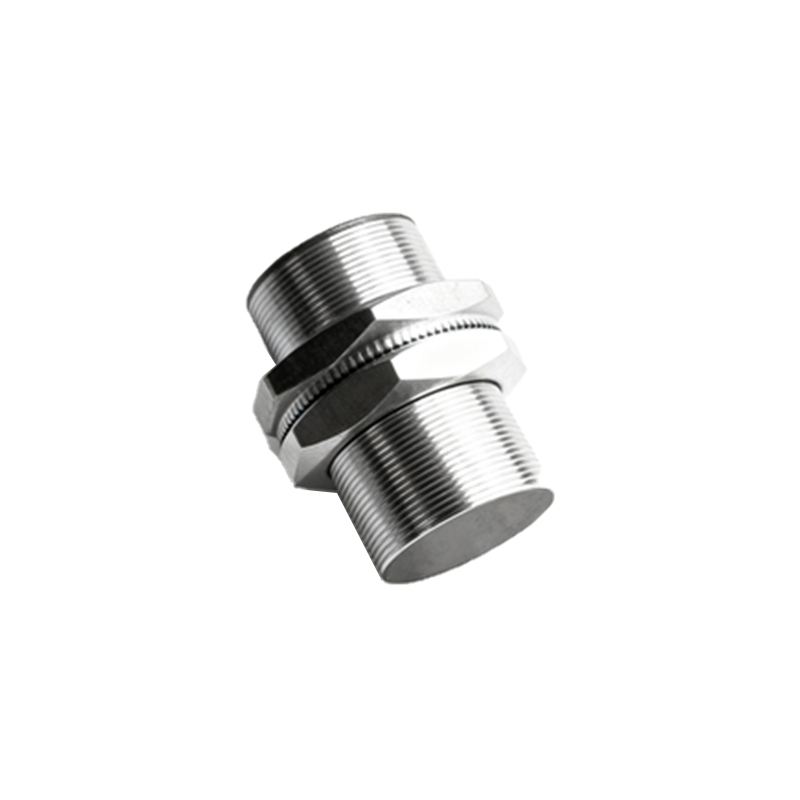
In practical applications, these sensors are ubiquitous. They are extensively used in packaging machinery to verify flap closure, in automotive assembly lines for part presence verification, in printing presses for registration mark detection, and in material handling for break detection or jam prevention. A common example is their use in rotary encoders or tachometers, where a slotted disk rotates through the sensor's gap, generating pulses to measure speed or position. Their robust construction, often rated at IP67 or higher, allows them to perform reliably in harsh industrial settings.
When selecting a slot-type proximity sensor, engineers must consider several parameters. The slot width and depth define the maximum size of the object that can be detected. Sensing distance, for inductive types, is often minimal as detection occurs within the confined slot. The output type (PNP/NPN, NO/NC) must match the PLC or controller input card. Response frequency is critical for high-speed applications, such as counting fast-moving items. Environmental conditions like temperature, exposure to chemicals, or washdown requirements will dictate the housing material, typically made from nickel-plated brass, stainless steel, or rugged plastics like PBT.
Maintenance is generally minimal but crucial. For photoelectric types, keeping the lens clean is essential for consistent operation. Inductive types are largely maintenance-free but should be checked for physical damage or metallic debris accumulation within the slot that could cause false triggering. Regular functional testing as part of preventive maintenance ensures long-term system integrity.
In summary, the slot-type proximity sensor is a versatile, precise, and robust solution for object detection in automated systems. Its integrated through-beam design offers unmatched alignment stability and application flexibility, making it a preferred choice for engineers designing reliable and efficient automation processes across countless industries. As automation evolves towards greater precision and connectivity, these sensors continue to be integral components, with newer models offering advanced features like IO-Link communication for diagnostic data and parameter setting.