In the intricate world of industrial automation and process control, precision, reliability, and safety are non-negotiable. Among the myriad of components that ensure these standards are met, liquid level proximity sensors stand as critical, yet often understated, guardians. These devices are engineered to detect the presence or absence of a liquid at a predetermined point without making physical contact with the medium. Their role extends far beyond simple on/off signaling; they are integral to system efficiency, asset protection, and operational intelligence across diverse sectors including chemical processing, water treatment, food and beverage, pharmaceuticals, and oil and gas.
At its core, a liquid level proximity sensor operates on the principle of detecting changes in a physical property caused by the liquid's presence. The most common technologies employed include capacitive, inductive, ultrasonic, and optical methods. Capacitive sensors, for instance, detect changes in capacitance when a liquid (a dielectric material) enters the sensing field. They are highly versatile, capable of detecting both conductive and non-conductive liquids through non-metallic tank walls. Inductive sensors, on the other hand, are primarily used for conductive liquids, generating an electromagnetic field and detecting eddy currents induced in the liquid. Ultrasonic sensors calculate distance by emitting sound waves and measuring their echo return time, making them ideal for continuous level monitoring in challenging environments. Optical sensors utilize infrared light, with a phototransistor detecting the presence or absence of liquid based on light refraction or absorption at the sensor's tip.
The primary function of these sensors is to provide discrete level detection—indicating whether a liquid has reached a high or low limit. This simple action is the foundation for critical control logic. For example, a high-level sensor in a storage tank can trigger an alarm or automatically shut off an inlet pump to prevent dangerous overfills, which could lead to spills, environmental hazards, or even catastrophic tank failure. Conversely, a low-level sensor can activate a pump or send an alert to prevent dry running, which protects pumps from damage and avoids costly downtime and repairs. This binary control is essential for basic safety interlocks and automated batch processes.
However, the role of liquid level proximity sensors has evolved. They are now key enablers of predictive maintenance and advanced process optimization. By continuously monitoring level trends and providing real-time data to a Supervisory Control and Data Acquisition (SCADA) system or a Programmable Logic Controller (PLC), these sensors contribute to a holistic view of system health. Unusual level fluctuations can signal issues such as pump inefficiency, valve failures, or leaks long before they cause a shutdown. In precision manufacturing, such as semiconductor fabrication or pharmaceutical compounding, maintaining exact liquid levels in etching baths or mixing vessels is paramount for product quality. Here, high-accuracy proximity sensors ensure repeatability and consistency, directly impacting yield and compliance with stringent regulatory standards.
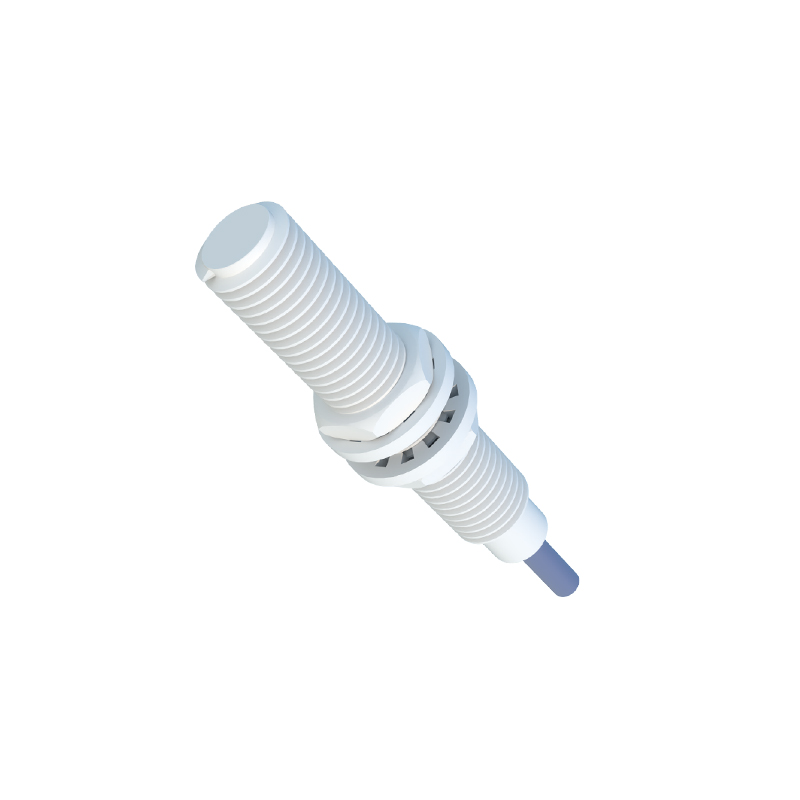
Selecting the appropriate sensor technology is a critical engineering decision influenced by several factors. The chemical composition, temperature, pressure, and viscosity of the liquid must be considered to ensure sensor compatibility and longevity. For aggressive chemicals like acids or caustics, sensors with specialized housing materials (e.g., PTFE, PVDF) are necessary. In applications involving sticky or coating fluids like syrup or grease, sensors with a smooth, non-fouling design are crucial to prevent false readings. Environmental conditions such as humidity, dust, and potential for explosive atmospheres (requiring intrinsically safe or explosion-proof certifications) also dictate the sensor's specifications.
Installation and configuration are equally important. Proper mounting location, away from turbulence or agitators, ensures stable readings. Calibration for the specific liquid's dielectric constant or acoustic properties is often required to optimize sensitivity and avoid false triggering. Modern sensors often feature adjustable sensing ranges and time delays to filter out signal noise from splashing or foam, enhancing reliability.
In conclusion, liquid level proximity sensors are far more than simple switches. They are sophisticated sensing elements that form the first line of defense in process safety and the first point of data acquisition for operational intelligence. Their silent, continuous operation ensures that fluids are managed accurately, efficiently, and safely. As industries move towards greater automation and the Industrial Internet of Things (IIoT), the data provided by these sensors will become even more valuable, feeding into analytics platforms to drive smarter, more responsive, and more sustainable industrial operations. For any engineer designing or maintaining a fluid handling system, a deep understanding of these devices is not just beneficial—it is essential.