In the demanding landscape of modern industrial processes, accurate temperature measurement is not merely a convenience—it is a critical parameter for ensuring product quality, process efficiency, and operational safety. For extreme environments where contact-based sensors fail or interfere with the process, high-temperature laser pyrometer sensors, also known as infrared (IR) thermometers or radiation thermometers, provide an indispensable non-contact solution. This article delves into the operational principles, key application areas, and essential selection criteria for these sophisticated instruments.
Fundamental Operating Principle
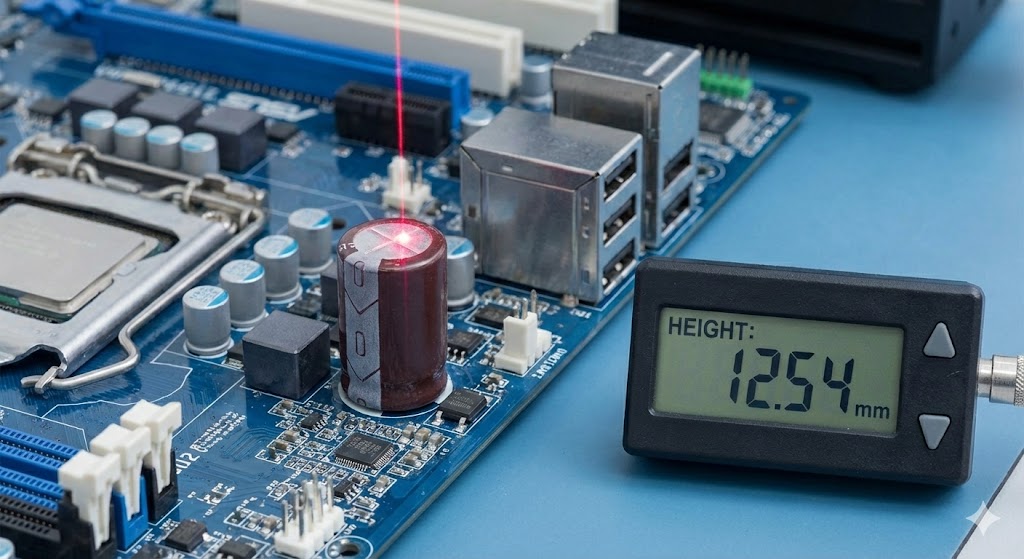
At its core, a laser pyrometer measures temperature by detecting the infrared radiation emitted by all objects above absolute zero. The device's optics collect this emitted energy and focus it onto a detector. The detector then converts the radiant energy into an electrical signal, which is processed by the instrument's electronics to display a temperature reading. The integrated laser sighting system serves a purely targeting function, allowing the operator to precisely aim the sensor at the measurement spot. It is crucial to understand that the laser does not measure temperature; it only indicates where the measurement is being taken.
The accuracy of this measurement hinges on a fundamental parameter known as emissivity. Emissivity is a measure of an object's effectiveness in emitting infrared radiation compared to a perfect emitter (a blackbody). Most high-temperature laser pyrometers allow for manual adjustment of the emissivity setting (a value between 0.1 and 1.0) to compensate for the material's surface characteristics. Failure to set the correct emissivity is the most common source of measurement error. For highly reflective or polished surfaces, specialized techniques or sensor models with adjustable spectral response may be required.
Key Advantages in Industrial Settings
The non-contact nature of laser pyrometers offers several distinct advantages:
1. Measurement of Moving or Inaccessible Objects: Ideal for monitoring temperatures on fast-moving production lines (e.g., glass, metal strips, plastics) or objects in hazardous or vacuum chambers.
2. No Contamination or Wear: Since there is no physical contact, there is no risk of contaminating the product (crucial in food, pharmaceutical, or semiconductor manufacturing) or sensor wear from abrasive surfaces.
3. Extremely Fast Response Time: These sensors can capture temperature changes in milliseconds, enabling real-time process control and rapid detection of thermal anomalies.
4. High-Temperature Capability: Specialized models are designed to measure targets from below zero to well over 3000°C (5432°F), far exceeding the limits of most thermocouples.
5. No Interference with Target: The measurement does not alter the heat balance of the target object, which is vital for delicate processes.
Primary Industrial Applications
High-temperature laser pyrometers are ubiquitous across heavy and precision industries:
* Metallurgy & Foundries: Monitoring molten metal in furnaces, ladles, and during casting; measuring ingot, billet, and slab temperatures in rolling mills.
* Glass Manufacturing: Controlling temperatures in melting tanks, forehearths, and during the forming and annealing of glass products.
* Cement & Ceramics: Kiln monitoring and control, measurement of clinker temperature, and quality checks on fired products.
* Semiconductor Processing: Wafer temperature measurement during epitaxy, diffusion, and rapid thermal processing (RTP) where contact is impossible.
* Plastics & Rubber: Monitoring extruder barrels, die temperatures, and molded parts.
Critical Selection Parameters
Choosing the correct high-temperature laser pyrometer requires careful consideration of several factors:
1. Temperature Range: The sensor must be specified for the minimum and maximum expected process temperatures.
2. Spectral Response (Wavelength): Selecting the optimal wavelength is paramount. For very high temperatures (>1000°C), short-wavelength sensors (e.g., 0.8-1.1 µm) are preferred for their high signal strength and relative immunity to emissivity variations and atmospheric interference. For lower temperatures or specific materials like glass or thin plastics, sensors with longer wavelengths (e.g., 8-14 µm) are more appropriate.
3. Optical Resolution (Distance-to-Spot Size Ratio): This specification, often expressed as a ratio like 50:1 or 100:1, determines the size of the measurement spot at a given distance. A higher ratio allows for measuring smaller targets from farther away.
4. Emissivity Adjustment: Ensure the device has a broad and finely adjustable emissivity setting.
5. Environmental Protection: The housing must be rated (e.g., IP65, NEMA 4) to withstand the ambient conditions, which may include dust, moisture, and high ambient temperatures. For harsh environments, air or water purging kits and protective shrouds are often necessary.
6. Outputs & Connectivity: Standard analog outputs (4-20 mA, 0-10 V) for PLC integration, digital interfaces (RS-485, Modbus, Ethernet), and relay alarms are common requirements.
Installation and Maintenance Best Practices
Proper installation is critical for reliable data. Ensure a clear line of sight to the target, free from obstructions like steam, dust, or smoke, which can attenuate the IR signal. The sensor lens must be kept clean; even a thin layer of dust can significantly affect readings. Regular verification against a calibrated blackbody source or a contact thermometer on a stable, known-temperature target (where feasible) is recommended to maintain measurement integrity.
In conclusion, high-temperature laser pyrometer sensors are powerful tools that bridge the gap where traditional temperature measurement falls short. By understanding their principles, respecting their limitations—particularly regarding emissivity—and meticulously selecting and installing the correct model for the application, engineers can unlock significant gains in process control, product consistency, and operational safety across a vast spectrum of high-temperature industrial operations.