This experiment report details a comprehensive performance evaluation of inductive and capacitive proximity sensors under controlled laboratory conditions. The primary objective was to analyze key operational parameters—sensing distance, repeat accuracy, response time, and environmental interference susceptibility—to provide empirical data for optimal sensor selection in industrial automation applications.
The test setup utilized a calibrated linear positioning stage with a micrometer screw for precise target displacement. Target objects included standard 1mm thick mild steel (Fe 360) for inductive sensors and aluminum, copper, and plastic (PVC) for capacitive variants. A 24V DC power supply regulated to ±0.5% provided operating voltage, while an oscilloscope and data acquisition system recorded output signals. Ambient temperature was maintained at 23°C ±2°C.
Procedure & Methodology:
1. Nominal Sensing Distance (Sn) Verification: Each sensor was mounted perpendicular to the target. The target was gradually advanced until the output switched. This point was recorded as the actual sensing distance. The process was repeated 50 times per sensor to establish a mean value and standard deviation.
2. Repeat Accuracy Testing: The target was cycled into and out of the sensing zone at 5Hz for 1000 cycles. The variance in the switch-on point was measured to determine hysteresis and repeatability.
3. Response Time Measurement: A high-speed target movement was initiated, and the time delay between the target reaching the effective sensing point and the output state change was captured using the oscilloscope. Both turn-on (t_on) and turn-off (t_off) times were recorded.
4. Environmental Factor Tests: For inductive sensors, tests were conducted with non-target metals (aluminum, stainless steel) present in the lateral background. For capacitive sensors, tests evaluated performance changes with varying humidity levels (30% to 80% RH) and the presence of non-target materials.
Results & Data Analysis:
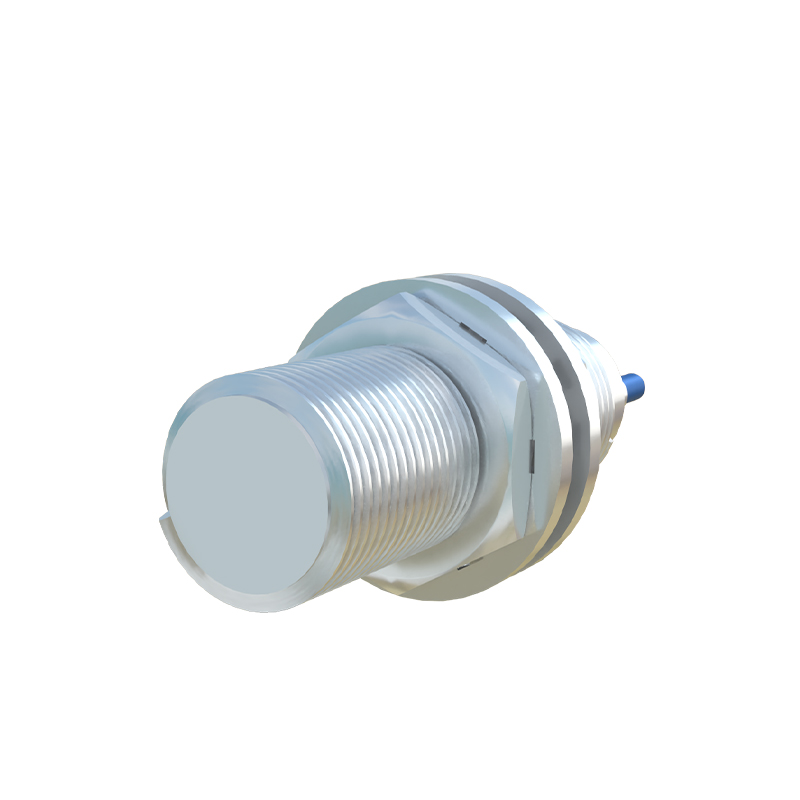
Inductive Sensor (Model: INX-8M): The measured mean sensing distance for the mild steel target was 7.8mm, 97.5% of its stated 8mm nominal range (Sn). Repeat accuracy was ±0.02mm. Response times averaged 0.8ms. Performance showed a 15% reduction in effective sensing distance when an aluminum plate was positioned 5mm behind the primary target, confirming known effects from conductive background materials.
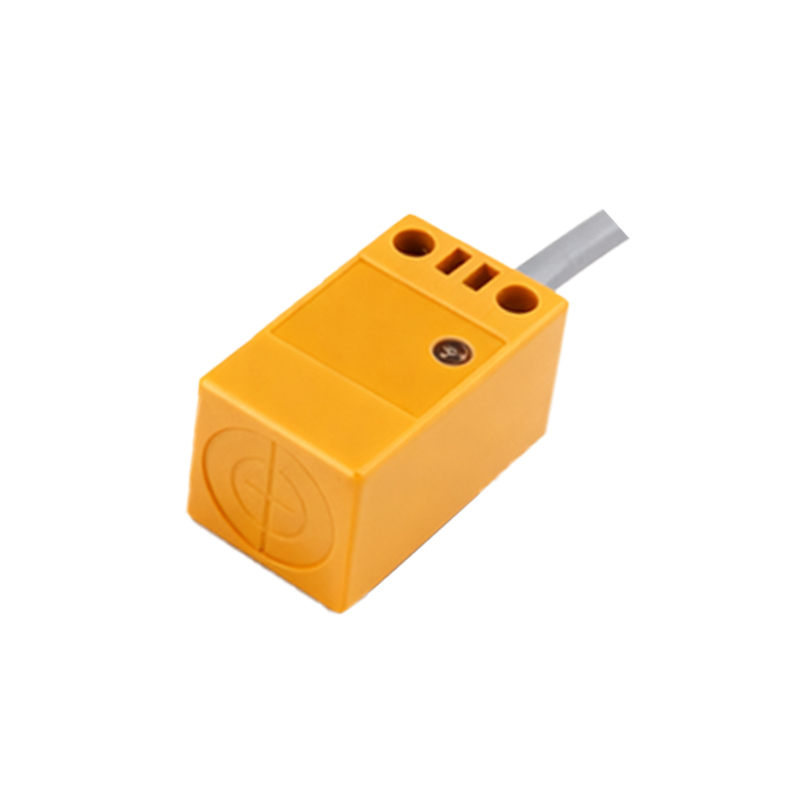
Capacitive Sensor (Model: CAP-12M): For the aluminum target, the mean sensing distance was 11.5mm (95.8% of 12mm Sn). For PVC, the distance reduced to 8.2mm, demonstrating material dependency. Repeat accuracy was ±0.05mm. Response time averaged 2.5ms. Increasing relative humidity from 30% to 80% caused a drift in the switch point of approximately ±0.3mm, indicating a need for calibration or shielding in highly variable environments.
Discussion:
The data clearly delineates the application domains for each sensor type. Inductive sensors exhibit superior repeatability and faster response, making them ideal for high-speed metal object detection in machine tools or conveyor systems. Their immunity to non-metallic contaminants is a key advantage. However, their performance is influenced by the target metal's conductivity and permeability, and they are susceptible to interference from adjacent metallic structures.
Capacitive sensors offer the distinct ability to detect non-metallic materials, which is invaluable in packaging, woodworking, or liquid level detection. The trade-off includes slower response times and sensitivity to environmental changes like humidity or dust accumulation. The experiment underscores the necessity of considering the dielectric constant of the target material during selection and installation.
Conclusion & Recommendations:
The experiment validates manufacturer specifications under ideal conditions and quantifies real-world performance deviations. For critical high-speed counting or positioning of metallic components, inductive sensors are recommended, with careful attention paid to mounting to minimize background interference. For applications involving varied materials (e.g., glass, wood, granules) or where container wall penetration is required, capacitive sensors are suitable, provided the operating environment is stable or the sensor features environmental compensation.
Future work should involve testing in dynamic, high-vibration industrial settings and evaluating the impact of temperature extremes on long-term sensor drift. This empirical approach to sensor validation is crucial for enhancing system reliability, reducing downtime, and optimizing automated processes.