In modern industrial automation, particularly within additive manufacturing, powder bed fusion, and bulk material handling, precise monitoring and control of powder materials are paramount. Laser powder sensors have emerged as a critical technology for non-contact, real-time measurement of powder presence, level, flow, and concentration. This article delves into the operational principles, key components, and industrial applications of these sophisticated sensors.
At its core, a laser powder sensor operates on the principle of light scattering, specifically Mie scattering and diffraction. The sensor emits a focused, coherent laser beam—typically from a diode laser in the visible or near-infrared spectrum—towards the target area containing the powder. When the laser light encounters powder particles, the photons interact with the particles. This interaction causes the light to scatter in various directions. The intensity and pattern of this scattered light are directly influenced by key particle properties: size (typically in the micrometer range), shape, concentration, and material composition.
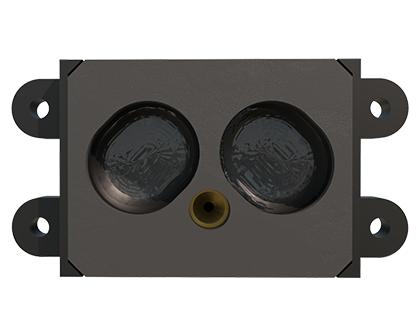
A receiver unit, positioned at a specific angle (often 90 degrees for optimal signal in many designs), collects a portion of this scattered light. This photodetector converts the optical signal into an electrical signal. The sensor's integrated electronics then analyze this signal. Sophisticated algorithms process the raw data to distinguish the signal from ambient light noise and to correlate the scattered light intensity with the desired measurement parameter, such as powder density or mass flow rate. For instance, a higher concentration of powder in the laser path results in a stronger scattered light signal.
Key components of a standard laser powder sensor system include:
1. Laser Source: Provides a stable, monochromatic light beam. Pulsed lasers are often used to enhance signal-to-noise ratio.
2. Transmit Optics: Lenses that collimate and focus the laser beam into a precise measurement volume.
3. Receiver Optics: Lenses that gather the scattered light and direct it onto the detector. Optical filters are crucial here to block unwanted wavelengths.
4. Photodetector: Usually a photodiode or avalanche photodiode (APD) for high sensitivity.
5. Signal Processing Unit: The "brain" that filters, amplifies, and interprets the electronic signal, often providing analog (4-20 mA, 0-10 V) or digital (RS-485, Ethernet/IP, PROFINET) outputs.
The advantages of laser powder sensors are significant. They offer high precision and fast response times, enabling real-time process control. As non-contact instruments, they avoid contamination or disturbance of the powder stream. They are highly sensitive, capable of detecting very low powder concentrations or the initiation of powder flow. Modern sensors are also robust, designed with IP67 ratings to withstand harsh industrial environments containing dust, vibration, and variable temperatures.
Industrial applications are diverse:
- Additive Manufacturing (3D Printing): In laser powder bed fusion (LPBF) machines, these sensors monitor the uniformity and thickness of the deposited powder layer. Any deviation can trigger a recoater blade halt to prevent build failures.
- Powder Coating Booths: They ensure optimal powder cloud density for efficient and uniform coating application, reducing waste.
- Pharmaceutical Processing: Monitoring powder flow in fluidized bed dryers, granulators, and tablet press feed hoppers to ensure consistent blend homogeneity and prevent blockages.
- Bulk Solids Handling: Used in silos, conveyors, and pneumatic transfer lines to detect the presence/absence of powder, monitor level, or alert to flow stoppages (plug detection).
- Food Industry: Controlling the dispersion of powdered ingredients like flour, milk powder, or spices in mixing processes.
Calibration and installation are critical for optimal performance. The sensor must be calibrated for the specific powder material's characteristics. Proper alignment of the transmitter and receiver is essential, and the measurement path must be kept clean from persistent buildup. While laser sensors are highly effective, challenges exist with extremely fine powders (sub-micron) where scattering patterns change, or with cohesive powders that may cause signal saturation.
In conclusion, laser powder sensors are indispensable tools in the Industry 4.0 landscape. By leveraging the physics of light scattering, they provide the precise, reliable data needed for automated process optimization, quality assurance, and predictive maintenance in powder-based industries. Their continued evolution, integrating with IoT platforms and AI for advanced analytics, promises even greater efficiency and control in the factories of the future.