In the realm of precision measurement and industrial automation, the mirror reflection laser distance sensor stands as a pivotal technology. Unlike standard diffuse reflection sensors that rely on light scattering from an object's surface, this advanced sensor utilizes a specialized mirror, typically a retroreflector, to bounce the laser beam back to its source. This fundamental operational difference unlocks superior performance in challenging environments.
The core principle is elegantly straightforward. The sensor's transmitter emits a focused laser beam towards a precisely positioned retroreflector. This reflector, often a corner cube prism or an array of micro-prisms, is designed to return the incident light beam along a path parallel to its incoming direction, regardless of minor angular misalignments. The beam travels to the reflector and back to the sensor's receiver. The sensor's sophisticated internal circuitry, often employing phase-shift or time-of-flight calculation methods, measures the time delay between emission and reception. This time interval is directly proportional to the distance traveled, allowing for highly accurate distance calculation to the reflector's surface.
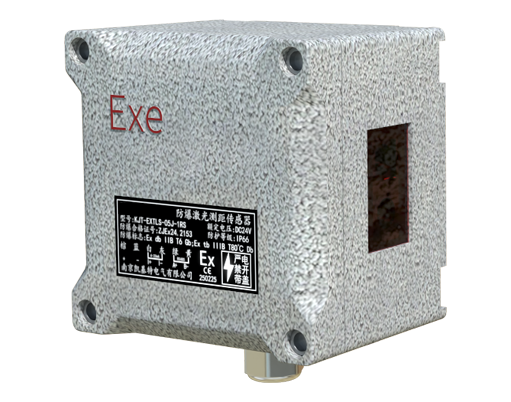
The primary advantage of this configuration is its exceptional reliability and extended range. Since the retroreflector provides a strong, consistent signal return, the sensor can operate over much longer distances compared to diffuse reflection models. It is also largely immune to the color, texture, or surface finish of the target object placed between the sensor and the reflector. Whether the object is black, white, glossy, or matte, the measurement integrity remains intact, as the system is calibrated to the fixed position of the reflector, not the object interrupting the beam. This makes it an ideal solution for presence detection, object counting, or precise positioning of objects on a conveyor line, where product variability would confuse a standard sensor.
Furthermore, these sensors exhibit remarkable stability against ambient light interference. The use of a modulated laser signal and narrow-band optical filtering allows the receiver to distinguish the sensor's own signal from background factory lighting or sunlight, ensuring consistent operation in brightly lit facilities. Their high response speed enables detection of fast-moving objects, critical for high-speed sorting and packaging applications.

Typical industrial applications are diverse. In automated warehousing and logistics, mirror reflection sensors are deployed for high-bay storage retrieval systems, providing exact positioning feedback for cranes along lengthy aisles. They serve as safety curtains around hazardous machinery, where breaking the laser beam to the reflector triggers an immediate machine halt. In the automotive industry, they ensure precise alignment of vehicle bodies during robotic welding processes. They are also integral to gate and door control systems, elevator positioning, and roll diameter measurement in paper, textile, and film production.
When selecting a mirror reflection laser distance sensor, key specifications to consider include the measuring range, which can extend from a few centimeters to several hundred meters; the resolution and linearity, defining its precision; the response time; and the type of output signal (e.g., analog voltage/current, digital switch, or serial communication). Environmental ratings for dust and water ingress protection (IP codes) are crucial for harsh industrial settings.

Installation requires careful alignment of the sensor and the retroreflector within their specified operating window. While retroreflectors offer forgiveness for minor angular deviations, optimal performance is achieved with proper initial setup. Regular maintenance involves keeping both the sensor's lens and the reflector surface clean from dust, oil, or debris that could attenuate the laser signal.
In summary, the mirror reflection laser distance sensor is a robust, long-range, and highly reliable solution for precise distance measurement and object detection. Its unique ability to ignore target surface properties, coupled with its resilience against environmental factors, makes it an indispensable tool in modern industrial automation, robotics, and safety systems, enabling higher levels of efficiency, accuracy, and operational safety.