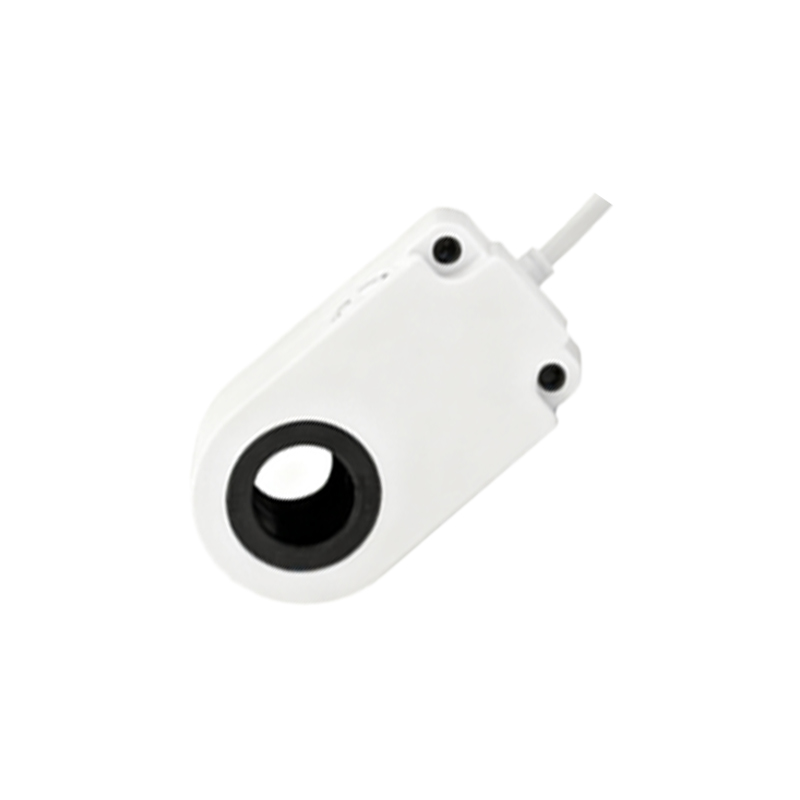
Proximity switch sensors are fundamental components in modern industrial automation, offering non-contact detection of metallic and sometimes non-metallic objects. Among the various configurations available, the 3-wire pin type stands out for its widespread adoption due to its balance of performance, reliability, and ease of integration. This article delves into the technical aspects, operational principles, and application considerations of 3-wire proximity sensors, providing a comprehensive overview for engineers and technicians in the electrical and automation fields.
At its core, a proximity sensor detects the presence or absence of an object within its sensing range without physical contact. The 3-wire design typically includes wires for power supply (usually labeled as brown for positive and blue for negative in DC models), and a third wire (often black or white) that serves as the output signal. This output can be either normally open (NO) or normally closed (NC), and it commonly functions in a switching capacity, toggling between states when a target object enters the detection zone. The sensing technology employed is predominantly inductive for metallic objects, utilizing an electromagnetic field generated by an oscillator coil. When a metal target disrupts this field, it causes a change in oscillation amplitude, which is then processed by the sensor's circuitry to trigger the output switch.
The pin configuration in 3-wire sensors is crucial for proper electrical connection. These sensors are designed to interface directly with programmable logic controllers (PLCs), relays, or other control systems. The standard pinout, often following international norms like IEC 60947-5-2, ensures compatibility across different manufacturers. For DC sensors, the brown wire connects to the positive voltage supply (typically 10-30 VDC), the blue wire to the common ground or negative, and the black (or white) output wire to the load. It is vital to note that the load (e.g., a PLC input module) must be connected in series with the output and the power supply. Incorrect wiring can lead to sensor malfunction or permanent damage. Many 3-wire sensors also incorporate protection features such as short-circuit protection, reverse polarity protection, and overload protection, enhancing their durability in harsh industrial environments.
Selecting the appropriate 3-wire proximity sensor requires careful consideration of several parameters. The sensing distance, or nominal range, is specified by the manufacturer and should be chosen with a safety margin to account for target material, size, and environmental factors like temperature fluctuations or the presence of contaminants. Response time is another critical factor, especially in high-speed automation lines; these sensors can often operate with switching frequencies up to several kilohertz. Furthermore, the housing material—commonly stainless steel, brass, or PBT plastic—must be selected based on the operational environment to resist corrosion, mechanical stress, or chemical exposure.
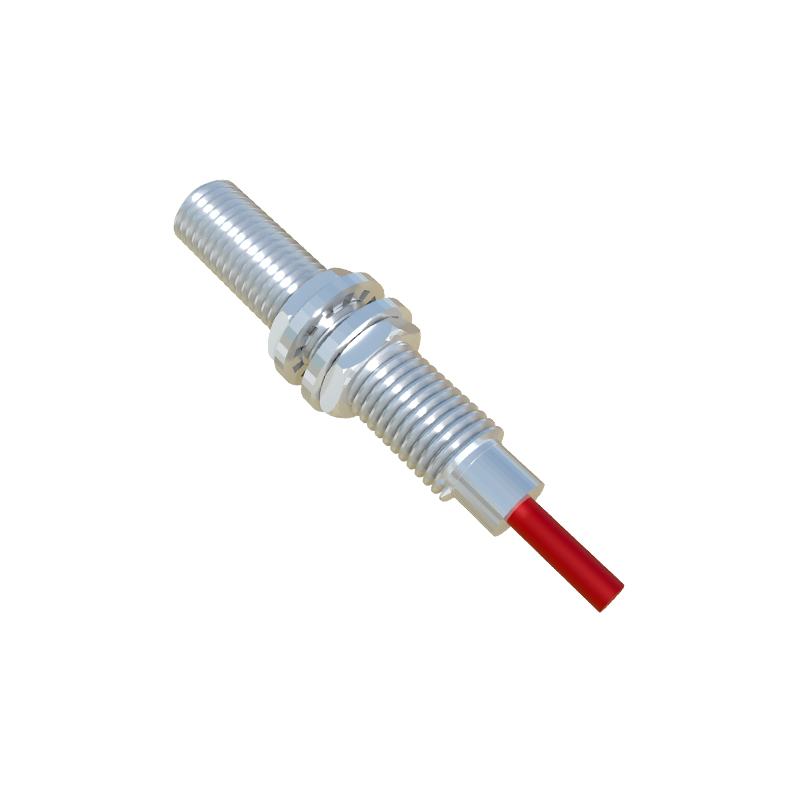
Installation and maintenance practices significantly impact sensor longevity and system reliability. Sensors should be mounted securely to minimize vibration effects, and adequate clearance from metallic backgrounds (non-sensing surfaces) must be maintained to prevent false triggering. Regular testing with a target at the specified sensing distance helps verify performance. Troubleshooting common issues often involves checking the power supply voltage, inspecting wiring connections for integrity, and ensuring the target object is within the sensor's material and size specifications.
In conclusion, 3-wire pin-type proximity switch sensors are versatile and robust devices essential for precise object detection in automation. Their design simplifies integration while offering reliable performance under demanding conditions. By understanding their operating principles, electrical characteristics, and application guidelines, engineers can effectively implement these sensors to enhance system efficiency, safety, and productivity across diverse industrial sectors, from packaging and material handling to automotive assembly and beyond.