In the realm of industrial automation and precision measurement, line laser sensors have emerged as indispensable tools, offering unparalleled accuracy, speed, and versatility. These sophisticated devices project a thin, fan-shaped laser line onto a target surface, and by analyzing the deformation or displacement of this line through an integrated camera or detector, they extract critical three-dimensional data. This fundamental principle enables a wide array of functions that are revolutionizing quality control, robotics, and metrology.
The primary function of a line laser sensor is high-speed, non-contact 3D profiling. Unlike single-point laser sensors that measure only one spot at a time, a line laser captures an entire cross-sectional profile in a single instant. This capability is crucial for applications such as inspecting the dimensional integrity of manufactured parts—checking for warpage, thickness variations, or the presence of grooves and seams. In electronics assembly, for instance, these sensors can precisely measure the coplanarity of ball grid array (BGA) components or the height of solder paste deposits on printed circuit boards, ensuring reliable connections before the reflow process.
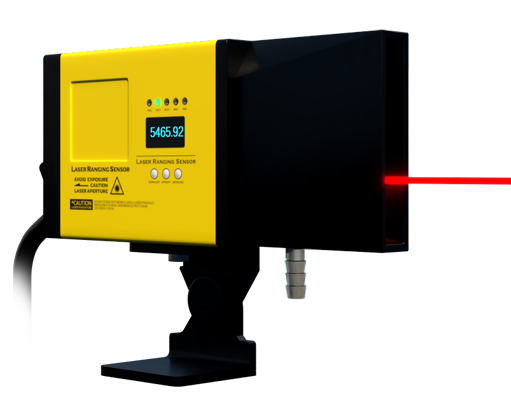
Another critical function is real-time gap and flush measurement in automotive assembly. When assembling vehicle bodies, doors, hoods, and panels must align perfectly. Line laser sensors are deployed to continuously scan the seams between panels, measuring the gap width and height difference (flushness) with micron-level precision. Any deviation from specification triggers an immediate alert, allowing for corrective action on the production line and guaranteeing the high build quality consumers expect.
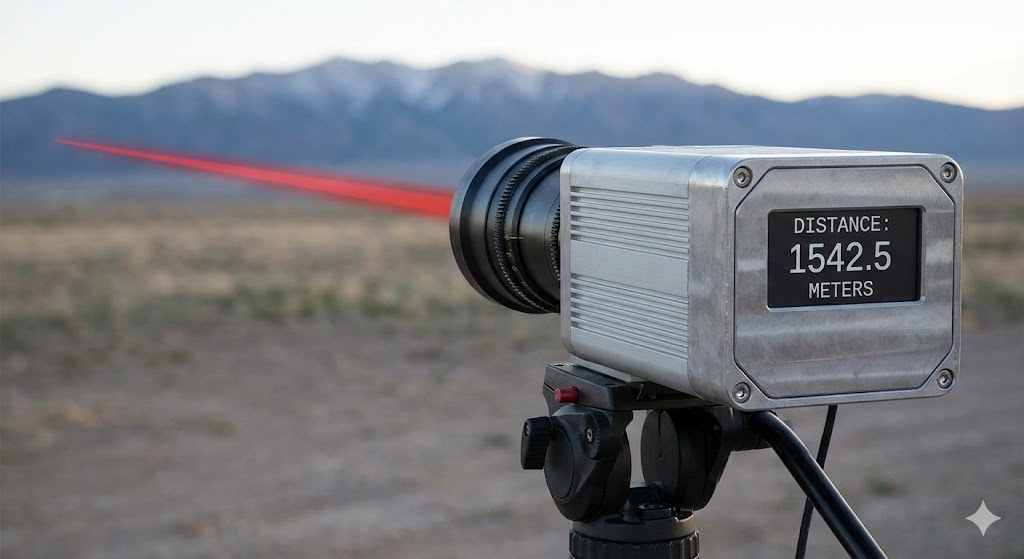
Furthermore, line laser sensors excel in surface defect detection. By scanning the reflected laser line, they can identify scratches, dents, pits, or contamination on surfaces that might be invisible to traditional 2D vision systems. The 3D height map generated reveals even the subtlest anomalies. This is extensively used in industries dealing with polished metals, painted surfaces, glass, or rolled materials like steel and paper, where surface perfection is paramount.
In robotic guidance and bin picking, line lasers provide the essential "eyes" for robots. By projecting a laser line into a bin of randomly oriented parts, the sensor quickly generates a 3D point cloud. Advanced software then analyzes this data to determine the position and orientation of a top part, guiding the robot's gripper to accurately pick and place it. This function dramatically increases flexibility in automated warehouses and production cells handling diverse components.
The functionality extends to precise volume measurement and logistics. Scanning parcels on a conveyor belt, a line laser sensor profiles their dimensions, enabling instant calculation of cuboidal volume for shipping cost determination. This replaces manual measurement, boosting throughput and accuracy in distribution centers.
The performance of these functions hinges on several key sensor parameters. The laser line's thickness, length, and wavelength must be matched to the application. Resolution (the smallest detectable change in height) and measurement range are critical for precision. Scanning speed, often in the kHz range, determines the maximum conveyor speed for inspection. Robust environmental ratings (IP67) are essential for operation in harsh industrial settings with dust, coolant, or vibration.
Modern line laser sensors are often integrated into smart systems. They come with powerful onboard processors and intuitive software that simplifies setup—defining measurement zones, setting pass/fail thresholds, and outputting data via standard industrial protocols like Ethernet/IP or PROFINET. This integration facilitates seamless communication with Programmable Logic Controllers (PLCs) and Manufacturing Execution Systems (MES) for data logging and process optimization.
In conclusion, the functionality of line laser sensors transcends simple distance measurement. They are comprehensive 3D vision systems that perform critical tasks in profiling, inspection, guidance, and measurement. By delivering fast, accurate, and reliable three-dimensional data, they form the backbone of modern, data-driven manufacturing, driving improvements in quality, efficiency, and automation across countless industries. As technology advances, we can expect their capabilities to expand further, embedding deeper intelligence and enabling even more complex applications in the smart factories of the future.