In the realm of industrial automation and control systems, the reliability and precision of sensing technology are paramount. Among the diverse array of sensors available, proximity sensors stand out for their non-contact detection capabilities. The EE-X-Z series represents a sophisticated line of inductive proximity sensors engineered for demanding applications. This article delves into the technical specifications, operational principles, and practical implementation of the EE-X-Z, providing electrical engineers with a detailed overview.
At its core, the EE-X-Z is an inductive proximity sensor. It operates on the principle of electromagnetic induction. The sensor generates a high-frequency oscillating electromagnetic field from its active face. When a metallic object (the target) enters this field, eddy currents are induced on the surface of the target. This causes a change in the oscillation amplitude within the sensor's coil circuit. An internal circuit detects this change and triggers a switching action—typically opening or closing a solid-state output. This entire process occurs without any physical contact, making the sensor ideal for applications where wear, contamination, or mechanical damage are concerns.
The EE-X-Z series is characterized by several key technical features that define its performance envelope. First is its sensing distance, often referred to as the "rated operating distance" (Sn). This distance is specified for a standard target (usually mild steel) and is a critical parameter for installation. Models within the EE-X-Z family may offer different sensing ranges to suit various spatial constraints. The sensors typically feature a built-in hysteresis, which prevents output chattering when a target is at the exact switching point, ensuring stable operation.
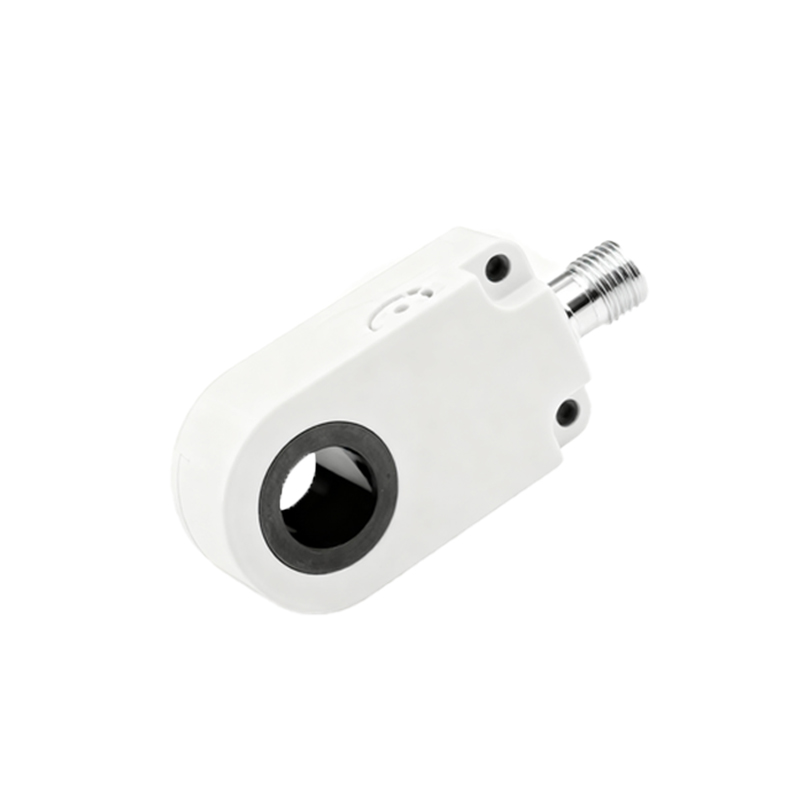
Output configuration is another vital aspect. The EE-X-Z commonly provides solid-state outputs, either NPN (sinking) or PNP (sourcing) transistor types, compatible with standard programmable logic controller (PLC) input modules. Some variants may also offer analog current (4-20mA) or voltage (0-10V) outputs for distance-proportional measurement. The housing is robust, usually constructed from nickel-plated brass or stainless steel, offering high resistance to industrial environments, including exposure to coolants, oils, and metal chips. Most models boast an IP67 or higher ingress protection rating, making them suitable for washdown areas.
Electrical connection is streamlined through pre-wired cables or quick-disconnect (M8 or M12) connectors, facilitating easy installation and maintenance. The operating voltage range is typically wide, such as 10-30V DC, ensuring compatibility with common industrial power supplies. Additionally, many EE-X-Z sensors incorporate protection against short-circuit, reverse polarity, and overload, enhancing system reliability.
The application spectrum for the EE-X-Z proximity sensor is vast within factory automation. A primary use is in position detection on automated machinery. For instance, verifying the presence of a metal part on a conveyor, confirming the end-of-travel position of a pneumatic cylinder (via a built-in metal piston flag), or detecting the open/closed status of a metal door or guard. In material handling systems, these sensors count metal objects, control sorting gates, and monitor bin levels. Within machine tools, they are indispensable for tool position verification, spindle orientation, and workpiece clamping confirmation.
When integrating the EE-X-Z into a control system, several engineering considerations must be addressed. Mounting is crucial; the sensor must be positioned so that the target approaches the active face perpendicularly for optimal sensing performance. Engineers must account for the influence of surrounding metals. Ferrous metals (like steel) have the longest sensing range, while non-ferrous metals (like aluminum or copper) have a reduced range, often requiring a correction factor. The sensor's data sheet provides specific derating information. For environments with multiple sensors in close proximity, maintaining adequate spacing between units is necessary to prevent mutual interference.
Troubleshooting typically involves checking the power supply, verifying the output load (e.g., PLC input LED), and ensuring the target is within the specified sensing range and material type. The robust design of the EE-X-Z minimizes failures, but environmental factors like excessive buildup of metallic dust or physical impact can affect performance.
In summary, the EE-X-Z proximity sensor is a versatile and robust component in the electrical engineer's toolkit. Its non-contact operation, environmental resilience, and reliable switching performance make it a cornerstone for object detection and position feedback in countless industrial automation scenarios. Understanding its operating principles, specifications, and application nuances is essential for designing efficient, reliable, and maintainable control systems. As automation evolves towards greater precision and connectivity, sensors like the EE-X-Z will continue to play a foundational role in bridging the physical and control worlds.