In modern industrial automation, achieving precise alignment is critical for ensuring product quality, operational efficiency, and equipment longevity. Fine line laser alignment sensors represent a sophisticated class of photoelectric sensors designed to address this need with exceptional accuracy and reliability. Unlike traditional diffuse or retro-reflective sensors, these devices project a thin, focused laser line onto a target surface. The sensor's receiver then detects the precise position of this line, enabling high-resolution measurement of edge position, width, or lateral displacement of materials. This technology is indispensable in applications such as web guiding, printing registration, robotic guidance, and assembly verification, where micron-level precision is non-negotiable.
The core operating principle hinges on triangulation. The laser diode emits a collimated beam that is shaped into a fine line by specialized optics. This line strikes the target object. The reflected or scattered light from this line is captured by a high-resolution CMOS or CCD array within the receiver. Any deviation in the object's position causes a shift in the line's image on the detector. Advanced onboard processors analyze this shift in real-time, calculating the exact displacement and outputting a corresponding analog signal (e.g., 4-20 mA, 0-10 V) or digital communication (e.g., IO-Link, Ethernet/IP) for immediate corrective action by a controller or drive system.

Key advantages of fine line laser sensors over other methods are numerous. Their high resolution, often down to a few micrometers, allows for detection of minute misalignments invisible to the human eye. The focused laser line provides excellent contrast against the background, making them highly resistant to ambient light interference and capable of working on challenging surfaces, including transparent films, glossy materials, and low-contrast objects. Furthermore, their non-contact nature eliminates wear and tear on both the sensor and the target, ensuring consistent performance and reducing maintenance costs. Modern sensors also feature robust housings (typically IP67 rated), wide operating temperature ranges, and intuitive setup software, making them suitable for harsh industrial environments.
Selecting the appropriate fine line laser alignment sensor requires careful consideration of several parameters. The required measurement range and stand-off distance must align with the mechanical constraints of the application. The sensor's resolution and repeatability must meet or exceed the process tolerance. The response time is crucial for high-speed production lines. Compatibility with the target material's surface properties—its color, reflectivity, and texture—is paramount; some models offer adjustable laser power or specialized filters to handle difficult surfaces. Finally, the output interface must integrate seamlessly with the existing plant control architecture.
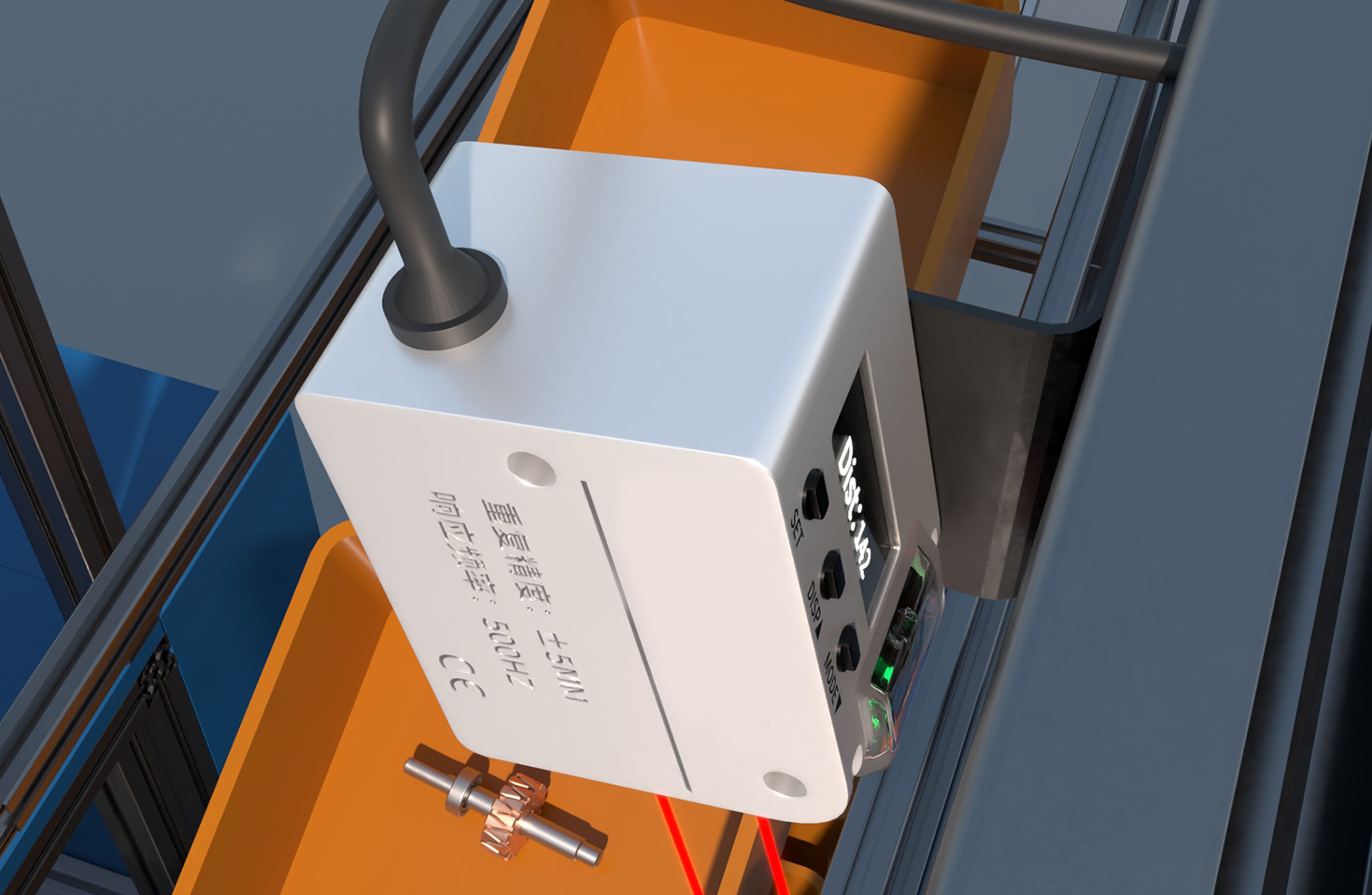
Implementation best practices involve meticulous mechanical mounting to minimize vibration, ensuring a stable power supply, and precise calibration during installation. Regular cleaning of the lens is essential to prevent dust accumulation from attenuating the laser signal. Many contemporary sensors feature built-in diagnostics and teach-in functions via push buttons or software, simplifying setup and troubleshooting. For complex multi-axis alignment tasks, systems comprising multiple sensors networked together provide a comprehensive solution.
Looking ahead, the evolution of fine line laser alignment sensors is intertwined with Industry 4.0 trends. Future developments will likely see enhanced integration with AI and machine vision systems for predictive alignment and anomaly detection. Improvements in miniaturization, power efficiency, and wireless connectivity will open new application frontiers. As manufacturing tolerances continue to tighten and the demand for zero-defect production grows, the role of these precise, robust, and intelligent sensors will only become more central to automated industrial processes, driving quality and productivity to new heights.