Laser sensors have become indispensable tools across numerous industries, from manufacturing and robotics to autonomous vehicles and medical diagnostics. At their core, these devices operate on the principle of using concentrated light to detect, measure, or image objects with exceptional precision. Understanding the fundamental imaging principles of laser sensors requires a dive into the physics of light, photodetection, and signal processing.
The foundational component is the laser itself—a device that emits coherent, monochromatic, and highly directional light. Unlike conventional light sources, laser light maintains its intensity over long distances with minimal divergence. This coherent beam is directed toward a target object. Upon striking the surface, several interactions occur: reflection, scattering, absorption, or transmission. For most imaging and ranging applications, the reflected or backscattered light is the critical signal.
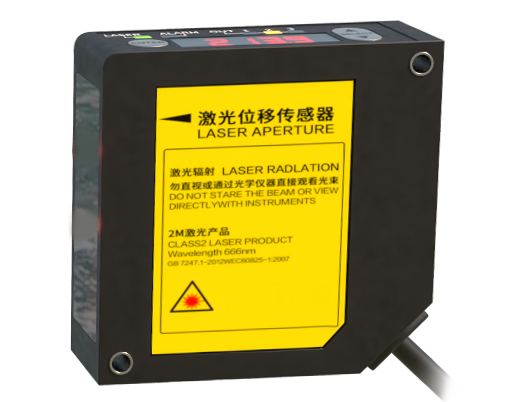
A key imaging method is Time-of-Flight (ToF). Here, a short laser pulse is emitted, and a high-speed photodetector, such as an avalanche photodiode (APD) or a single-photon avalanche diode (SPAD), measures the time it takes for the reflected pulse to return. Since the speed of light is a known constant, the sensor calculates the distance to the object with remarkable accuracy: Distance = (Speed of Light × Time Delay) / 2. ToF sensors can create detailed 3D point clouds by rapidly scanning across a scene, making them vital for LiDAR systems in autonomous driving and topographic mapping.
Another prevalent technique is Triangulation. In this setup, the laser emitter, the target, and the detector (usually a position-sensitive device like a CCD or CMOS array) form a triangle. A laser dot or line is projected onto the target. The position of the reflected spot on the detector shifts depending on the target's distance. By analyzing this displacement through geometric relationships, the sensor computes the distance or profiles the object's surface contour. Triangulation sensors excel in high-resolution, short-range applications such as part inspection on assembly lines and surface defect detection.
Laser Doppler Vibrometry represents a more specialized imaging principle, used for measuring vibrations and velocity. It exploits the Doppler effect: when laser light reflects off a moving surface, its frequency shifts slightly. By interfering this reflected beam with a reference beam (a process called interferometry), the sensor extracts the frequency shift, which is directly proportional to the target's velocity. This non-contact method is crucial for analyzing structural health, disk drive mechanics, and even biological tissues.

For creating detailed 2D intensity images or patterns, Structured Light Imaging is often employed. A laser projects a known pattern (e.g., grids, stripes, or dots) onto an object. A camera captures the pattern, which becomes deformed based on the object's shape and distance. Sophisticated algorithms compare the deformed pattern to the original reference, reconstructing a precise 3D model. This principle is widely used in facial recognition, motion capture, and reverse engineering.
The photodetector's role is paramount. It converts the faint optical return signal into an electrical current. Signal conditioning circuits then amplify this signal and filter out ambient light noise. Advanced digital signal processors (DSPs) analyze the waveform, extracting parameters like phase shift (for phase-shift ToF systems), intensity, or frequency modulation.
Challenges in laser sensor imaging include handling specular reflections, which can saturate detectors, and operating in environments with high ambient light or particulates like fog. Techniques such as using multiple wavelengths, modulating the laser beam, and implementing advanced noise-reduction algorithms are continuously developed to mitigate these issues.

In conclusion, laser sensor imaging is a sophisticated interplay of optics, electronics, and computation. From the basic ToF measurement to complex structured light 3D reconstruction, these principles enable machines to perceive their environment with superhuman accuracy. As laser, detector, and processing technologies advance, we can expect even higher resolutions, faster frame rates, and more robust performance, further expanding the horizons of automation, safety, and scientific discovery.