Laser glass sensors represent a significant advancement in measurement and detection technology, offering unparalleled precision in various industrial and scientific applications. These sensors utilize the principles of laser interferometry, where a laser beam is directed through a specialized glass medium. The interaction between the laser light and the glass, often doped with rare-earth elements like erbium or neodymium, creates highly sensitive detection mechanisms. As the glass properties change due to external factors such as pressure, temperature, or strain, the laser beam's characteristics—including its phase, intensity, or wavelength—are altered. These minute changes are then captured and analyzed by photodetectors and sophisticated signal-processing units, converting them into precise digital readings.
The core of laser glass sensors lies in their material science. The glass used is not ordinary window glass but engineered optical glass or phosphate glass, designed to have specific refractive indices and thermal expansion coefficients. This customization ensures minimal signal loss and maximum sensitivity. For instance, in aerospace engineering, these sensors monitor structural health by detecting micro-deformations in aircraft wings or fuselages, preventing potential failures before they occur. In the medical field, they enable high-resolution imaging in endoscopic procedures, allowing surgeons to navigate with greater accuracy. Environmental monitoring also benefits, with sensors deployed to track subtle shifts in atmospheric pressure or pollutant concentrations in real-time.
Manufacturing these sensors requires cutting-edge techniques. The glass components are often produced using methods like chemical vapor deposition or sol-gel processes, which ensure purity and homogeneity. The integration of laser diodes, typically in the near-infrared spectrum for better penetration and safety, is done in cleanroom environments to avoid contamination. Calibration is a critical step, involving comparison against international standards to guarantee accuracy across different batches and applications.
One of the standout features of laser glass sensors is their robustness. Unlike traditional electronic sensors that may degrade due to electromagnetic interference or moisture, laser-based systems are inherently resistant to such issues. The glass medium provides excellent insulation, and the non-contact nature of laser measurement reduces wear and tear. This durability translates to lower maintenance costs and longer service life, making them a cost-effective solution for long-term deployments in harsh conditions, such as offshore oil rigs or deep-sea exploration vehicles.
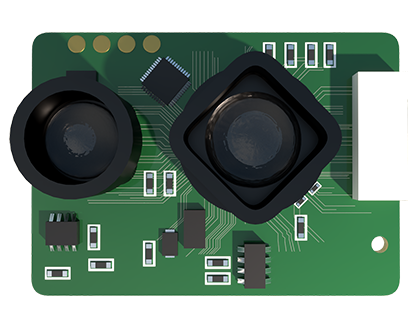
Looking ahead, research is focused on enhancing miniaturization and integration. Scientists are developing hybrid systems that combine laser glass sensors with silicon photonics, aiming to create chip-scale devices for consumer electronics or wearable health monitors. Advances in quantum optics may further boost sensitivity, enabling detection at the atomic level. As industries increasingly prioritize automation and data-driven decision-making, the demand for these precise, reliable sensors is expected to grow, solidifying their role as a cornerstone of modern technological infrastructure.

In summary, laser glass sensors exemplify the convergence of optics, materials science, and electronics. They provide critical data with exceptional accuracy, driving innovation across sectors from manufacturing to healthcare. Their development continues to push the boundaries of what is measurable, offering new insights into both macroscopic systems and microscopic phenomena.