Eddy current thickness sensors represent a critical technology in modern industrial measurement and quality control systems. These non-contact sensors operate on the principle of electromagnetic induction, providing high-precision thickness measurements for conductive materials without physical contact. This article delves into their working mechanism, key advantages, typical applications, and selection considerations for engineers and technical professionals.
The core operation of an eddy current thickness sensor involves a coil energized with an alternating current, generating an oscillating magnetic field. When this field interacts with a conductive target material, it induces circular electrical currents—known as eddy currents—within the material. These eddy currents, in turn, generate their own opposing magnetic field. The sensor's electronics analyze the interaction between the original and the secondary magnetic fields. The characteristics of this interaction, specifically the impedance change in the coil, are highly sensitive to the distance between the sensor probe and the conductive target. For thickness measurement, this principle is applied by measuring the distance to both the top and bottom surfaces of a conductive material or by measuring the distance to a conductive coating over a non-conductive substrate. The sensor's signal processing unit converts these distance measurements into a precise thickness value.

One of the most significant advantages of this technology is its non-contact nature. This eliminates issues like probe wear, mechanical deformation of soft materials, and the need for constant recalibration due to sensor degradation. It allows for high-speed, in-line measurement on moving production lines, such as in rolling mills for metal sheets, foil production, and continuous casting processes. Furthermore, eddy current sensors are largely unaffected by non-conductive intervening materials like oil, dust, or thin paint layers, making them robust in harsh industrial environments. They offer excellent resolution, often in the sub-micron range, and high measurement frequencies, enabling real-time process control.
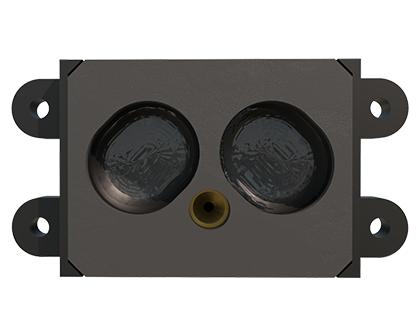
Typical industrial applications are vast. In metal manufacturing, they are indispensable for monitoring the thickness of sheets, strips, and foils of aluminum, copper, steel, and other alloys during hot and cold rolling. In the automotive and aerospace industries, they are used to measure the thickness of critical components, engine parts, and coatings. Another major application is in the quality control of conductive and non-conductive coatings. For instance, measuring the thickness of a paint layer on a metal car body, an anodized layer on aluminum, or a plastic coating on a wire is a common task. The sensor can precisely determine the coating thickness by measuring the distance to the underlying conductive base material.
When selecting an eddy current thickness sensor for a specific application, several factors must be considered. The material properties of the target are paramount; different metals and alloys have varying electrical conductivity and magnetic permeability, which directly affect the sensor's calibration and performance. Most modern sensors feature material compensation algorithms, but initial setup for the specific material is crucial. The required measurement range and resolution will dictate the choice of probe size and electronics. Environmental conditions such as temperature extremes, presence of chemicals, or strong electromagnetic interference in the plant must be accounted for by choosing sensors with appropriate housing ratings and shielding. Finally, the integration with factory automation systems is key. Look for sensors with analog outputs (e.g., 4-20 mA, 0-10 V), digital interfaces (e.g., IO-Link, USB), or dedicated fieldbus protocols to seamlessly feed data into PLCs and SCADA systems for closed-loop control.
In conclusion, eddy current thickness sensors are a versatile and reliable solution for precision measurement in demanding industrial settings. Their ability to provide accurate, non-contact data in real-time makes them a cornerstone of modern manufacturing quality assurance and process optimization. As materials and production techniques evolve, ongoing advancements in sensor electronics and signal processing continue to enhance their capabilities, ensuring their relevance in the Industry 4.0 landscape.