In the realm of precision measurement and industrial automation, laser displacement sensors have become indispensable tools. Their ability to provide non-contact, high-speed, and highly accurate distance measurements makes them critical for quality control, robotics, and process monitoring. This review delves into the core technology, evaluates key performance metrics, and provides a practical guide for selecting the right sensor for demanding industrial applications.
At their core, laser displacement sensors operate on the principle of triangulation. A laser diode projects a focused beam onto the target surface. The reflected light is captured by a receiving lens and focused onto a position-sensitive detector (PSD) or a CMOS/CCD array. The position of the light spot on the detector shifts proportionally to the distance of the target. This shift is analyzed by the sensor's internal processor to calculate the precise displacement value. This method allows for measurements ranging from micrometers to several meters, depending on the sensor model.
Performance evaluation of these sensors hinges on several critical parameters. First is accuracy and linearity. High-end models can achieve sub-micron accuracy with excellent linearity across their entire measuring range. Linearity error, often expressed as a percentage of full scale, is crucial for applications like thickness gauging. Second is resolution, which defines the smallest detectable change in distance. It is vital for detecting minute surface defects or vibrations. Third is sampling speed, measured in Hertz (Hz). For high-speed production lines or vibrating targets, speeds exceeding 50 kHz are necessary to capture reliable data without aliasing. Fourth is spot size. A smaller laser spot allows for measurement on small targets or steep edges, while a larger spot can average surface roughness. Finally, environmental robustness is non-negotiable. Industrial sensors must have high IP ratings for dust and water resistance, withstand significant ambient light interference, and operate reliably in wide temperature ranges and under mechanical vibration.
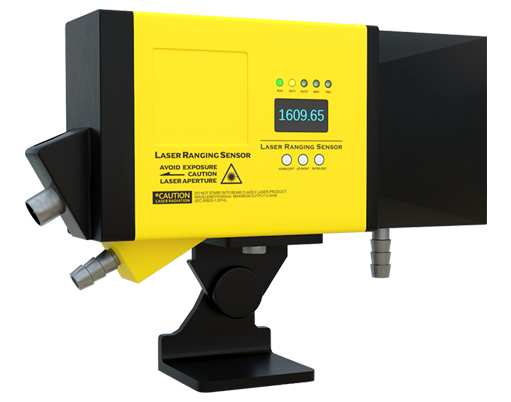
The market offers various types tailored to different challenges. Diffuse reflection sensors are the most common, measuring distance to most solid surfaces. Specular reflection (mirror reflection) models are designed for highly reflective surfaces like polished metal or glass. Through-beam types, with separate transmitter and receiver units, are used for precise edge detection or presence sensing. Recently, blue laser sensors have gained traction for measuring challenging surfaces like transparent materials, shiny metals, or organic substances (e.g., rubber, resin), as the shorter wavelength reduces penetration and scatter compared to traditional red lasers.
In practical application testing, we evaluated several leading models across common industrial tasks. For precision thickness measurement of rolled metal sheets, a sensor with 0.1µm resolution and 10 kHz speed provided stable, repeatable data crucial for closed-loop control. In a robotic welding seam tracking application, a compact, high-speed (50 kHz) sensor with a precise synchronization interface enabled real-time path correction. For vibration analysis on a motor housing, a sensor with a very high sampling rate (100 kHz) successfully captured high-frequency oscillations. A notable challenge was measuring the warpage of a black rubber seal; a standard red laser sensor failed due to low reflectivity, but a blue laser model delivered excellent results with high signal stability.
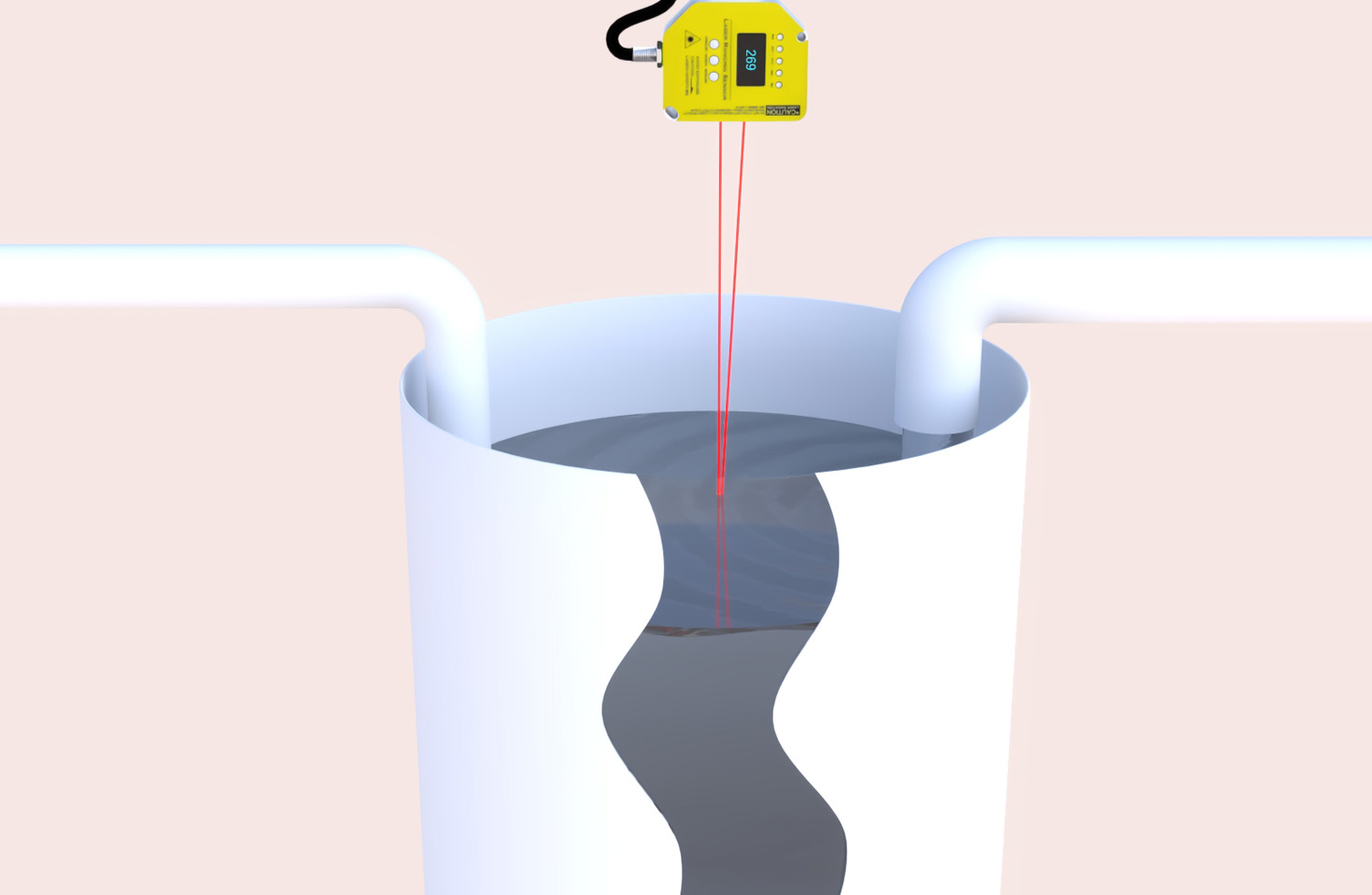
When selecting a laser displacement sensor, engineers must conduct a thorough needs analysis. Start by defining the measurement range and required accuracy/resolution. Consider the target characteristics: material, color, surface finish (rough, shiny, transparent). A shiny surface may require a specular reflection model or a diffuse sensor with specialized filters. Evaluate the environmental conditions: temperature, humidity, dust, oil mist, and ambient light. Determine the necessary outputs and interfaces (analog voltage/current, digital Ethernet, PROFINET, EtherCAT) for integration with PLCs or data acquisition systems. Finally, factor in mechanical constraints like sensor size and mounting options.
Looking ahead, trends point towards increased miniaturization, higher speeds, and smarter sensors. Integration of onboard processors for edge computing—performing basic data analysis like OK/NG judgments directly within the sensor—reduces controller load. Enhanced connectivity via Industrial IoT protocols allows for predictive maintenance and centralized data analytics. Furthermore, multi-point sensors and laser line profilers, which capture entire cross-sectional profiles instead of a single point, are expanding applications into 3D inspection.
In conclusion, laser displacement sensors are powerful enablers of modern manufacturing precision. Their performance is no longer just about raw specifications but about suitability for the specific application challenge. A successful implementation requires matching the sensor's technological strengths—be it blue laser for difficult materials, ultra-high speed for dynamics, or robust housing for harsh environments—to the precise demands of the measurement task. By carefully evaluating the factors outlined in this review, engineers can make informed decisions that enhance quality, efficiency, and reliability on the factory floor.