In the vast and intricate world of industrial automation and control systems, the terms "sensor" and "proximity switch" are frequently encountered. While often used interchangeably in casual conversation, they represent distinct concepts with specific functionalities. Understanding the difference is crucial for engineers, technicians, and procurement specialists to ensure optimal system design, performance, and cost-efficiency.
Fundamentally, a sensor is a broad, umbrella term for any device that detects or measures a physical property and records, indicates, or otherwise responds to it. Sensors convert a physical phenomenon—such as temperature, pressure, light, humidity, position, or presence—into an electrical signal that can be interpreted by a control system. The output from a sensor can be analog (a continuous range of values, like 4-20mA or 0-10V) or digital (discrete on/off signals, but often with more data complexity). Examples are abundant: thermocouples for temperature, pressure transducers, photoelectric sensors, and indeed, proximity switches. The key characteristic of a sensor is its role in gathering data about the environment or process.
A proximity switch, on the other hand, is a specific type of sensor. More precisely, it is a non-contact sensor designed to detect the presence or absence of a target object within a defined sensing range without any physical contact. Its primary function is to act as a binary switch: its output changes state (typically from "off" to "on" or vice versa) when an object enters its detection field. The output is almost exclusively a discrete digital signal—a simple "yes" or "no" regarding object presence. Proximity switches are valued for their reliability, long service life (no moving parts to wear out from contact), and high-speed operation.
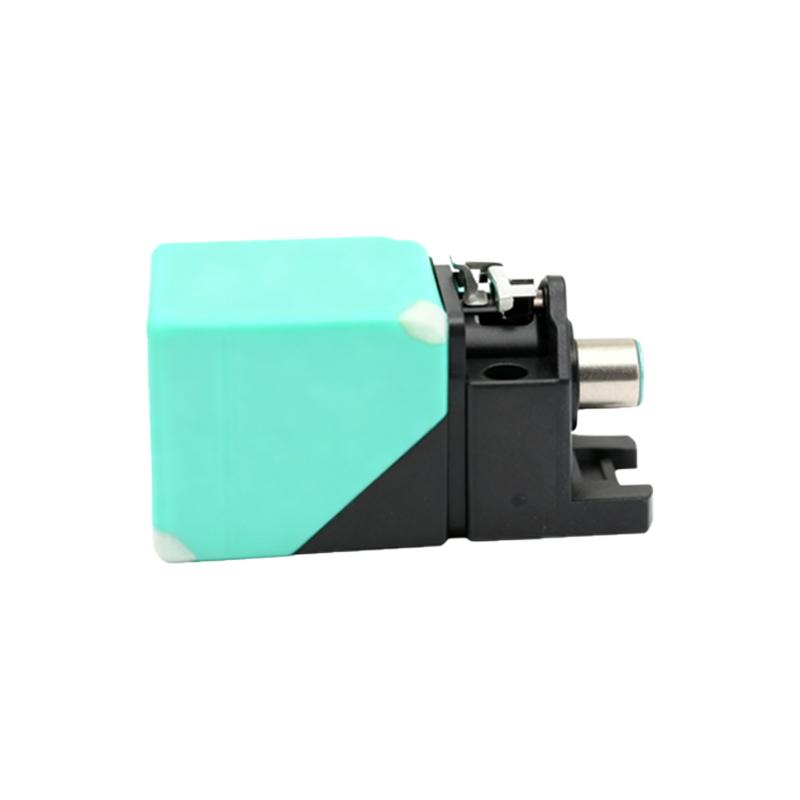
The core distinction lies in the scope and output. All proximity switches are sensors, but not all sensors are proximity switches. A proximity switch is a subset of sensors focused on a singular task: presence detection leading to a switching action.
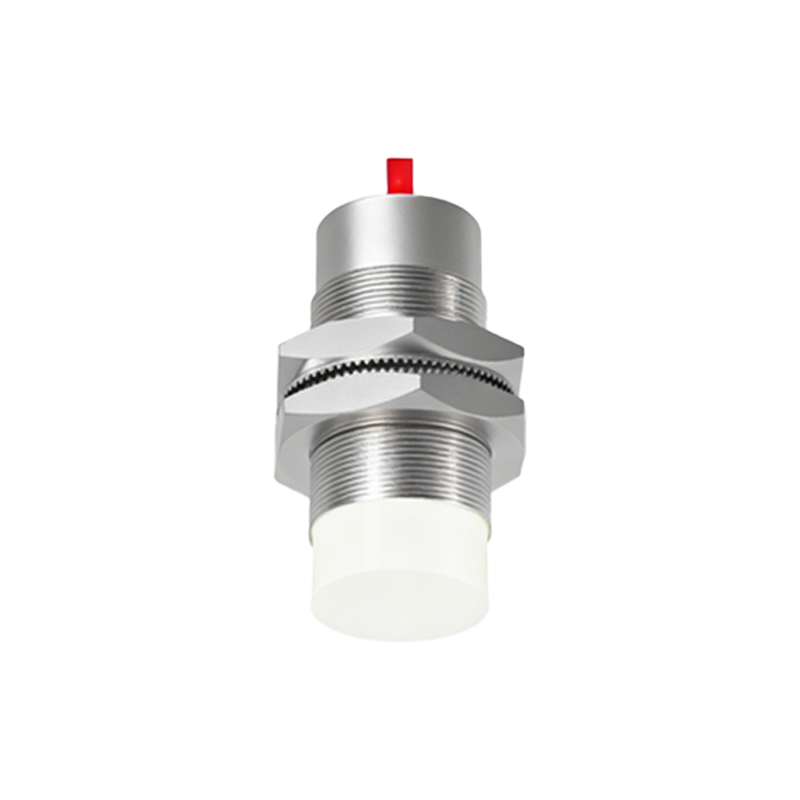
Delving deeper, proximity switches themselves are categorized based on their detection technology, each suited for different materials and applications:
Inductive Proximity Switches: Detect metallic objects (primarily ferrous metals like steel and iron, with some types for non-ferrous metals). They generate an electromagnetic field; a metallic object entering this field induces eddy currents, causing the switch to trigger.
Capacitive Proximity Switches: Can detect both metallic and non-metallic materials (plastics, wood, liquids, powders). They sense changes in capacitance caused by a target object entering an electrostatic field.
Ultrasonic Proximity Switches: Use sound waves beyond human hearing to detect objects and can often measure distance as well. They work on most materials and are less affected by color or transparency.
Photoelectric Switches: Use a beam of light (visible, infrared, or laser) to detect objects. They have longer ranges and can detect virtually any material that interrupts the light beam.
In contrast, other sensor types provide different kinds of information. A linear position sensor (like an LVDT) provides a continuous analog signal corresponding to precise displacement. A vision sensor captures complex image data for inspection. A pressure sensor outputs a value proportional to force per unit area. These devices feed nuanced data into a Programmable Logic Controller (PLC) or system for analysis and complex decision-making, whereas a proximity switch typically provides a simple input to a PLC's digital input card to trigger a predefined action (e.g., stop a conveyor, start a drill, count an item).
Choosing between a general sensor and a proximity switch depends entirely on the application requirement.
Use a Proximity Switch when: The need is straightforward detection of an object's presence/absence, position (e.g., end-of-travel limit), or counting. Applications include part positioning on an assembly line, bin level detection (full/empty), rotary speed monitoring, and door position sensing. The requirement is for a robust, fast, and reliable digital signal.
Use a different type of Sensor when: You need to measure a quantity. If you need to know how hot (temperature sensor), how much pressure (pressure sensor), the exact distance (analog ultrasonic or laser sensor), or the specific color (color sensor), a proximity switch is insufficient. These scenarios demand the analog or complex digital data provided by other sensors.
In summary, while the proximity switch is a vital and ubiquitous component in factory automation, it serves a specific, binary-purpose role within the much larger and more diverse universe of sensors. Recognizing that a proximity switch is a specialized sensor for detection, rather than a