Laser welding has revolutionized modern manufacturing with its precision, speed, and ability to join a wide range of materials. However, the quality and consistency of laser welds are highly dependent on maintaining optimal thermal conditions during the process. This is where temperature sensors for laser welding machines become critical. Unlike conventional welding, laser welding involves a highly concentrated energy beam, creating a small but intensely hot melt pool. Precise temperature measurement and control in this environment are essential for preventing defects such as cracking, porosity, and distortion, while ensuring weld strength and metallurgical integrity.
The primary challenge in measuring temperature during laser welding is the extreme and localized nature of the heat source. The process generates rapid thermal cycles with very high peak temperatures, often exceeding the melting points of the materials involved. Furthermore, the presence of the laser beam itself, intense plasma, spatter, and fumes creates a hostile environment for any sensing device. Therefore, the chosen temperature sensor must be non-contact, have a very fast response time, and be capable of withstanding electromagnetic interference and optical noise.
Several types of non-contact temperature sensors are employed in laser welding applications, each with its own principles and advantages.
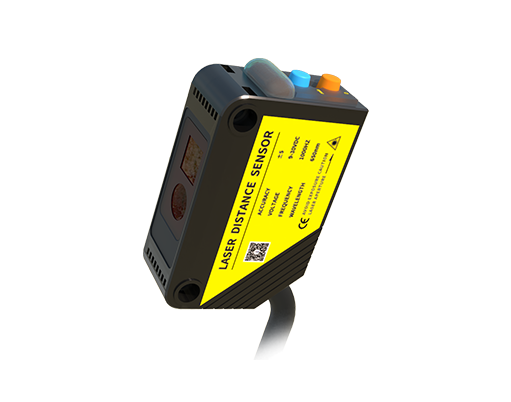
Pyrometers are the most commonly used sensors. They work by detecting the infrared (IR) radiation emitted by the hot weld pool and surrounding heat-affected zone (HAZ). Modern two-color or ratio pyrometers are particularly effective for laser welding. They measure radiation at two different wavelengths and compute a ratio, which provides a temperature reading that is less sensitive to surface emissivity variations, partial obstructions from smoke, or changes in the target's surface condition. This makes them robust for industrial environments. They can be integrated into the welding head or positioned nearby to provide real-time, closed-loop feedback to the laser power controller.
Thermal Imaging Cameras offer a more comprehensive view by creating a two-dimensional temperature map of the weld area. While pyrometers provide a single-point or small-spot measurement, thermal cameras can monitor the entire weld seam, the HAZ, and even track the temperature gradient. This is invaluable for complex geometries or long seams, as it can identify hotspots, lack of fusion, or uneven cooling. The data from thermal imaging can be used for process monitoring, quality assurance, and even adaptive control systems that adjust laser parameters on-the-fly.
Photodiodes and Photodetectors are often used for simpler monitoring tasks. They can be filtered to specific wavelengths corresponding to the thermal radiation of interest. While they may not provide a direct, calibrated temperature readout like a pyrometer, they are excellent for detecting relative changes in thermal emission. This is useful for process stability monitoring, such as detecting the moment a weld pool forms (a sudden increase in IR signal) or identifying anomalies like burn-through.

The integration of these sensors into a laser welding system is a sophisticated task. It involves precise optical alignment to ensure the sensor's field of view is focused on the correct spot—typically the trailing edge of the weld pool. The sensor's signal must be processed with high-speed electronics to keep pace with the welding speed, which can be several meters per minute. This data is then fed into a control algorithm that can modulate laser power, pulse frequency, or travel speed to maintain the setpoint temperature. This closed-loop control is key to achieving consistent, high-quality welds in automated production, especially when welding dissimilar materials or thin sheets that are thermally sensitive.
Beyond process control, temperature sensor data is a cornerstone of Industry 4.0 in welding. Logged thermal profiles for each weld can be stored and analyzed, creating a digital twin of the manufacturing process. Trends in temperature data can predict maintenance needs for the laser source or optics, and correlate thermal signatures with post-weld quality tests to refine process windows further.

In conclusion, temperature sensors are not merely auxiliary devices but fundamental components for unlocking the full potential of laser welding technology. From robust two-color pyrometers for direct control to advanced thermal cameras for holistic process analysis, these sensors provide the critical thermal intelligence required for precision, repeatability, and quality in modern manufacturing. As laser welding advances into new materials and more demanding applications, the role of accurate, high-speed temperature measurement will only become more pivotal.