In the intricate world of industrial automation and control systems, the smooth surface proximity sensor stands as a pivotal component, enabling non-contact detection and measurement with remarkable reliability. Often referred to simply as a proximity sensor or a non-contact sensor, its primary function is to detect the presence or absence of a target object without any physical contact. The "smooth surface" designation typically refers to the sensor's housing or sensing face, which is designed to be flush-mountable and easy to clean, making it ideal for environments where hygiene, minimal protrusion, or resistance to debris buildup is critical, such as in food and beverage processing, packaging, or pharmaceutical manufacturing.
The core operational principle of most smooth surface inductive proximity sensors is based on electromagnetic fields. The sensor generates a high-frequency oscillating electromagnetic field from its active face. When a metallic target object enters this field, eddy currents are induced on the surface of the target. This causes a change in the oscillation amplitude within the sensor's internal circuit. The sensor's electronics detect this change and subsequently switch the output state, sending a signal to a programmable logic controller (PLC) or other control unit. This entire process happens instantaneously and without wear, as there is no mechanical contact involved.
The advantages of using smooth surface proximity sensors are numerous and directly address common industrial challenges. First and foremost is their exceptional durability and long service life. The absence of physical contact eliminates mechanical wear and tear on both the sensor and the target, leading to significantly reduced maintenance costs and downtime. Their non-contact nature also allows for very high switching speeds, capable of detecting objects at frequencies unsuitable for mechanical limit switches. This makes them perfect for high-speed counting, positioning, and speed monitoring applications on conveyor lines or rotating machinery.
The smooth, flush-mountable design is a key feature. It prevents material accumulation on the sensor face, which is crucial in industries where product residue, dust, or liquids are present. This design simplifies cleaning procedures and meets stringent sanitary standards. Furthermore, these sensors are inherently robust, often built with stainless steel or high-grade polymer housings rated for IP67, IP68, or IP69K, providing excellent resistance to water, oils, chemicals, and physical impacts. Their solid-state construction makes them highly resistant to vibration and shock.
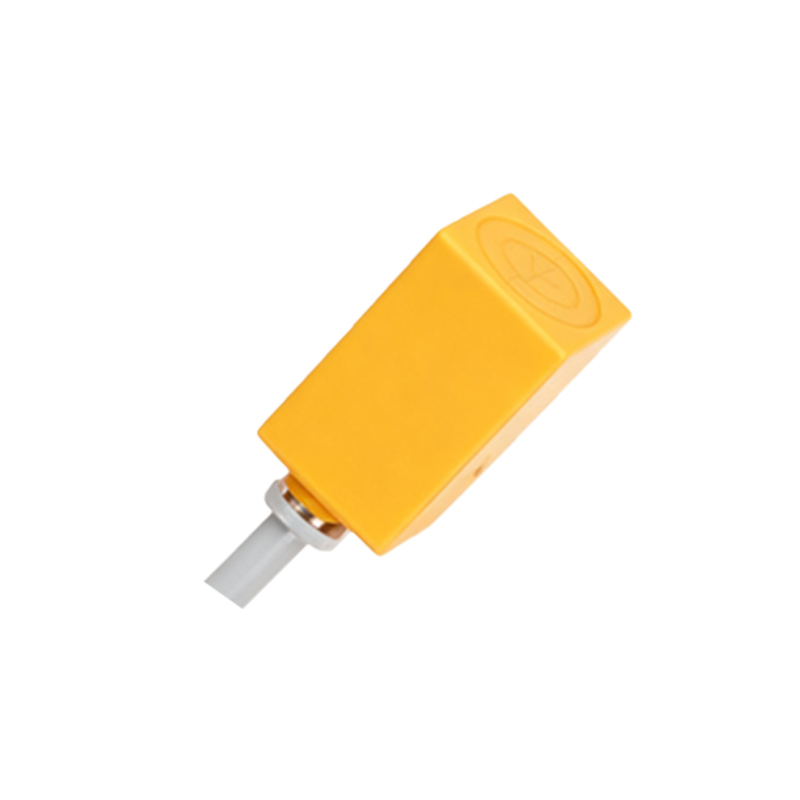
Typical applications are vast across manufacturing sectors. They are extensively used for precise position detection of machine parts, such as verifying if a cylinder is fully extended or retracted. On assembly lines, they detect the presence of components, bottles, or packages for process control and sorting. In metalworking, they monitor tool breakage or count finished parts. Their reliability in harsh conditions also makes them suitable for use in automotive manufacturing, material handling systems, and automated warehousing.
When selecting a smooth surface proximity sensor, several key specifications must be considered. The sensing range, or the maximum distance at which the sensor can reliably detect a standard target, is paramount. The target material is also critical; standard inductive sensors detect ferrous metals (like iron and steel) at the longest range, with reduced range for non-ferrous metals (like aluminum or copper). The sensor's output type—typically NPN (sinking) or PNP (sourcing) transistor outputs—must be compatible with the control system's input module. Other factors include the operating voltage, response frequency, temperature rating, and the specific housing size and thread type (e.g., M8, M12, M18, M30) for installation.
In summary, the smooth surface proximity sensor is an indispensable workhorse in modern industrial automation. By providing accurate, wear-free, and reliable non-contact detection, it enhances system efficiency, ensures process reliability, and reduces operational costs. Its specialized design for clean and demanding environments solves practical problems on the factory floor, making it a fundamental element in building resilient, high-speed, and low-maintenance automated systems. As industries continue to advance towards smarter and more connected operations, the role of these robust and precise sensors will only become more central to achieving seamless and productive automation.