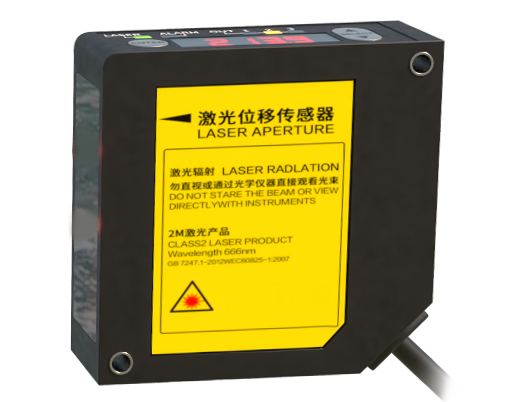
In the high-speed, precision-driven world of modern manufacturing and material handling, the ability to reliably and accurately detect plastic materials is paramount. Plastic detection laser sensors have emerged as a critical technology, offering superior performance over traditional mechanical or photoelectric methods. These sensors operate on the principle of laser triangulation or time-of-flight measurement, projecting a focused laser beam onto a target surface. The reflected light is captured by a receiver, and sophisticated onboard electronics analyze the signal's properties—such as intensity, position, or phase shift—to determine the presence, absence, distance, or even specific characteristics of a plastic object.
The core advantage of laser sensors lies in their exceptional precision and versatility. Unlike diffuse photoelectric sensors that can be fooled by color or surface reflectivity, many laser sensors are designed to overcome these challenges. For instance, sensors with background suppression or true background suppression functionality can reliably detect dark or transparent plastics, such as black ABS or clear PET, by evaluating the angle of the reflected beam rather than just its intensity. This makes them indispensable in applications like bottle sorting, where clear containers must be distinguished from empty spaces on a conveyor.
Another significant application is in quality control and inspection processes. Laser sensors can be configured to measure the height, thickness, or profile of plastic components, identifying defects like warping, incomplete filling in injection molding, or incorrect assembly. In automated assembly lines, they ensure the precise positioning of plastic parts before a robotic arm performs a pick-and-place or welding operation. Their small, focused laser spot allows for detection in tight spaces and on small components, such as connectors or micro-gears.
The selection of an appropriate plastic detection laser sensor requires careful consideration of several key parameters. First, the type of plastic is crucial. Transparent, glossy, matte, and dark plastics all interact with laser light differently. For transparent materials, a polarized retro-reflective or a specialized through-beam sensor might be necessary. Second, the required sensing distance and spot size must match the application. Long-range sensors are used for large-bin picking, while miniature sensors are suited for PCB assembly. Environmental factors cannot be ignored; sensors in environments with dust, coolant mist, or high ambient light require high ingress protection (IP) ratings and robust housing. Finally, output options (PNP/NPN, analog, IO-Link, PROFINET) must be compatible with the existing control system, such as a PLC.
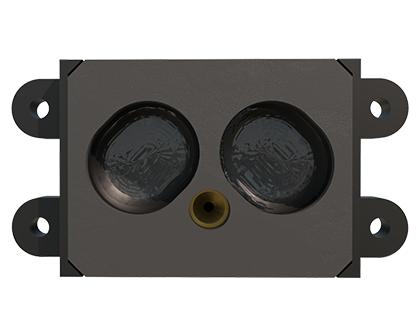
Modern advancements are pushing the boundaries further. The integration of IO-Link communication allows for extensive parameterization, remote monitoring, and predictive maintenance data exchange from the sensor directly to the control system. Smart sensors can now store multiple teaching sets for different materials, enabling quick line changeovers. Furthermore, the development of Class 1 laser products ensures complete eye safety, allowing for their use in open applications without requiring extensive safety enclosures.

In conclusion, plastic detection laser sensors are a cornerstone of industrial automation, providing the accuracy, reliability, and flexibility needed for complex manufacturing tasks. From ensuring the correct feedstock enters a molding machine to verifying the final product's integrity, these sensors enhance efficiency, reduce waste, and guarantee consistent quality. As plastics continue to evolve and automation becomes more sophisticated, the role of advanced laser sensing technology will only grow in significance, driving innovation and operational excellence across countless industries.