In the realm of industrial automation and control systems, proximity sensors are indispensable components for detecting the presence or absence of an object without physical contact. Among the critical specifications defining their operation is the electrical state of their output contacts, categorized as Normally Open (NO) and Normally Closed (NC). A clear understanding of this distinction is paramount for designing safe, efficient, and reliable circuits. This article delves into the operational principles, typical applications, and crucial considerations for selecting between NO and NC proximity sensor configurations.
At its core, the terminology "Normally Open" and "Normally Closed" refers to the default state of the sensor's output switch when the sensor is in its non-activated or "normal" condition—that is, when no target is within its specified sensing range. This "normal" state is a defined electrical condition, independent of power being applied to the sensor itself.
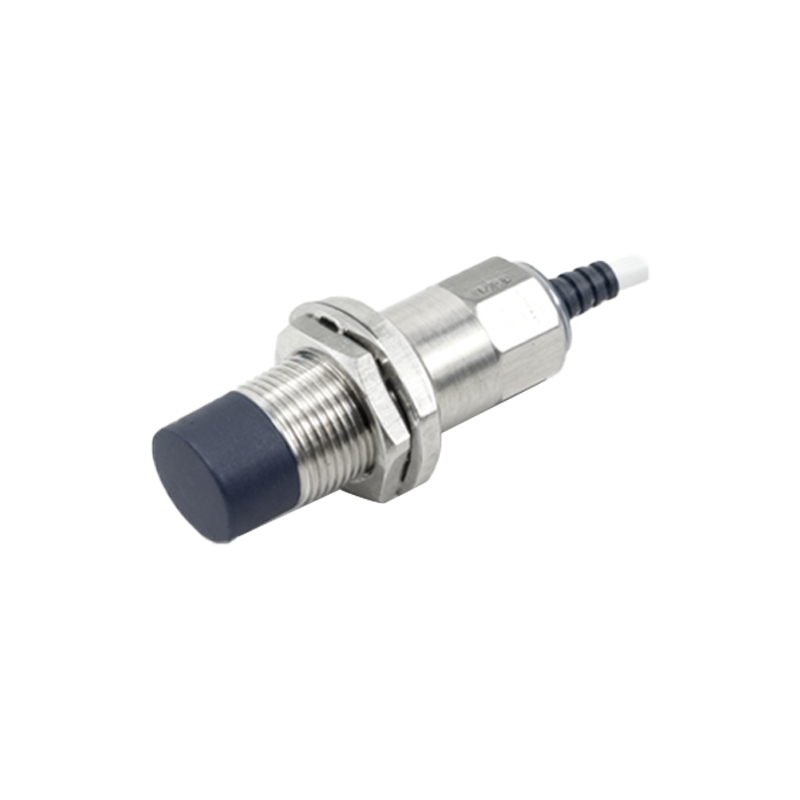
A Normally Open (NO) proximity sensor has an output circuit that is open (non-conducting) when no target is detected. When a target enters the sensor's detection field, the internal switch closes, completing the circuit and allowing current to flow. In essence, the sensor acts as a switch that turns on upon detection. This is the most common configuration found in many automation applications. For instance, an NO sensor might be used to start a process, such as initiating a count on a production line when a part passes by, or activating a solenoid valve when a workpiece is in position. The logic is straightforward: detection equals an active signal.
Conversely, a Normally Closed (NC) proximity sensor operates in the opposite manner. Its output circuit is closed (conducting) in its normal, non-detected state. When a target enters the sensing field, the internal switch opens, breaking the circuit and stopping the current flow. Here, the sensor acts as a switch that turns off upon detection. This configuration is often employed in safety-critical or monitoring applications. A classic example is a safety interlock on a machine guard door. An NC sensor is positioned so that when the door is properly closed (no target—the door—in range), the circuit is closed, allowing the machine to operate. If the door is opened (target detected), the circuit opens, immediately halting the machine to prevent injury. This "fail-safe" principle is a significant advantage of NC contacts.
The choice between NO and NC is not merely a matter of preference but is driven by system requirements, safety protocols, and desired logic behavior.
Safety and Fail-Safe Design: This is the most compelling reason to specify an NC sensor. In a safety circuit, a wire break or a loss of power to the sensor itself should cause a safe shutdown. With an NC configuration, both a broken wire and the detection of a fault condition (like an open guard door) result in an open circuit, triggering the safety response. An NO sensor in the same scenario would fail dangerously; a broken wire would be indistinguishable from the "no detection" state, potentially leaving a hazardous condition undetected.
Circuit Logic and Energy Efficiency: NO sensors are typically used for initiating actions and are intuitive for "start" commands. NC sensors are excellent for "stop," "halt," or "monitor" conditions. Furthermore, in systems that remain in a standby state for long periods, an NC sensor might be more energy-efficient if its normal state keeps a monitoring circuit alive with minimal draw, only interrupting it during an event. However, the power consumption of modern solid-state sensors makes this a minor factor in most cases.
Wiring and PLC Programming: The selection directly impacts the ladder logic or function block programming in a Programmable Logic Controller (PLC). An NO sensor contact in the field is typically programmed as an examine-if-closed (XIC) instruction, while an NC field device is often programmed as an examine-if-open (XIO) instruction to achieve the same logical outcome. Understanding this relationship prevents logic errors. For example, using an NC sensor for a machine run permissive and programming it as an XIC would cause the machine to run only when the guard door is open—a clear hazard.
It is also vital to note that many modern proximity sensors, especially 3-wire DC types, offer a selectable output function. These sensors allow the user to configure the same physical device as either NO or NC via a switch or wiring configuration, providing tremendous flexibility. Always consult the manufacturer's datasheet for wiring diagrams and configuration details.
In summary, the difference between Normally Open and Normally Closed proximity sensors is foundational. Normally Open sensors provide an active signal upon detection and are standard for process initiation. Normally Closed sensors provide a signal in their resting state and interrupt it upon detection, making them the cornerstone of fail-safe design in safety interlock and monitoring systems. The correct application