In the realm of industrial automation and control, selecting the right sensing technology is paramount for ensuring efficiency, safety, and reliability. Two of the most prevalent and versatile solutions are ultrasonic sensors and proximity switches. While both serve the fundamental purpose of object detection without physical contact, their underlying principles, performance characteristics, and ideal applications differ significantly. This article provides a detailed technical comparison to guide engineers and system integrators in making informed decisions.
Ultrasonic sensors operate on the principle of echolocation, similar to sonar. They emit high-frequency sound waves (typically between 20 kHz and 400 kHz) and measure the time interval between the emission of a pulse and the reception of its echo after reflecting off a target object. This time-of-flight measurement is then used to calculate the distance to the object. The core components include a piezoelectric transducer for generating and receiving sound waves and sophisticated electronics for signal processing.
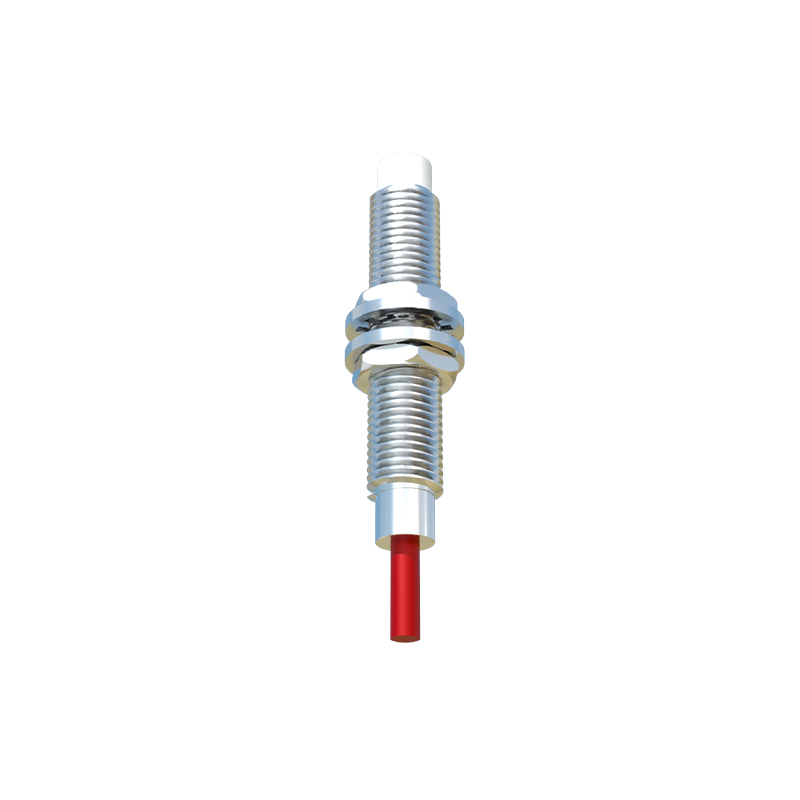
Key advantages of ultrasonic sensors include their exceptional range capabilities, often spanning from a few centimeters up to several meters. They are largely material-agnostic, capable of detecting objects regardless of color, transparency, or surface texture (although soft, sound-absorbing materials can pose challenges). They excel in applications requiring precise distance measurement, level control of liquids and bulk solids, and presence detection over longer ranges. Furthermore, they are relatively unaffected by ambient light, dust, or smoke, making them suitable for harsh environments. However, their performance can be influenced by temperature variations (which affect sound speed), air turbulence, and steeply angled surfaces that deflect the sound wave away from the sensor.
Proximity switches, on the other hand, are non-contact sensors that detect the presence or absence of a metallic object (ferrous or non-ferrous, depending on the type) within a short, fixed range. The most common types are inductive and capacitive. Inductive proximity switches generate an electromagnetic field. When a metallic object enters this field, it induces eddy currents, causing a change in the oscillation amplitude, which is detected by the sensor's circuit. Capacitive proximity switches generate an electrostatic field and detect changes in capacitance caused by the presence of any material (metal, plastic, wood, liquid) that alters the dielectric constant of the space between the sensor and the target.
The primary strengths of proximity switches lie in their speed, precision, and robustness for short-range detection. Inductive sensors offer extremely fast response times, high switching frequencies, and exceptional repeatability. They are virtually immune to environmental factors like dirt, oil, and moisture (given appropriate housing ratings like IP67). Their detection range is limited, typically from 1 mm to 60 mm, and they are designed specifically for metals. Capacitive sensors have a slightly longer range for non-metals but are more sensitive to environmental changes like humidity or material composition.
When comparing the two, the choice hinges on specific application requirements. For precise distance measurement, level sensing in tanks, or detecting objects over a meter away, ultrasonic sensors are the unequivocal choice. They are ideal for warehouse automation (pallet detection), parking guidance systems, and process industries. For high-speed counting, precise position verification of metal parts on a conveyor, or end-of-travel detection in machinery, inductive proximity switches are superior. Their compact size, ruggedness, and insensitivity to non-metallic contaminants make them staples in automotive manufacturing, packaging, and CNC machining.
In summary, ultrasonic sensors are the long-range, versatile "measuring tapes" of the sensing world, effective for diverse materials and demanding environments where distance data is crucial. Proximity switches are the high-speed, precise "triggers," optimized for reliable, repeatable detection of objects (especially metals) at very close quarters. A thorough analysis of factors—target material, required range, environmental conditions, needed output (analog distance vs. discrete switch signal), and cost—will lead to the optimal selection, ensuring a robust and efficient automation solution.