In the realm of industrial automation and machine design, proximity sensors are indispensable components for non-contact detection. A common and critical question that arises in material handling, packaging, and assembly applications is: Can proximity sensors reliably detect objects made of nylon? The answer is not a simple yes or no; it hinges on the fundamental operating principles of the sensor type and the specific material properties of nylon.
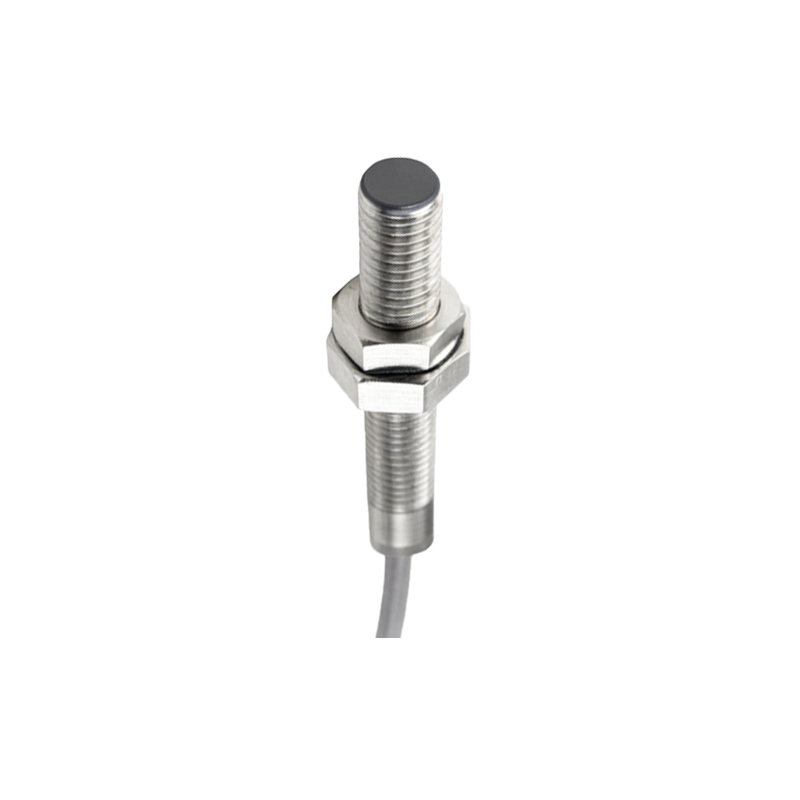
Nylon, a versatile family of synthetic polymers (polyamides), is inherently a non-metallic, dielectric material. Its electrical and magnetic properties are the primary factors determining its detectability. Standard inductive proximity sensors, the most common type used for metal detection, operate by generating an electromagnetic field. They detect the presence of a target by sensing the eddy currents induced in a conductive material. Since nylon is an electrical insulator and does not conduct electricity, it does not induce eddy currents. Consequently, standard inductive proximity sensors cannot detect pure nylon objects. Attempting to use them for this purpose will result in no signal change, rendering them ineffective.
However, the landscape of sensing technology offers viable solutions. For non-metallic materials like nylon, plastic, glass, and liquids, capacitive proximity sensors are the appropriate choice. These sensors function by generating an electrostatic field. Any object that enters this field alters the sensor's capacitance, regardless of its conductivity. Since all materials, including nylon, have a dielectric constant different from air, they cause a measurable change in capacitance. Therefore, a capacitive sensor can reliably detect nylon parts, containers, or sheets. The detection sensitivity can often be adjusted via a potentiometer to compensate for the material's specific dielectric constant, which for nylon typically ranges between 3-5 (compared to air at 1). This adjustability is crucial for filtering out background interference or detecting nylon through thin non-metallic barriers.
Another scenario involves ferrous (iron-based) metal-filled nylon. Some engineering-grade nylons are compounded with metal powders or fibers to enhance properties like strength, thermal conductivity, or EMI shielding. If the nylon composite contains a sufficient percentage of ferrous material, it may be detectable by a standard inductive sensor. However, the sensing range will be significantly reduced compared to solid metal, and detection consistency can be challenging due to potential inhomogeneity in the material mix. For such composites, testing with a specific sensor model is strongly recommended.
Photoelectric sensors present a third alternative, especially for detecting the presence or absence of nylon objects on a conveyor or at a specific point. Through-beam, retro-reflective, or diffuse reflective modes can all be effective, depending on the application's requirements (e.g., color, transparency, surface finish of the nylon part). Diffuse sensors rely on the reflectivity of the target material. While nylon generally has good reflective properties, its exact response depends on color (white nylon is highly reflective, black nylon is not) and surface texture.
Key considerations for engineers when designing a system to detect nylon include:
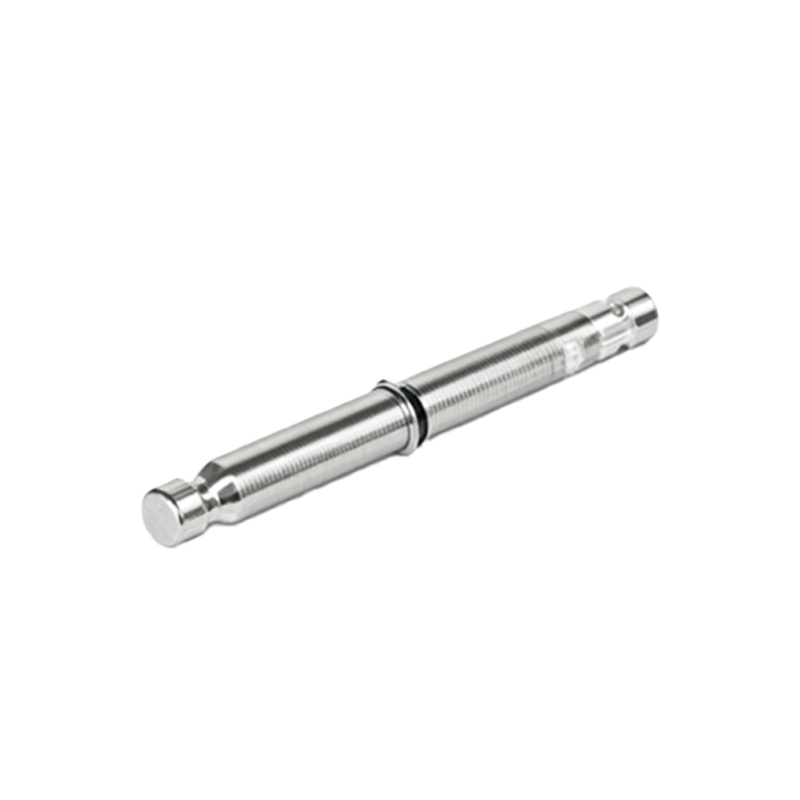
1. Sensor Selection: Prioritize capacitive sensors for pure nylon. Consider the specific dielectric constant and the required sensing distance.
2. Environmental Factors: Capacitive sensors can be influenced by humidity, dust, and temperature fluctuations. Proper housing (IP rating) and environmental shielding are important.
3. Target Characteristics: The size, shape, and thickness of the nylon object affect detection. Larger surface areas facing the sensor are easier for capacitive sensors to detect.
4. Installation and Tuning: Ensure correct mounting and use the sensitivity adjustment on capacitive sensors to optimize performance for the specific nylon target while ignoring background noise.
In conclusion, while standard inductive proximity sensors are ineffective for pure nylon, the sensing need is fully addressable with the correct technology. Capacitive proximity sensors are the primary and most robust solution for detecting this common engineering polymer. Understanding the material composition and the operational principles of different sensor families is essential for implementing a reliable, maintenance-free detection system in any application involving nylon components.