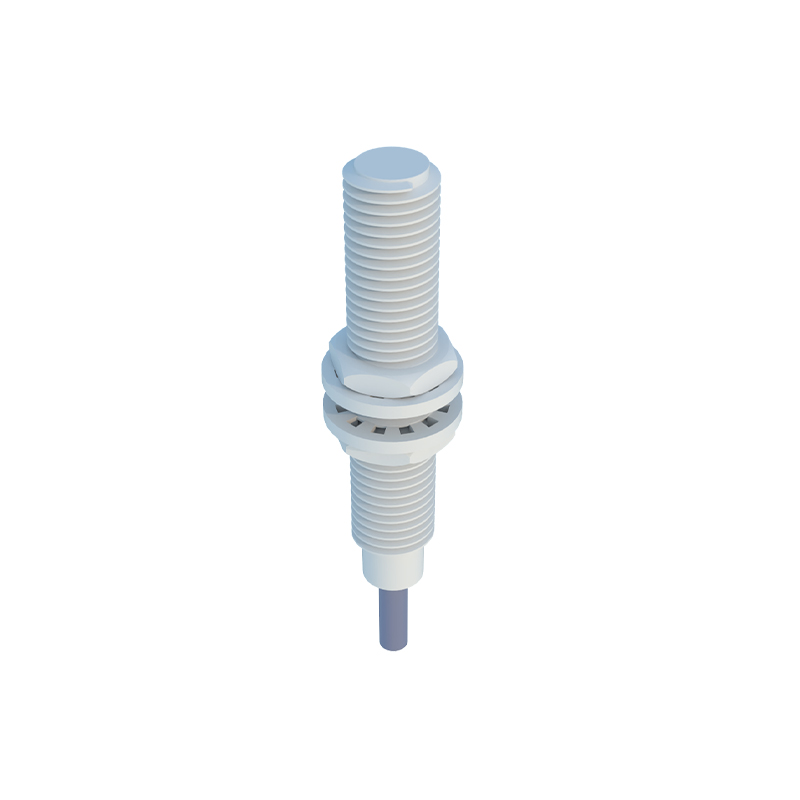
In the realm of industrial automation and process control, proximity sensors are indispensable components for non-contact object detection. Among the various types available, analog output proximity sensors stand out for their ability to provide continuous, variable data about the target's position or distance, rather than a simple on/off signal. This article delves into the working principles, key technologies, application scenarios, and critical selection factors for these versatile devices.
At their core, analog output proximity sensors operate on the same fundamental principles as their digital counterparts, primarily inductive, capacitive, or ultrasonic technologies. Inductive sensors detect metallic objects by generating an electromagnetic field, while capacitive sensors can detect both metallic and non-metallic materials by sensing changes in capacitance. Ultrasonic sensors use sound waves to measure distance to an object. The key differentiator lies in the signal processing. Instead of triggering a switch at a predefined threshold, these sensors produce an output signal—typically a voltage (e.g., 0-10V) or current (e.g., 4-20mA)—that is proportional to the distance between the sensor and the target. For instance, as a metal part moves closer to an inductive analog sensor, the output voltage might increase linearly from 2V to 8V, providing a precise measurement of its position.
The analog output offers significant advantages. It enables continuous monitoring and control, which is essential for applications requiring precision. Consider a robotic arm that needs to gently pick up a fragile component; an analog sensor can provide real-time feedback on the gripper's distance, allowing for smooth, controlled movement. Similarly, in liquid level monitoring within a tank, an analog capacitive sensor can provide a continuous readout of the level, not just a "full" or "empty" alert. This facilitates better process optimization, predictive maintenance, and integration with Programmable Logic Controllers (PLCs) and supervisory control systems that can interpret the analog signal for complex control algorithms.
When selecting an analog output proximity sensor for a specific application, several technical parameters demand careful consideration. First is the measuring range. This defines the minimum and maximum distances over which the sensor can provide a reliable analog signal. Operating outside this range leads to signal saturation or loss of linearity. Linearity is perhaps the most critical characteristic for analog sensors. It refers to how accurately the output signal (voltage/current) represents the actual distance. A deviation from perfect linearity is expressed as a percentage; a lower percentage indicates higher accuracy. Repeatability defines the sensor's ability to produce the same output signal when the target is at the same position under identical conditions. Response time is crucial for high-speed applications, indicating how quickly the sensor can reflect a change in distance in its output signal. Finally, environmental factors like temperature stability, resistance to shock/vibration, and Ingress Protection (IP) rating for dust and moisture are vital for reliable operation in harsh industrial settings.
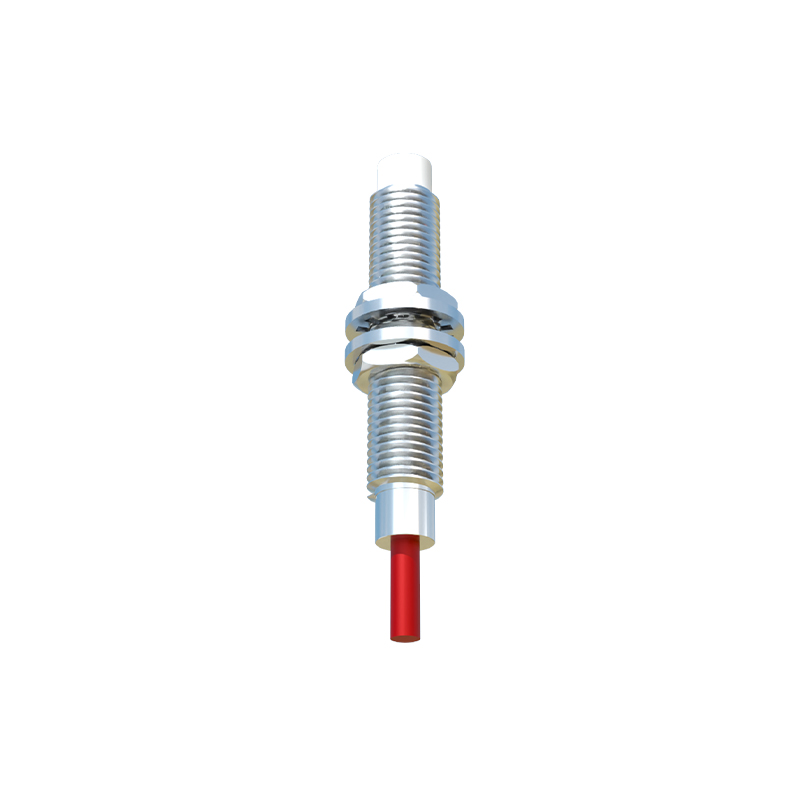
Common application areas span numerous industries. In automotive manufacturing, they are used for precise gap measurement between body panels. In packaging machinery, they control the fill level of containers. In material handling, they guide the position of cranes or elevators. In woodworking or metalworking, they can monitor tool wear by detecting the position of a cutting tool relative to a reference point. The 4-20mA current loop output is particularly favored in process industries due to its inherent noise immunity and ability to indicate a sensor fault (a reading of 0mA).
In conclusion, analog output proximity sensors bridge the gap between simple presence detection and precise metrology. By providing a continuous electrical signal proportional to distance, they empower engineers to build more intelligent, responsive, and efficient automated systems. A thorough understanding of their operating principles, coupled with a meticulous evaluation of specifications against the application's demands, is key to unlocking their full potential and ensuring robust, long-lasting performance on the factory floor or in any controlled environment.