In the realm of industrial automation and control systems, the terms "electrical sensor" and "proximity switch" are frequently encountered. While they are both fundamental components for detecting objects and process variables, they represent distinct categories of devices with different operating principles, applications, and characteristics. A clear understanding of their differences is crucial for engineers and technicians to select the optimal component for a given task, ensuring system reliability, efficiency, and safety.
An electrical sensor is a broad, umbrella term for any device that detects a physical property or event and converts it into an electrical signal. This signal, which can be analog (e.g., voltage, current) or digital (on/off), is then transmitted to a controller like a PLC (Programmable Logic Controller) for processing and decision-making. The physical property detected can be virtually anything: light, temperature, pressure, flow, level, humidity, vibration, or the presence/absence of an object. Therefore, electrical sensors encompass a vast array of technologies. Common types include photoelectric sensors (using light beams), capacitive sensors (detecting changes in capacitance), inductive sensors (reacting to metallic objects), ultrasonic sensors (using sound waves), and thermocouples (measuring temperature). Their outputs are diverse; a temperature sensor might provide a 4-20 mA signal proportional to temperature, while a photoelectric sensor might provide a simple digital pulse.
A proximity switch, on the other hand, is a specific subtype of sensor. Its defining function is to detect the presence or absence of a target object within a specified range—without any physical contact. By design, a proximity switch is primarily a binary device; its output is typically a clean, digital on/off signal. The most prevalent type is the inductive proximity switch, which generates an electromagnetic field and detects the eddy current losses caused by a metallic target entering this field. Similarly, capacitive proximity switches can detect both metallic and non-metallic materials (like plastics, wood, or liquids) by sensing changes in capacitance. Another type is the magnetic proximity switch (or reed switch), activated by a magnetic field. The key point is that all proximity switches are non-contact sensors designed for object detection, but not all electrical sensors are proximity switches.
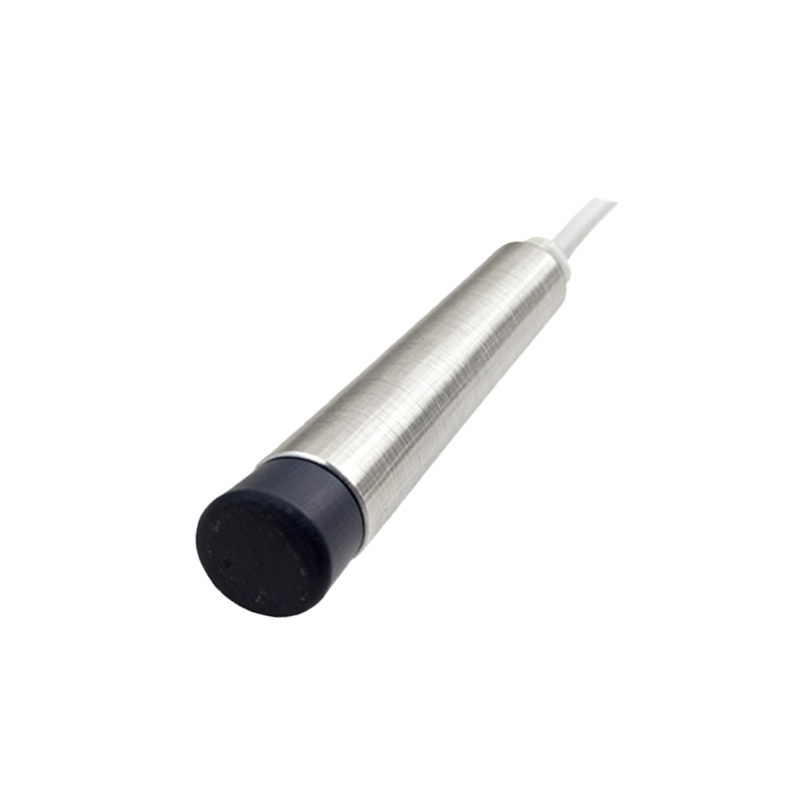
The core differences can be distilled into scope, output, and application. Scope: "Electrical sensor" is a generic category. A proximity switch is a specific type of sensor within that category. It's analogous to the relationship between "vehicle" and "forklift." All proximity switches are sensors, but not all sensors are proximity switches. Output: Proximity switches almost exclusively provide a discrete, switch-like digital output (e.g., PNP/NPN transistor output). General electrical sensors can provide this digital output, but many are designed to provide a continuous analog signal representing the measured variable's magnitude. Application: Proximity switches are specialists in non-contact position sensing. They are ideal for counting objects, determining end positions, detecting part presence on a conveyor, or as safety interlocks. Their operation is typically simple: object present = output ON; object absent = output OFF. Other electrical sensors serve broader measurement roles. A pressure sensor monitors system pressure in psi or bar, a level sensor gauges tank filling, and an optical sensor might differentiate colors or read barcodes, tasks beyond the capability of a standard proximity switch.
Selection criteria between the two depend heavily on the application requirements. For straightforward detection of metallic objects (e.g., sensing a gear tooth, a machine part, or a metal flag), an inductive proximity switch is often the most robust, cost-effective, and simple solution. They are resistant to dirt, dust, and moisture (with appropriate IP ratings) and offer high switching frequencies. If the target is non-metallic, a capacitive or ultrasonic proximity switch would be considered. However, if the requirement is to measure a variable like precise distance (not just presence), temperature, or light intensity, a specialized analog sensor (e.g., laser distance sensor, RTD, photoelectric sensor with analog output) is necessary. Environmental factors also play a role; high-temperature environments might require specialized sensors, while areas with heavy washdown might necessitate sensors with high IP69K ratings, available in both proximity and other sensor forms.
In system design, proximity switches are often the workhorses of discrete automation, providing the essential "yes/no" inputs to a control system. Other electrical sensors act as the system's senses for monitoring and closed-loop control of process variables. Understanding that a proximity switch is a subset of the sensor family clarifies technical documentation and part selection. For instance, a catalog might list "Inductive Proximity Sensors," correctly using "sensor" in the broader sense, while specifying its function as a proximity switch.
In conclusion, while the terms are sometimes used interchangeably in casual conversation, the technical distinction is significant