In the realm of industrial automation and precision engineering, pin proximity sensors have emerged as indispensable components, playing a critical role in enhancing efficiency, safety, and reliability across various applications. These compact, non-contact sensing devices are designed to detect the presence or absence of metallic objects with high accuracy, making them essential in environments where traditional mechanical switches fall short. Unlike larger proximity sensors, pin proximity sensors feature a slender, needle-like form factor, allowing them to be integrated into tight spaces and intricate machinery where size constraints are paramount.
The fundamental principle behind pin proximity sensors lies in electromagnetic induction or capacitive sensing technology. For inductive types, which are most common for detecting metals, the sensor generates an oscillating electromagnetic field. When a metallic target enters this field, it induces eddy currents, causing a change in the oscillation amplitude. This alteration is detected by the sensor's circuitry, triggering an output signal—typically a digital switch—that can be used to control machinery, count objects, or monitor positions. Capacitive variants, on the other hand, respond to both metallic and non-metallic materials by sensing changes in capacitance, though they are less frequently used in industrial metal-detection scenarios.
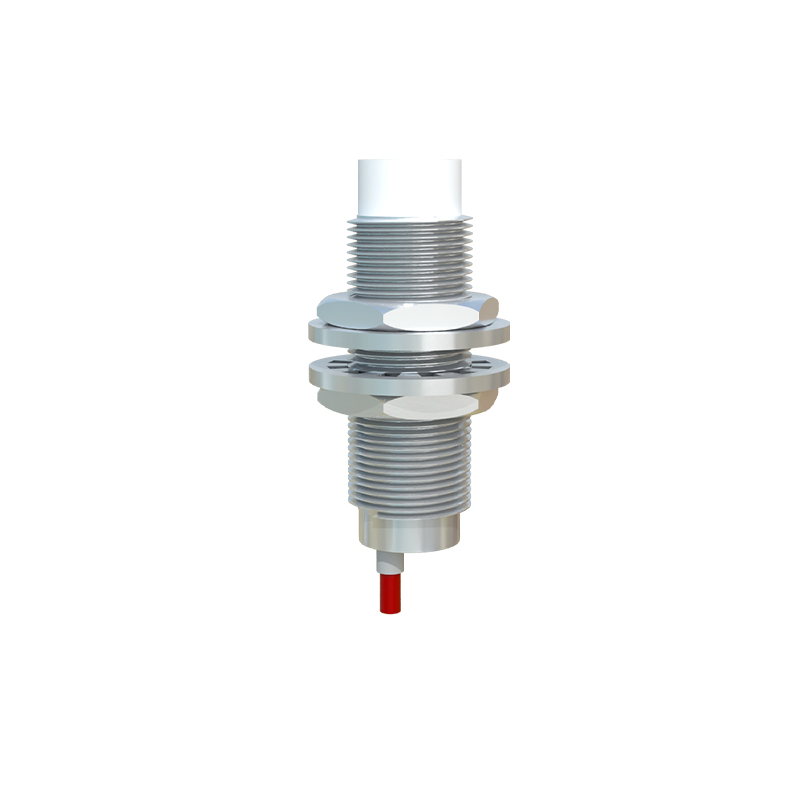
One of the primary advantages of pin proximity sensors is their non-contact operation, which eliminates mechanical wear and tear, thereby extending their lifespan and reducing maintenance costs. This characteristic is particularly valuable in high-speed production lines, such as those in automotive manufacturing, where sensors must reliably detect components like screws, bolts, or small metal parts without physical interaction. For instance, in assembly robots, pin sensors ensure precise positioning of parts, preventing misalignments that could lead to defects or downtime. Additionally, their immunity to environmental factors like dust, oil, and moisture—when properly sealed—makes them suitable for harsh industrial settings, including machining centers and packaging equipment.
In electronics manufacturing, pin proximity sensors are often deployed on printed circuit board (PCB) lines to verify the presence of components or to trigger automated soldering processes. Their small diameter enables them to be mounted directly adjacent to other elements without interference, facilitating miniaturization trends in technology. Similarly, in the aerospace sector, these sensors contribute to quality control by inspecting turbine blades or fastener installations, where even minor deviations can have significant consequences.
Beyond detection, pin proximity sensors support safety functions by acting as interlocks in machinery guards. If a guard door is opened during operation, the sensor can immediately halt equipment to prevent accidents, aligning with occupational health standards. Moreover, their rapid response times—often in the microsecond range—allow for real-time monitoring and control, which is crucial in dynamic processes like conveyor sorting or robotic pick-and-place systems.
When selecting a pin proximity sensor, engineers must consider factors such as sensing distance, target material, output type (e.g., NPN or PNP), and environmental ratings. While typical sensing ranges are short due to their size—often just a few millimeters—this limitation is offset by their precision. Installation also requires attention to alignment and shielding from electromagnetic interference to ensure consistent performance.
As Industry 4.0 advances, pin proximity sensors are increasingly integrated with IoT networks, enabling predictive maintenance and data analytics. By transmitting operational data to central systems, they help optimize production flows and reduce energy consumption. In summary, pin proximity sensors may be small in stature, but their impact on modern industry is profound, driving automation forward with unwavering accuracy and durability. Their continued evolution promises even greater adaptability in smart factories and beyond, solidifying their status as a cornerstone of industrial sensing technology.