In the rapidly evolving landscape of industrial automation, the demand for reliable, non-contact sensing solutions has never been greater. Among the array of technologies available, NTN capacitive proximity sensors stand out as a versatile and critical component for countless applications. Unlike their inductive counterparts, which detect only metallic objects, capacitive sensors are capable of detecting a wide range of materials, including liquids, plastics, wood, and granular substances, by measuring changes in capacitance. This fundamental principle allows them to sense the presence or absence of an object through nearly any non-metallic container wall, making them indispensable in packaging, food and beverage, pharmaceutical, and material handling industries.
The operational core of an NTN capacitive sensor involves an oscillator circuit that generates an electrostatic field. When a target object enters this field, it causes a detectable change in the circuit's capacitance, triggering an output signal. A key advantage is their adjustable sensitivity, often via a potentiometer, allowing engineers to fine-tune the sensing range and ignore interfering background materials like container walls. This flexibility is crucial in complex environments where precise level detection of powders, adhesives, or liquids is required. For instance, in silo or tank level monitoring, these sensors provide a robust, maintenance-free alternative to mechanical floats or optical devices, which may fail due to dust, condensation, or material buildup.
NTN's engineering excellence ensures these sensors are built to withstand harsh industrial conditions. Typical designs feature robust housings in materials like PBT or stainless steel, offering high degrees of ingress protection (IP67/IP69K) against water, oils, and chemicals. This durability translates to reduced downtime and lower total cost of ownership. Furthermore, modern NTN capacitive sensors often incorporate advanced features such as short-circuit protection, reverse polarity protection, and temperature compensation, ensuring stable performance across a wide operational temperature range. Their output options, including NPN, PNP, analog, and IO-Link versions, provide seamless integration into both conventional control systems and Industry 4.0 smart factory networks.
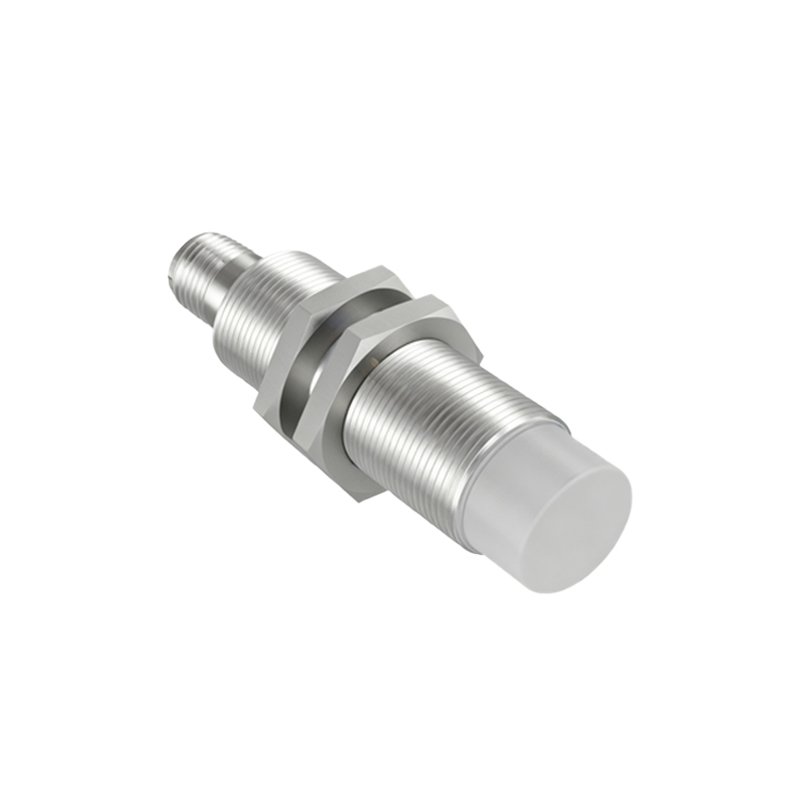
Application scenarios are vast and varied. In bottling lines, they reliably detect liquid levels in glass or plastic bottles regardless of color or transparency. In woodworking, they ensure proper board positioning without physical contact. In agricultural automation, they monitor grain levels in hoppers. A particularly innovative use is in touch-sensitive control panels, where the sensor acts through a protective glass or plastic overlay, enabling hygienic, sealed interfaces for medical or cleanroom equipment. The ability to sense non-conductives also makes them ideal for detecting broken tools or missing gaskets in assembly processes.
When selecting an NTN capacitive sensor, several parameters require careful consideration. The sensing range, typically from a few millimeters to about 25 millimeters for standard models, must match the application. The target material's dielectric constant significantly influences performance; materials with higher constants (like water) are easier to detect than those with lower constants (like certain plastics). Environmental factors such as ambient humidity, temperature fluctuations, and the presence of conductive dust must also be evaluated, as they can affect the electrostatic field. Proper installation is paramount—maintaining adequate clearance from surrounding metal and other sensors prevents mutual interference and ensures accurate, repeatable switching.
Looking ahead, the integration of capacitive sensing with digital communication protocols like IO-Link is a game-changer. It enables remote configuration, real-time diagnostics, and predictive maintenance data collection, aligning perfectly with smart manufacturing initiatives. NTN continues to innovate in this space, developing sensors with enhanced noise immunity, faster response times, and miniaturized designs for space-constrained applications.
In conclusion, NTN capacitive proximity sensors represent a sophisticated fusion of physics and practical engineering. Their unique material-agnostic detection capability, combined with rugged construction and intelligent features, solves complex sensing challenges across diverse industries. For system designers and maintenance engineers, understanding their operational principles and application best practices is key to leveraging their full potential for enhancing efficiency, safety, and reliability in automated systems. As automation grows more intricate, the role of these precise, adaptable sensors will only become more central to industrial innovation.