In the vast landscape of industrial automation and control systems, metal proximity sensors stand as indispensable components, enabling non-contact detection of metallic objects with remarkable precision and reliability. These sensors are pivotal in applications ranging from assembly line automation and robotic guidance to safety interlocks and position sensing. But what exactly is the principle behind their operation? At its core, the working principle of metal proximity sensors revolves around electromagnetic induction or changes in an oscillating circuit, depending on the specific type.
The most common type is the inductive proximity sensor, which operates based on Faraday's law of electromagnetic induction. Inside such a sensor, a coil wound around a ferrite core is connected to an oscillator circuit, generating a high-frequency alternating magnetic field at the sensing face. When a metallic object enters this field, eddy currents are induced on the surface of the metal due to the changing magnetic flux. These eddy currents, in turn, create their own opposing magnetic field, which dampens the oscillation amplitude of the sensor's internal circuit. This damping effect is detected by a threshold circuit, triggering a switch in the output state—typically changing from open to closed or vice versa—to signal the presence of the metal target.
It's crucial to note that different metals interact with the magnetic field in varying ways. Ferrous metals like iron and steel, being magnetic, exhibit strong eddy current generation and magnetic permeability effects, leading to longer detection ranges. Non-ferrous metals such as aluminum or copper, while non-magnetic, still induce eddy currents but with less intensity, resulting in shorter sensing distances. This characteristic necessitates careful sensor selection based on the target material to ensure optimal performance.
Another variant is the capacitive proximity sensor, which can detect both metallic and non-metallic objects by sensing changes in capacitance. However, for metal-specific applications, inductive sensors are predominantly favored due to their immunity to non-metallic substances and environmental factors like dust, oil, or moisture. The sensing range of these devices typically spans from a few millimeters to several tens of millimeters, with factors like sensor size, target material, and installation conditions influencing the exact distance.
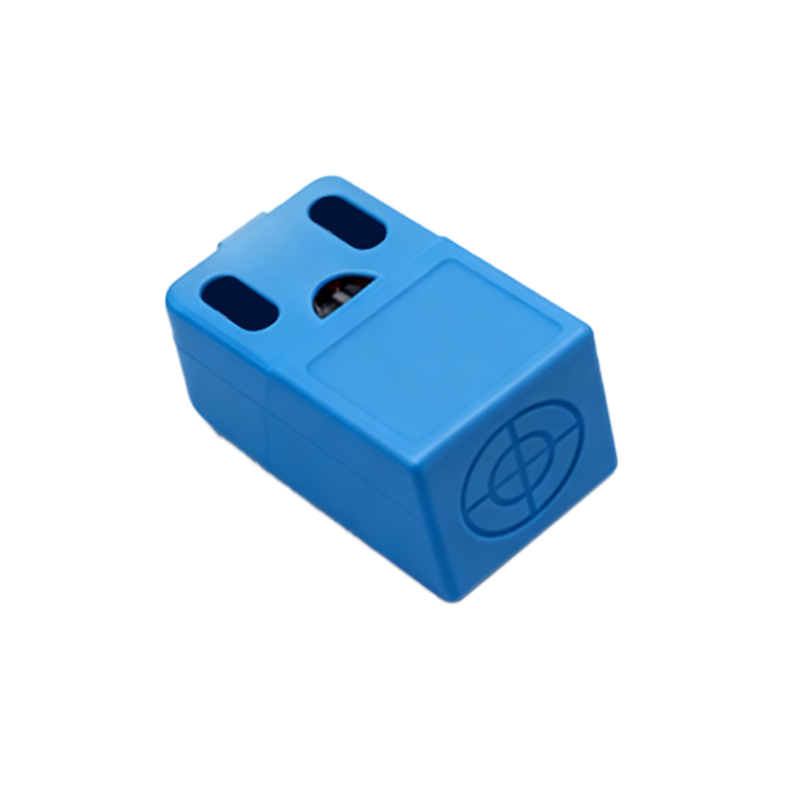
Advanced designs incorporate features such as embedded microprocessors for temperature compensation and noise immunity, enhancing stability in harsh industrial environments. Additionally, output configurations vary, including NPN/PNP transistor outputs or analog signals for distance proportionality, catering to diverse control system requirements.
In practice, the installation and alignment of metal proximity sensors are critical. Proper mounting avoids interference from surrounding metal structures, while alignment ensures consistent detection. Regular maintenance, though minimal due to their non-contact nature, involves checking for physical damage or contamination that could affect the magnetic field.
Ultimately, the principle of metal proximity sensors embodies a seamless blend of physics and engineering, transforming electromagnetic phenomena into actionable signals that drive automation. Their ability to operate without physical contact translates to reduced wear, longer service life, and enhanced safety—key reasons for their ubiquitous presence in modern manufacturing and beyond. As technology evolves, innovations like miniaturization and IoT integration are further expanding their capabilities, solidifying their role as foundational elements in smart industrial ecosystems.