In the realm of electrical engineering and automation, sensors act as the fundamental sensory organs of modern systems. Among these, proximity sensors and light sensors, while sometimes discussed in tandem due to overlapping technologies, serve distinct and critical functions. This article delves into their operational principles, types, and industrial applications, providing a clear technical overview.
A proximity sensor is a device capable of detecting the presence or absence of an object within a specified range without any physical contact. It achieves this by emitting an electromagnetic field, beam of electromagnetic radiation (like infrared light), or acoustic waves, and then looking for changes in the field or return signal. The key advantage is non-contact detection, which minimizes wear and tear and allows for high-speed operation. Common types include:
1. Inductive Proximity Sensors: These detect metallic objects (primarily ferrous metals) by generating an oscillating electromagnetic field. When a metal object enters this field, it induces eddy currents within the object, which in turn dampens the sensor's oscillation. This change is detected and converted into an output signal. They are robust, reliable, and widely used in manufacturing for part counting, machine tool positioning, and detecting metal parts on conveyors.
2. Capacitive Proximity Sensors: These can detect both metallic and non-metallic objects (plastics, wood, liquids, granules) by sensing changes in capacitance. The sensor forms one plate of a capacitor, with the target object acting as the other plate. As the object approaches, the capacitance increases, triggering the switch. They are ideal for level detection in tanks, material handling, and detecting non-metallic containers.
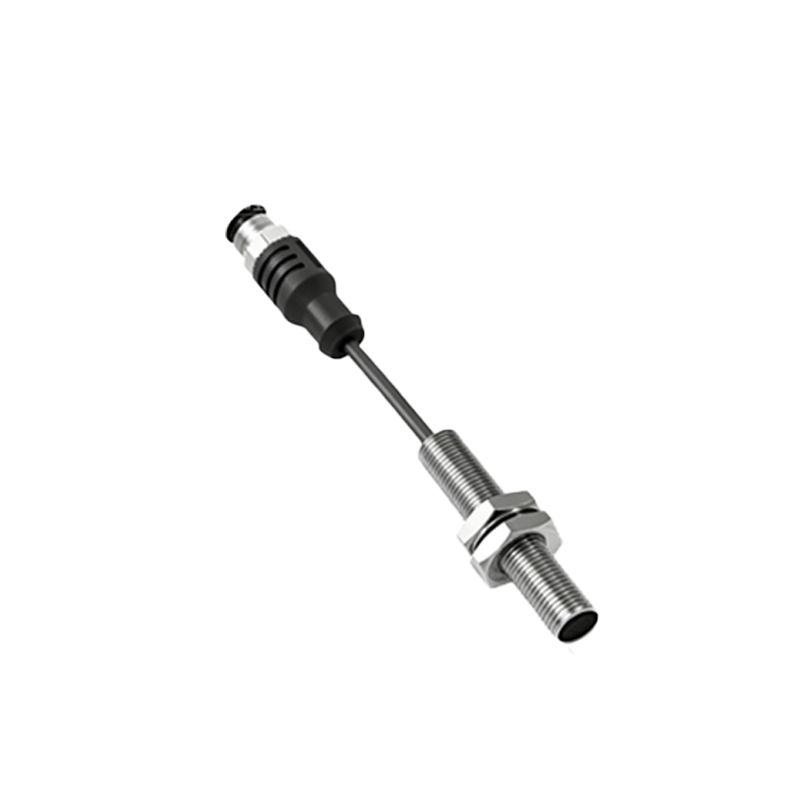
3. Photoelectric Sensors (Proximity Mode): Often used for proximity detection, these consist of a light emitter (usually LED) and a receiver. In the diffuse reflective (proximity) mode, the sensor emits light, which reflects off the target object back to the receiver. Detection occurs when the reflected light intensity surpasses a threshold. They are excellent for detecting objects of various materials and colors at short to medium ranges.
4. Ultrasonic Proximity Sensors: These measure the time taken for an emitted ultrasonic sound wave to reflect off an object and return to the sensor. They are effective for detecting objects regardless of material, color, or transparency, and are commonly used in distance measurement, liquid level control, and collision avoidance systems.
On the other hand, a light sensor, or ambient light sensor (ALS), is specifically designed to measure the intensity of visible light in its environment. Its primary function is not to detect objects but to quantify illumination levels. The most common type is the photodiode or phototransistor, which generates a current or changes its resistance proportional to the incident light intensity. Key applications include:
Automatic brightness adjustment for displays in smartphones, tablets, and automotive dashboards to enhance readability and save power.
Energy management in smart lighting systems, where artificial lights are dimmed or switched off based on sufficient ambient daylight.
Photographic exposure control in cameras.
Solar light monitoring systems.
While a photoelectric sensor used in proximity mode is indeed a type of light-based proximity detector, the term "light sensor" typically refers to the ambient light measuring device. The core distinction lies in the purpose: proximity sensors are for object detection and positioning, whereas light sensors are for measuring light quantity.
In industrial settings, the choice between sensor types is crucial. An inductive sensor is perfect for detecting a metal gear tooth in a high-speed packaging machine. A capacitive sensor might be chosen to detect the fill level of plastic bottles in a bottling plant. A photoelectric proximity sensor could be used to count boxes on a conveyor belt. Meanwhile, an ambient light sensor on a factory HMI panel would automatically adjust screen brightness for optimal operator viewing under varying plant lighting conditions.
Integration of these sensors with Programmable Logic Controllers (PLCs) and Industrial IoT (IIoT) platforms has further expanded their capabilities. Data from proximity sensors can feed into predictive maintenance algorithms, while light sensor data can optimize entire building energy profiles.
In conclusion, proximity sensors and light sensors are indispensable components in electrical engineering design. Understanding their distinct operating principles—magnetic field disturbance, capacitance change, light reflection time-of-flight, and photometric measurement—enables engineers to select the optimal device for automation, control, and monitoring tasks. Their non-contact nature, reliability, and adaptability continue to drive efficiency and innovation across countless industries, from discrete manufacturing and process control to consumer electronics and smart infrastructure.