Proximity sensors are indispensable components in modern industrial automation, offering non-contact detection of objects within a specific range. Their ability to function reliably in harsh environments—amidst dust, moisture, and temperature variations—makes them a cornerstone of manufacturing, packaging, automotive, and material handling systems. This guide delves into the primary models of proximity sensors, their operational principles, and key selection criteria for optimal performance.
The most prevalent types are inductive, capacitive, and magnetic proximity sensors. Inductive proximity sensors are widely used for detecting metallic objects. They generate an electromagnetic field; when a metal target enters this field, it induces eddy currents, causing a change in the sensor's oscillation amplitude. This change triggers the output switch. Common models in this category include cylindrical housings (e.g., M8, M12, M18, M30 threaded barrels) and rectangular or block-style designs. Key specifications involve sensing distance (typically from 1mm to 60mm), switching frequency, and output type (PNP/NPN, NO/NC). For instance, the M18-4-AP8X model might offer an 8mm sensing range with a PNP normally open output, ideal for detecting steel parts on an assembly line.
Capacitive proximity sensors can detect both metallic and non-metallic materials, such as liquids, plastics, wood, or granules. They operate by measuring changes in capacitance between the sensor's active surface and the target. When an object enters the sensing zone, it alters the dielectric constant, prompting the sensor to switch. These models often feature adjustable sensitivity potentiometers to fine-tune detection for specific materials. Typical applications include level detection in tanks (e.g., monitoring liquid or powder levels) and presence verification of plastic caps on bottles. A model like the CQ35-25N might provide a 25mm range for various substance detections.
Magnetic proximity sensors, or reed switches, are activated by the presence of a permanent magnet. They are frequently paired with pneumatic cylinders to detect piston position. These sensors are compact, cost-effective, and highly reliable for binary position feedback. A standard model might be a BMF-102 with a 2-wire AC/DC configuration, designed to mount directly onto cylinder bodies.
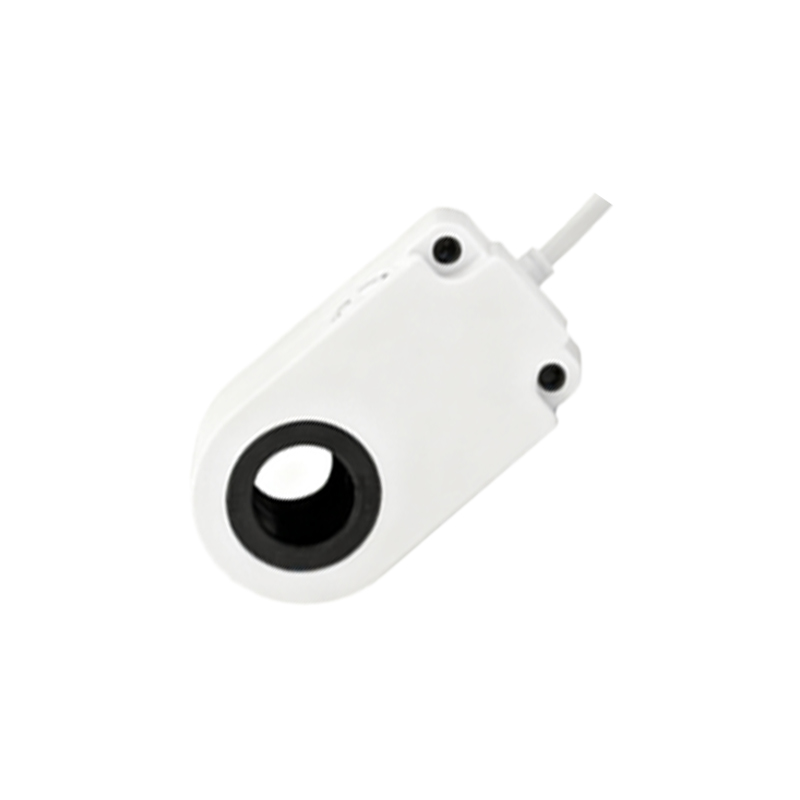
Ultrasonic and photoelectric sensors also fall under the broader proximity sensing category but are often classified separately due to their longer ranges and different technologies. Ultrasonic sensors use sound waves for distance measurement and are excellent for detecting transparent or variably colored objects. Photoelectric sensors utilize light beams and are superb for long-range or precise detection tasks.
Selecting the correct proximity sensor model requires careful analysis of several parameters. First, define the target material: ferrous metals, non-ferrous metals, or non-metallics. Next, consider the required sensing distance, ensuring a 10-20% safety margin to account for installation tolerances and environmental factors. The housing material is critical—nickel-plated brass or stainless steel (e.g., V4A/316L) offers superior corrosion resistance for washdown or chemical exposure. Electrical characteristics like operating voltage (10-30V DC, 20-250V AC), output current, and connection method (pre-wired cable, quick-disconnect M12 connector) must match the control system. Environmental ratings, particularly Ingress Protection (IP67, IP69K), and temperature ranges ensure durability. Finally, mounting constraints (flush or non-flush mounting for inductive sensors) influence the effective sensing range and physical integration.
Installation and wiring practices significantly impact sensor longevity and accuracy. Ensure proper alignment with the target path, avoid mounting metallic sensors too close to each other to prevent mutual interference, and use shielded cables in electrically noisy environments. Regular maintenance involves cleaning the sensing face from debris and verifying the switching signal under operational conditions.
Leading manufacturers like Sick, Omron, Pepperl+Fuchs, and Balluff offer extensive model portfolios with detailed datasheets. Always consult technical documentation for precise specifications, as performance can vary between series even within the same physical size. For example, Omron's E2E series inductive sensors are renowned for their durability, while Pepperl+Fuchs' modular capacitive sensors provide exceptional flexibility.
In summary, understanding the distinct models and their applications enables engineers to enhance system reliability, reduce downtime, and improve safety. Whether for object counting, position verification, or end-of-travel detection, the right proximity sensor is a pivotal element in achieving efficient and robust automation.