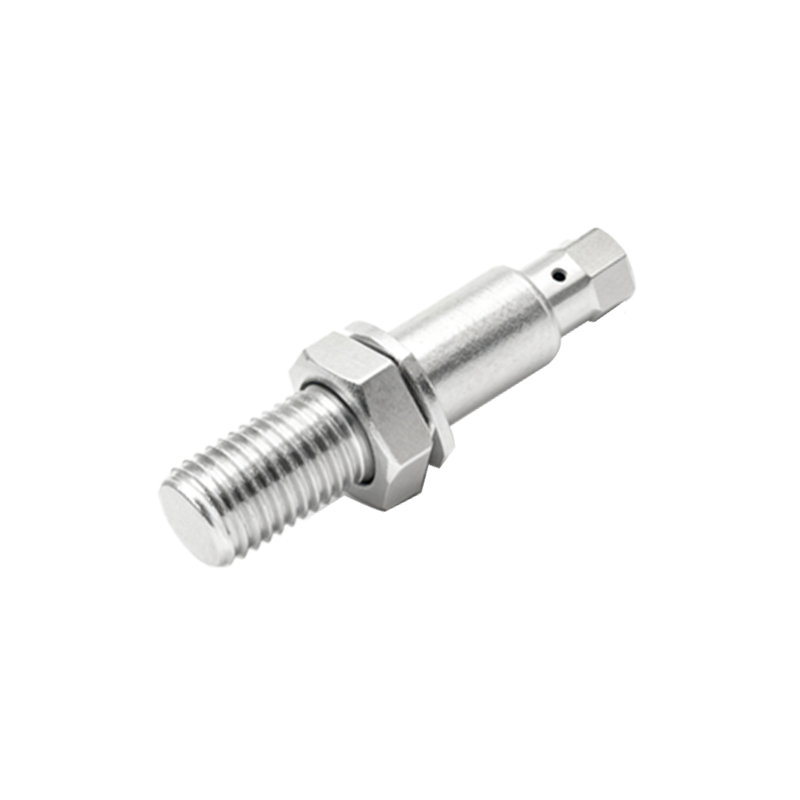
Proximity switch ring sensors, also known as ring-shaped inductive proximity sensors or annular sensors, represent a specialized and highly effective category of non-contact detection devices widely used in industrial automation. Their unique doughnut-shaped design allows for the detection of metallic objects passing through their central aperture, making them indispensable for applications like counting, sorting, inspection, and positioning of small metal parts, fasteners, and components on high-speed production and assembly lines.
The core operating principle of an inductive ring sensor is based on electromagnetic induction and the generation of eddy currents. The sensor consists of a ferrite core arranged in a closed ring configuration. Wound around this core is a coil that forms part of an oscillator circuit. When the sensor is powered, this oscillator generates a high-frequency alternating electromagnetic field that radiates from the coil, primarily concentrated within and around the central opening of the ring.
In its normal state, with no target object present, the oscillator operates at a stable, predetermined amplitude and frequency. The key event occurs when a metallic object—typically ferrous (like iron or steel) or non-ferrous (like aluminum, copper, or brass)—enters the active detection zone within the ring's aperture. This metallic target interacts with the alternating electromagnetic field.
For ferromagnetic materials, the primary effect is a change in the magnetic permeability within the sensor's field. The target object concentrates the magnetic flux lines, effectively increasing the inductance of the coil in the oscillator circuit. For all conductive metals, a more significant effect takes place: the generation of eddy currents. The alternating magnetic field induces circulating currents (eddy currents) on the surface of the target object. These eddy currents, in accordance with Lenz's Law, create their own opposing magnetic field, which acts against the original field generated by the sensor coil.
Both phenomena—the change in permeability for ferrous metals and the eddy current generation for all conductors—result in a measurable loading or damping effect on the oscillator circuit. This damping causes a decrease in the amplitude of the oscillator's oscillations. A subsequent evaluation circuit within the sensor, often a threshold-triggered Schmitt trigger or a specialized IC, continuously monitors this amplitude.
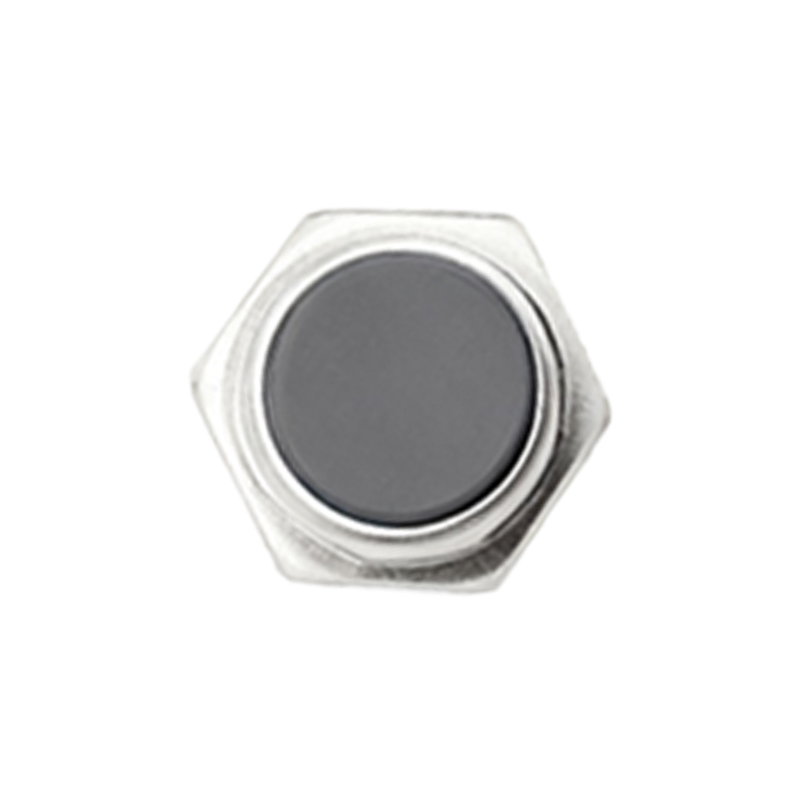
Once the amplitude drop exceeds a predefined threshold, the evaluation circuit triggers a state change in the sensor's output. For a digital output sensor (the most common type), this typically means switching a solid-state output (PNP or NPN) from OFF to ON, or vice-versa, providing a clear signal to a programmable logic controller (PLC), counter, or other control system. The target is detected the moment it passes through the ring, and the output reverts once it exits, providing precise positional information.
Several critical technical parameters define a ring sensor's performance and suitability for an application. The inner diameter is the primary sizing factor, determining the maximum size of object that can pass through. The sensing distance or sensitivity is often adjustable and refers to the effective range within the aperture where detection reliably occurs; it is typically a fraction of the inner diameter. Switching frequency is vital for high-speed applications, indicating how many detection events per second the sensor can reliably handle. Output type (e.g., PNP, NPN, analog, or IO-Link) and housing material (often PBT or stainless steel for durability) are also key selection criteria.
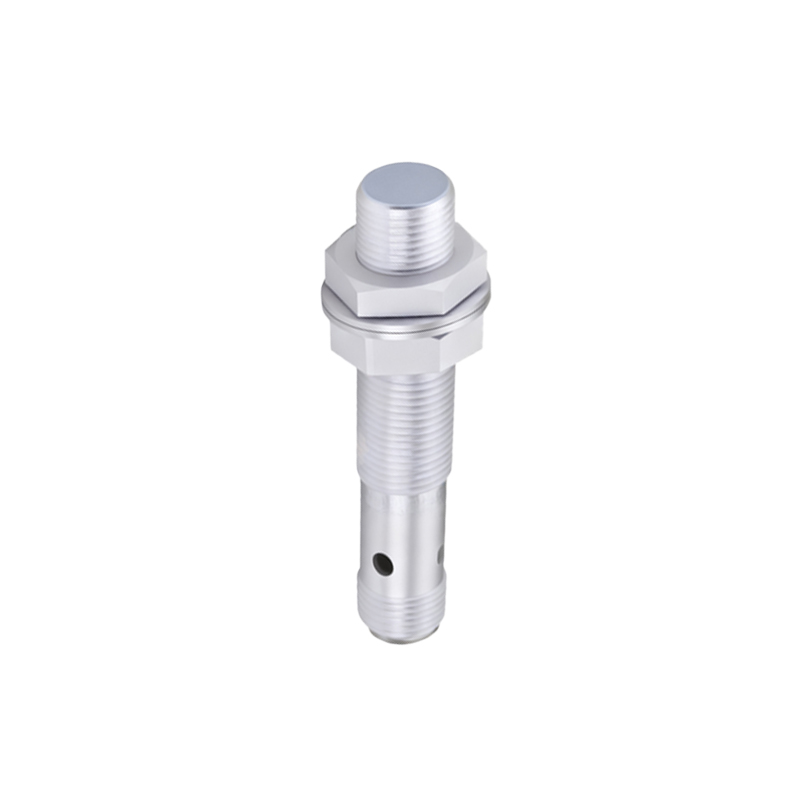
The advantages of ring-type proximity sensors are numerous. They enable true non-contact, wear-free detection, which is crucial for longevity and reliability in demanding 24/7 industrial environments. They offer extremely high response speeds, capable of detecting objects moving at several meters per second. Their design allows for easy integration into conveyor chutes, guide rails, and dispensing systems, providing a seamless "pass-through" inspection point without impeding the product flow. Furthermore, they are largely immune to environmental factors like dust, oil, and non-metallic debris that would obstruct optical sensors.
Typical industrial applications are diverse. In automotive manufacturing, they count pistons, valves, or bearings on feeder lines. In electronics, they verify the presence of metal shields or connectors on PCBs. In fastener and hardware production, they sort and count screws, nuts, and washers, often interfacing with rejection mechanisms to remove defective or out-of-spec parts. They are also used for detecting broken tools (like missing drill bits or taps) by sensing the metal shank, and for monitoring wire or cable cutting processes.
In summary, the proximity switch ring sensor is a robust, precise, and versatile solution for metallic object detection in automated systems. Its operation, grounded in the principles of electromagnetic damping, provides a reliable and maintenance-free method for obtaining critical production data, ensuring quality control, and enabling precise automation sequences across countless manufacturing and packaging industries.