In the realm of electrical engineering and automation, laser autofocus sensors have emerged as pivotal components, driving precision and efficiency across diverse applications. These sensors utilize laser technology to measure distance and adjust focus dynamically, offering unparalleled accuracy in industrial and commercial systems. At their core, laser autofocus sensors operate on principles such as triangulation or time-of-flight (ToF). In triangulation-based systems, a laser diode emits a beam onto a target surface, and the reflected light is captured by a position-sensitive detector. By analyzing the angle of reflection, the sensor calculates the distance to the object, enabling real-time focus adjustments. ToF sensors, on the other hand, measure the time taken for a laser pulse to travel to the target and back, providing rapid distance data even in challenging environments.
The integration of laser autofocus sensors spans multiple industries, from manufacturing and robotics to consumer electronics. In automated production lines, these sensors ensure precise alignment in assembly processes, reducing errors and enhancing throughput. For instance, in semiconductor fabrication, laser autofocus systems maintain optimal focus during lithography, critical for producing microchips with nanometer-scale features. Robotics applications leverage these sensors for object detection and navigation, allowing autonomous machines to operate with high spatial awareness. In consumer devices like smartphones and cameras, laser autofocus enables swift and accurate focusing, improving image quality in varying lighting conditions.
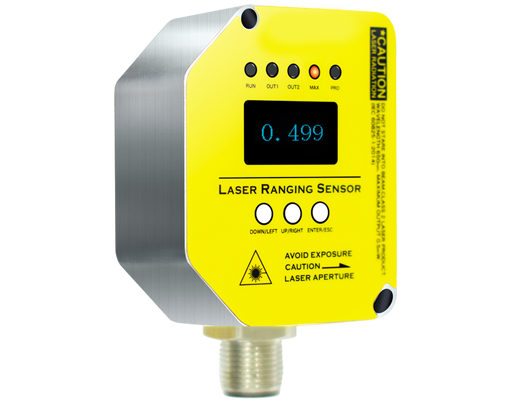
Key advantages of laser autofocus sensors include their non-contact nature, high-speed response, and immunity to ambient light interference. Unlike mechanical focusing mechanisms, laser-based systems minimize wear and tear, extending operational lifespan. They can achieve sub-micron resolution, making them ideal for tasks requiring extreme precision. However, challenges persist, such as sensitivity to surface reflectivity and environmental factors like dust or humidity. Engineers address these by incorporating adaptive algorithms and protective enclosures, ensuring reliability in harsh settings.
Recent advancements in laser autofocus technology focus on miniaturization and integration with artificial intelligence (AI). Compact sensor designs facilitate deployment in space-constrained applications, while AI-driven algorithms enhance adaptive focusing by learning from environmental data. For example, smart sensors can now predict focus shifts based on motion patterns, optimizing performance in dynamic scenarios. Additionally, the rise of Industry 4.0 has spurred the development of networked laser autofocus systems that communicate with central control units, enabling predictive maintenance and data analytics for process optimization.

From an electrical engineering perspective, designing laser autofocus sensors involves careful selection of components like laser diodes, photodetectors, and signal processing circuits. Engineers must consider factors such as power consumption, thermal management, and electromagnetic compatibility to ensure robust operation. Calibration protocols are essential to maintain accuracy over time, often involving automated routines that adjust for drift or degradation. As the demand for automation grows, laser autofocus sensors are poised to evolve further, with innovations in quantum sensing and integrated photonics offering potential breakthroughs in speed and sensitivity.
In summary, laser autofocus sensors represent a convergence of optics, electronics, and software, playing a crucial role in modern electrical systems. Their ability to deliver precise, real-time focus control underpins advancements in automation, quality assurance, and user experience. For engineers and industry professionals, staying abreast of these technologies is vital for driving innovation and addressing future challenges in a rapidly evolving landscape.