In modern industrial automation and precision measurement systems, laser sensors have become indispensable tools due to their high accuracy, non-contact operation, and rapid response times. As an electrical engineer, understanding how to effectively read and interpret data from these sensors is crucial for optimizing system performance, ensuring reliability, and troubleshooting issues. This guide delves into the fundamentals of laser sensor data acquisition, covering key principles, common interfaces, and practical implementation steps.
Laser sensors operate by emitting a focused beam of light toward a target and measuring the reflected signal to determine parameters such as distance, position, or thickness. The data output typically includes analog signals (e.g., voltage or current) or digital signals (e.g., serial communication protocols). To read this data, engineers must first select an appropriate interface based on the sensor model and application requirements. Common interfaces include analog-to-digital converters (ADCs) for analog sensors, which convert voltage levels into digital values readable by microcontrollers or PLCs. For digital sensors, protocols like RS-232, RS-485, Modbus, or Ethernet/IP are often used, enabling direct communication with control systems.

The process begins with sensor calibration, ensuring accurate baseline measurements. Engineers should refer to the sensor's datasheet for specifications on output range, resolution, and response time. For analog sensors, connect the output to an ADC input on a microcontroller, such as an Arduino or industrial PLC. Use programming languages like C++ or ladder logic to read the ADC values, applying scaling formulas to convert raw data into meaningful units (e.g., millimeters or inches). For instance, if a sensor outputs 0-10V corresponding to 0-1000mm, a reading of 5V would translate to 500mm. Noise reduction techniques, such as filtering algorithms or shielded cables, are essential to minimize interference in industrial environments.
Digital sensors require configuring communication parameters like baud rate, data bits, and parity to match the host system. Implement protocol-specific commands to request data; for example, with Modbus, send a query frame to the sensor's register address. The response frame contains the measured value, which can be parsed and processed. In Python or similar languages, libraries like pySerial facilitate serial communication, allowing engineers to automate data logging and analysis. Always validate data integrity through checksums or error-checking mechanisms provided by the protocol.
Real-world applications highlight the importance of robust data reading. In automotive assembly, laser sensors monitor part alignment, where inaccurate readings could lead to defects. By integrating sensors with PLCs via Ethernet/IP, engineers achieve real-time monitoring and adaptive control. Similarly, in warehouse automation, sensors track inventory levels, with data transmitted over Wi-Fi to central databases for inventory management. Challenges like environmental factors (e.g., dust or ambient light) may affect readings; thus, periodic maintenance and software updates are recommended.
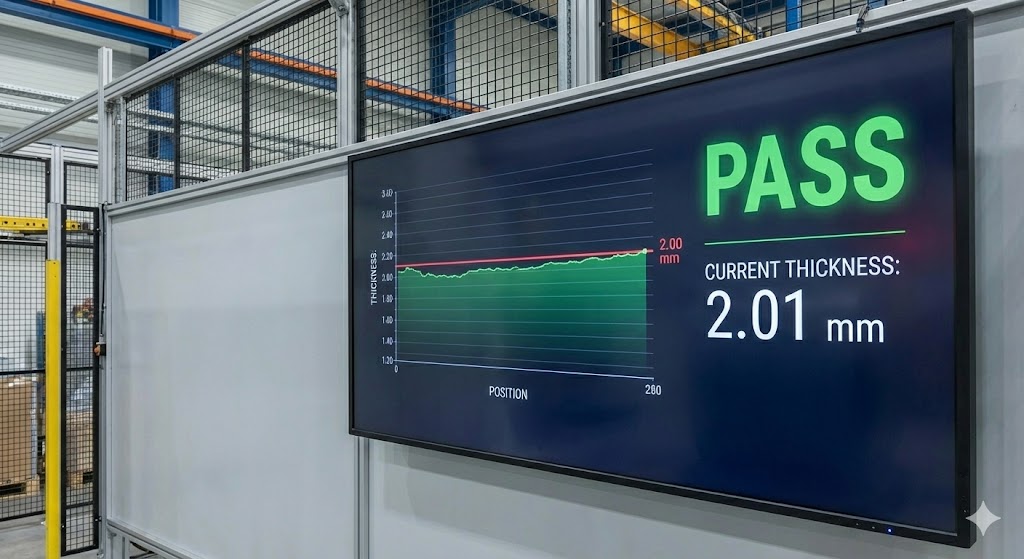
Advanced topics include using IoT platforms to stream sensor data to cloud services for remote analysis, employing machine learning algorithms to predict trends, or implementing redundancy with multiple sensors for critical systems. Engineers should stay updated with industry standards, such as IEC 61131 for programming or IEEE 1451 for smart transducer interfaces, to ensure compatibility and safety.
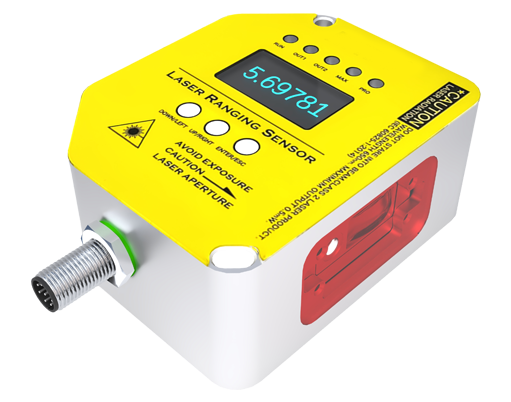
In summary, reading data from laser sensors involves a blend of hardware integration and software development. By mastering interface protocols, calibration techniques, and noise mitigation, engineers can harness the full potential of laser sensors, driving efficiency and innovation in fields from manufacturing to robotics. Always test systems in controlled environments before deployment, and document processes for future reference.