Laser scanning rangefinder sensors, often simply called LiDAR (Light Detection and Ranging) sensors in many contexts, represent a cornerstone technology in modern precision measurement and spatial awareness systems. These devices operate on the fundamental principle of time-of-flight (ToF) or phase-shift measurement. A laser diode emits a focused beam of light towards a target. The sensor then precisely measures the time it takes for the reflected pulse to return to a detector. Given the constant speed of light, this time interval is directly converted into an accurate distance calculation. In a scanning configuration, this laser emitter and receiver are mounted on a rotating or oscillating mechanism, allowing them to rapidly capture distance measurements across a wide field of view, creating a detailed point cloud or profile of the surrounding environment.
The core components of a laser scanning rangefinder include the laser source, the photodetector, precision optics, a high-speed scanning mechanism (like a rotating mirror or MEMS system), and sophisticated signal processing electronics. The performance of these sensors is characterized by key parameters such as measurement range, accuracy, resolution, scanning speed (often measured in Hz or points per second), and angular resolution. For instance, a sensor might have a range of 100 meters with centimeter-level accuracy, scanning 100,000 points per second across a 270-degree horizontal field of view. Different laser classes (Class 1 being eye-safe) are used depending on the application and required power.

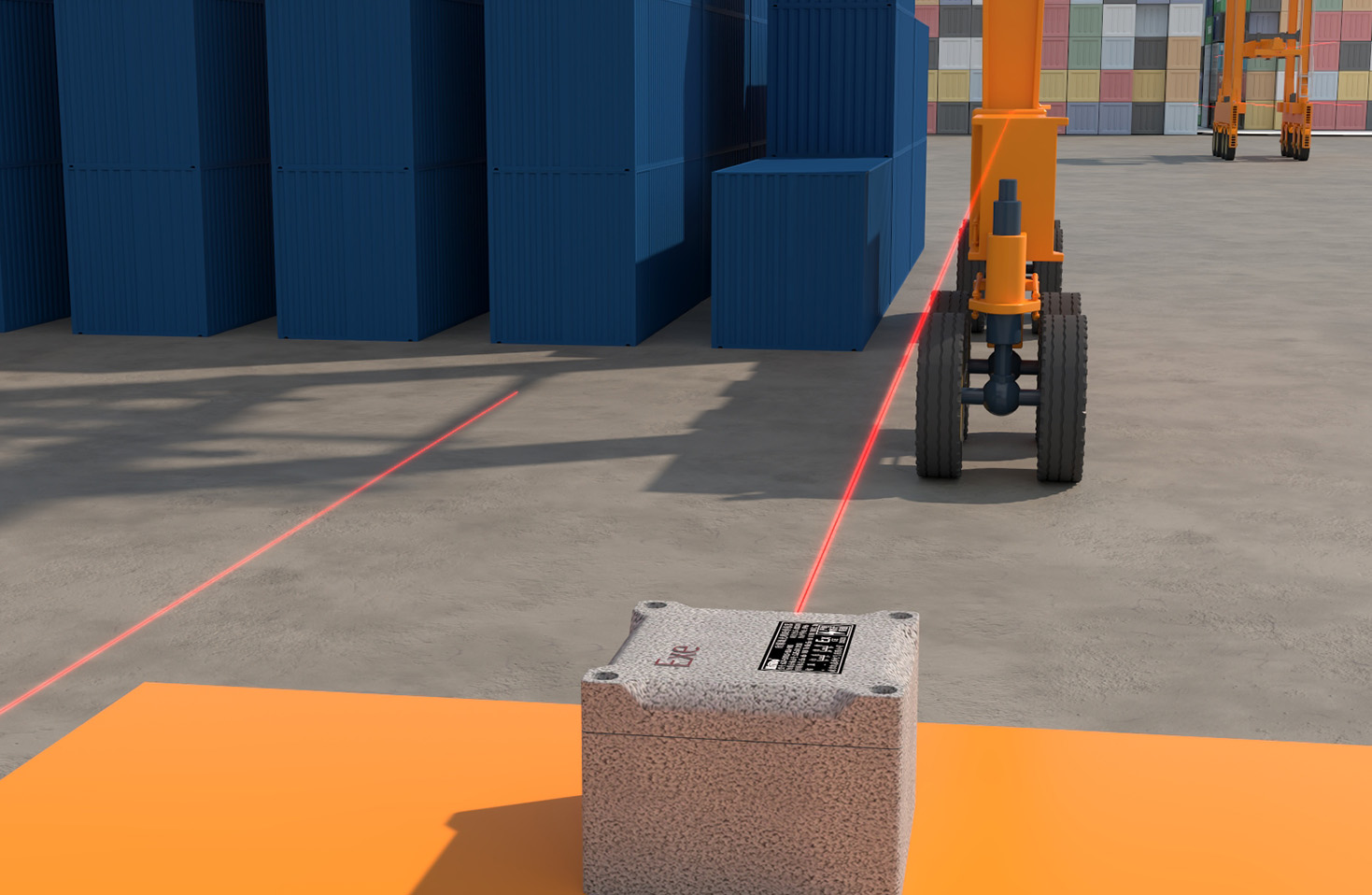
The applications for laser scanning rangefinders are vast and continually expanding. In industrial automation, they are indispensable for tasks like robotic guidance, where they create a 3D map for navigation and obstacle avoidance. They are used for volume measurement in logistics, monitoring stockpiles of bulk materials like coal or gravel. In production lines, they perform precise dimensional checks and profile inspections of manufactured parts. Beyond the factory floor, this technology is critical for autonomous vehicles, providing real-time, high-resolution 3D perception of the road and obstacles. Surveying and mapping professionals use terrestrial and airborne LiDAR to create highly accurate digital elevation models and topographic maps. Even in agriculture, laser scanners help in monitoring crop health and optimizing field management.
When selecting a laser scanning rangefinder for a specific project, several critical factors must be weighed. The operating environment is paramount. Will the sensor be used indoors, outdoors, or in harsh industrial settings with dust, vibration, or extreme temperatures? This dictates the required ingress protection (IP) rating and ruggedness. The necessary measurement range and accuracy directly influence the choice of sensor and its cost. The required field of view and scanning frequency determine if a 2D profile scanner suffices or if a full 3D LiDAR is necessary. Integration ease is another crucial consideration, including the available communication interfaces (Ethernet, USB, CAN bus) and the compatibility of the provided software development kits (SDKs) with existing systems. Finally, the total cost of ownership, balancing performance with budget constraints, is always a decisive element.
Looking ahead, the evolution of laser scanning rangefinder technology is focused on several key trends. The drive for miniaturization and cost reduction, particularly through solid-state LiDAR (which has no moving mechanical parts), is opening new markets in consumer electronics and advanced driver-assistance systems (ADAS). There is a continuous push for higher resolution, longer range, and improved accuracy. Furthermore, sensor fusion—the intelligent combination of data from LiDAR, cameras, and radar—is enhancing the robustness and contextual understanding of perception systems. As processing power increases and algorithms become more advanced, the data from these sensors will be interpreted faster and more intelligently, unlocking even more innovative applications across every sector of industry and research.