In the intricate world of industrial automation and machinery control, sensors act as the vital sensory organs, providing critical data for process stability, safety, and efficiency. Among the most fundamental and widely used types are proximity sensors and speed sensors. While their names suggest distinct functions, they often work in concert within complex systems. Understanding their principles, types, and applications is essential for engineers, technicians, and anyone involved in modern manufacturing and equipment design.
Proximity sensors are non-contact devices designed to detect the presence or absence of an object within a specific range without any physical contact. Their operation hinges on various physical principles. Inductive proximity sensors are the workhorses for detecting metallic objects. They generate an electromagnetic field; when a metal target enters this field, it induces eddy currents, causing a change in the sensor's oscillation amplitude, which triggers a switching signal. These are ideal for harsh environments, resistant to dust, oil, and moisture, and are commonly used for position verification, counting metal parts, or as limit switches. Capacitive proximity sensors, on the other hand, can detect both metallic and non-metallic materials like plastic, wood, or liquids. They sense changes in capacitance caused by the presence of any material that alters the dielectric constant of the space between the sensor's electrode and the ground. This makes them perfect for level detection in tanks, material handling, or detecting filled packages on a conveyor. Photoelectric sensors use light beams (visible, infrared, or laser) to detect objects. They come in through-beam, retro-reflective, and diffuse-reflective modes, offering long detection ranges and high speed, suitable for small object detection, transparent material sensing, and packaging lines. Ultrasonic sensors operate by emitting high-frequency sound waves and measuring the time for the echo to return, effectively used for distance measurement and level sensing of bulk materials.
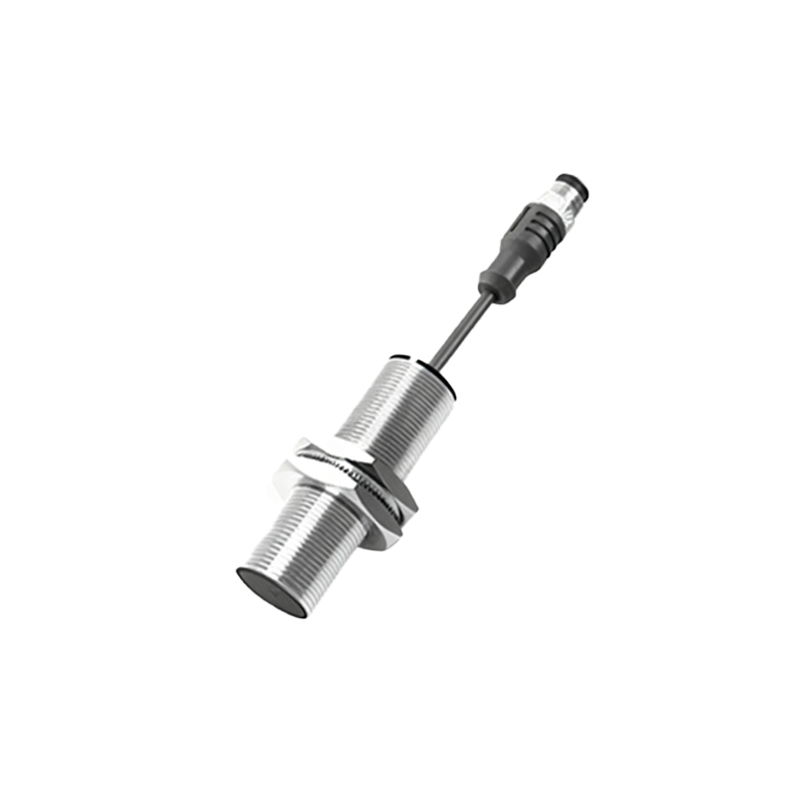
Speed sensors, also known as tachometers or rotational speed sensors, are dedicated to measuring the rotational or linear speed of a component. Their primary output is typically a pulse signal whose frequency is directly proportional to the speed. Magnetic speed sensors, often called variable reluctance sensors, are extremely robust. They consist of a permanent magnet and a coil. When a ferromagnetic gear tooth or key passes the sensor tip, it changes the magnetic flux, inducing a voltage pulse in the coil. The frequency of these pulses reveals the rotational speed. These sensors are famous for their durability in high-temperature and oily environments, such as in automotive crankshaft or camshaft position sensing. Optical encoders provide higher precision. They use a light source and a photodetector facing a coded disk attached to a rotating shaft. As the disk rotates, it interrupts the light beam, generating a digital pulse train. Incremental encoders measure relative speed and position, while absolute encoders provide a unique digital code for each shaft position. Hall-effect sensors are solid-state devices that respond to magnetic fields. A rotating magnet or a ferrous gear with a magnet creates a changing field, causing the Hall sensor to generate a clean digital square wave signal. They are widely used in brushless DC motors, automotive wheel speed sensing for ABS systems, and industrial motor speed feedback.
The synergy between proximity and speed sensors is where system intelligence truly emerges. A classic application is on a conveyor system. Inductive or photoelectric proximity sensors are placed along the line to detect the presence of products, triggering actions like sorting, labeling, or stopping a section. Simultaneously, a speed sensor, perhaps a magnetic pickup monitoring a drive roller's rotation, provides real-time conveyor belt speed feedback. This speed data is fed to a controller (like a PLC or variable frequency drive) to maintain a constant, precise belt velocity, ensuring smooth operation and accurate product spacing. In automotive manufacturing, a robotic arm equipped with proximity sensors precisely locates a car body panel. Meanwhile, speed sensors on the robot's servo motors provide closed-loop feedback to the motion controller, ensuring the arm moves at the exact required speed and trajectory for welding or assembly. In wind turbines, proximity sensors monitor blade pitch position and vibration, while speed sensors meticulously track the rotational speed of the main shaft and generator, providing critical data for power regulation and safety shutdowns.
Selecting the right sensor requires careful consideration of the application's specific demands. Key factors include the target material (metal, plastic, liquid), required sensing distance, environmental conditions (temperature, contaminants, shock/vibration), output signal type (PNP/NPN, analog, pulse), response speed, and installation constraints. For instance, a dirty, oily metal-cutting machine would favor a rugged inductive proximity sensor, while a clean bottling plant might use a photoelectric sensor for detecting glass. Similarly, a high-precision CNC spindle demands an optical encoder, whereas a heavy-duty gearbox in a mining truck might rely on a robust magnetic speed sensor.
The evolution of sensor technology