In the realm of industrial automation, the reliable detection of objects without physical contact is a cornerstone of efficiency and safety. Among the myriad of solutions available, the GL-8H inductive proximity sensor has established itself as a robust and dependable component for countless applications. This article delves into the technical specifications, operational principles, and practical implementation considerations of the GL-8H, providing engineers and technicians with a detailed understanding of its capabilities.
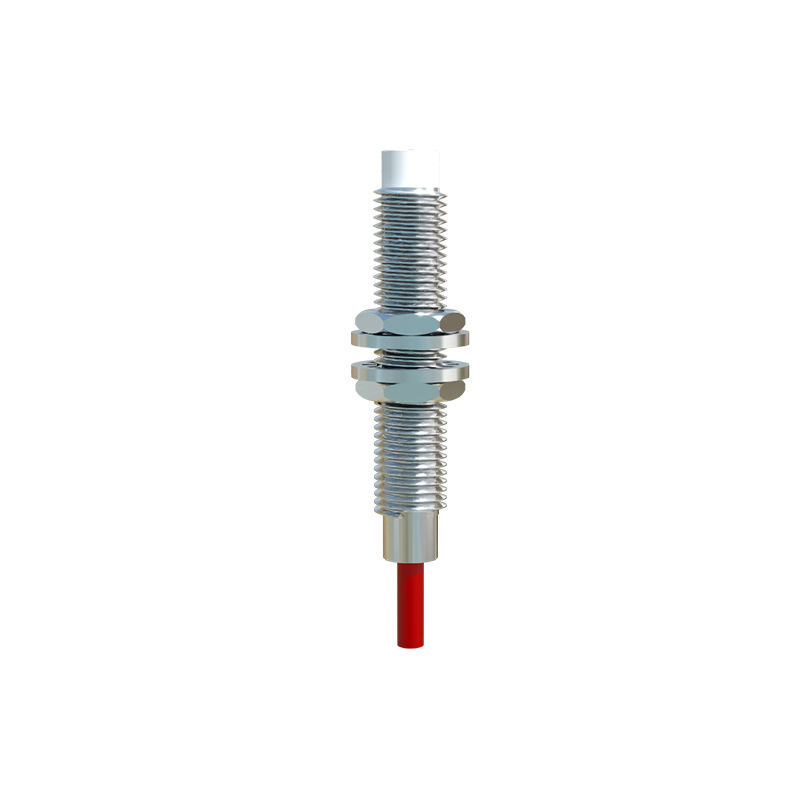
The GL-8H is a cylindrical, shielded inductive proximity sensor designed to detect the presence of metallic objects. Its core operating principle is based on electromagnetic induction. The sensor head contains an oscillator circuit that generates a high-frequency electromagnetic field. When a conductive metal target enters this active field, eddy currents are induced on the target's surface. This causes a change in the oscillation amplitude within the sensor, which is detected by a threshold circuit. This change triggers the sensor's solid-state output switch, sending a signal to the connected controller, such as a PLC.
Key specifications define the GL-8H's performance envelope. Typically, it offers a nominal sensing distance of 8mm, adhering to standard rating conventions. It is crucial to note that this sensing range is calibrated for a standard mild steel target. For other metals, a correction factor must be applied; for instance, the effective range for stainless steel is approximately 0.7 to 0.9 times the rated distance, while for aluminum or copper, it can be as low as 0.3 to 0.4 times. The sensor commonly operates on a wide-range DC supply voltage, often 10-30V DC, making it compatible with standard industrial control voltages. The output configuration is typically a 3-wire design with either a PNP (sourcing) or NPN (sinking) transistor output, capable of switching loads up to 200mA. This allows for direct interfacing with PLC digital input modules, relays, or indicator lamps.
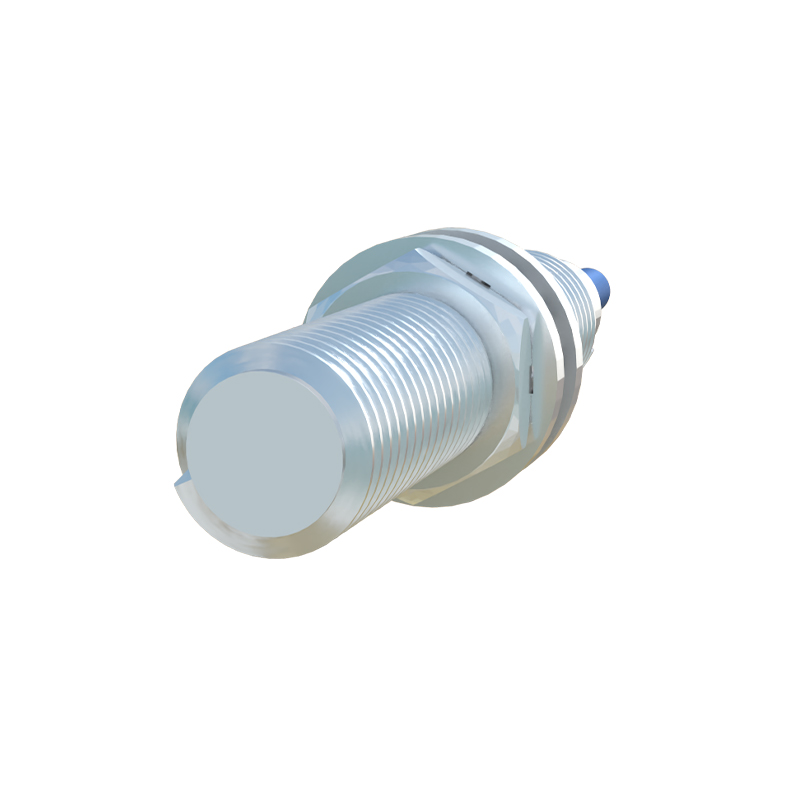
One of the defining features of the GL-8H is its shielded (flush-mountable) design. This allows the sensor to be embedded into a metal mounting bracket without compromising its sensing field or causing false triggers from the surrounding metal. This is a critical advantage in space-constrained or mechanically demanding installations. The housing is usually constructed from nickel-plated brass or stainless steel, providing excellent resistance to mechanical impact, coolant, and cutting oils commonly found in machine tool environments. Many models also boast an IP67 or higher ingress protection rating, ensuring reliable operation in the presence of dust and temporary immersion in water.
In practical application, correct installation and wiring are paramount. Engineers must ensure proper clearance around the sensing face to prevent interference from adjacent metal structures. The wiring should follow the manufacturer's datasheet precisely, connecting the brown wire (typically +V), blue wire (0V), and black wire (output signal) accordingly. A common diagnostic feature is the inclusion of an LED status indicator, which provides visual confirmation of power and output activation. For integration into complex systems, the GL-8H's fast switching speed and high repeat accuracy make it ideal for tasks such as part presence verification on conveyor lines, end-of-travel limit detection on actuators, hole detection in machining centers, and rotary speed monitoring via gear tooth sensing.
When selecting a sensor for a specific task, comparing the GL-8H with alternatives like capacitive or ultrasonic sensors is essential. While inductive sensors are unparalleled for metal detection, they are inherently blind to non-metallic materials. For such applications, a different technology must be employed. Furthermore, environmental factors like extreme temperatures, strong electromagnetic fields, or welding spatter should be considered, potentially necessitating the use of specialized variants with enhanced protection.
Troubleshooting typically involves a systematic approach: verifying power supply voltage, checking for proper target material and distance, inspecting the load connected to the output, and examining the wiring for shorts or breaks. The sensor's inherent simplicity and lack of moving parts contribute to its exceptional mean time between failures (MTBF), a key factor in minimizing downtime.
In conclusion, the GL-8H proximity sensor exemplifies the blend of simplicity, durability, and precision required in modern industrial settings. Its widespread adoption is a testament to its proven performance in detecting metallic objects reliably under challenging conditions. By understanding its technical parameters, operating principles, and application best practices, automation professionals can effectively deploy the GL-8H to enhance system reliability, optimize production cycles, and contribute to safer, more intelligent manufacturing processes. As Industry 4.0 continues to evolve, such fundamental components remain the critical sensory nodes that feed data into the digital ecosystem, making their selection and application as important as ever.