In the realm of industrial automation and control systems, proximity sensors and switches are indispensable components. These devices detect the presence or absence of an object without physical contact, offering reliability, longevity, and precision. Understanding the various types of proximity sensors is crucial for selecting the right technology for specific applications. This guide delves into the primary categories, their operating principles, advantages, and typical use cases.
The most common classification of proximity sensors is based on their sensing technology. Inductive proximity sensors are widely used for detecting metallic objects. They operate by generating an electromagnetic field. When a metal target enters this field, it induces eddy currents, causing a change in the oscillation amplitude. This change is detected by the sensor's circuit, triggering an output signal. Inductive sensors are robust, resistant to environmental factors like dust and moisture, and are ideal for applications in manufacturing, such as position sensing of metal parts, counting, and machine tool monitoring. Their sensing range is typically limited, often up to 60 mm, depending on the sensor size and target material.
Capacitive proximity sensors, on the other hand, can detect both metallic and non-metallic materials, including liquids, plastics, glass, and wood. They function by measuring changes in capacitance. The sensor forms one plate of a capacitor, with the target object acting as the other plate. As the object approaches, the capacitance increases, and once it reaches a threshold, the sensor switches its output. These sensors are versatile and can sense through non-metallic barriers, making them suitable for level detection in tanks, material handling, and packaging industries. However, they can be sensitive to environmental changes like humidity and temperature.
Ultrasonic proximity sensors utilize sound waves beyond the human hearing range. They emit high-frequency ultrasonic pulses and measure the time taken for the echo to return after reflecting off an object. By calculating the time-of-flight, the sensor determines the distance to the target. These sensors are excellent for detecting objects regardless of color, transparency, or material composition. They are commonly used in distance measurement, object presence detection in challenging environments, and liquid level control. Their performance can be affected by factors like air turbulence, temperature, and the angle of the target surface.
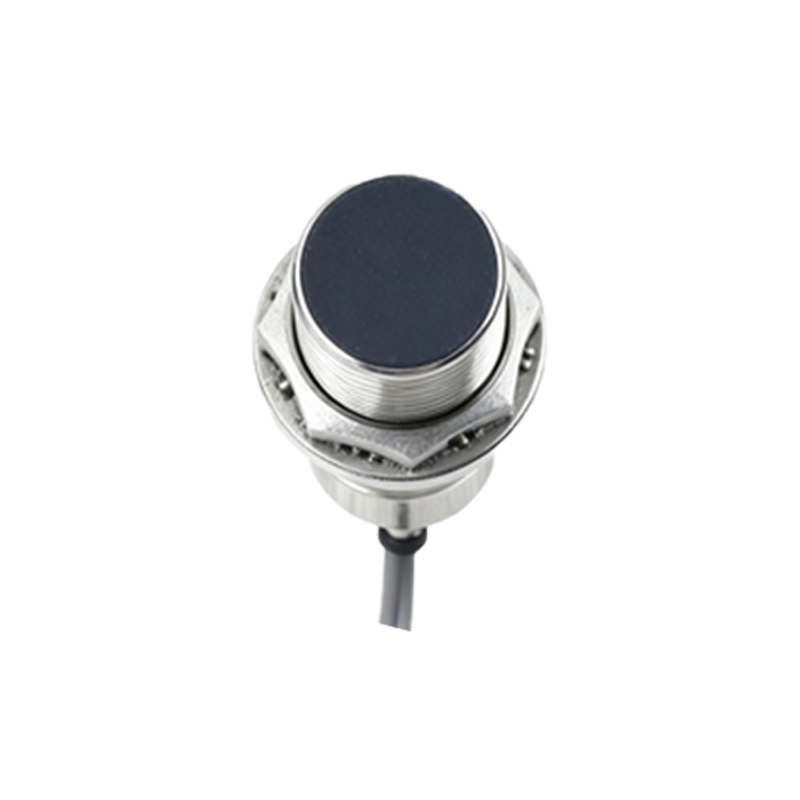
Magnetic proximity sensors, often referred to as reed switches or Hall effect sensors, detect magnetic fields. Reed switches consist of two ferromagnetic reeds sealed in a glass tube. When a magnet approaches, the reeds attract and close the circuit. Hall effect sensors generate a voltage when exposed to a magnetic field. These sensors are highly reliable for position sensing in harsh conditions, such as in hydraulic cylinders, door position detection, and automotive applications. They are immune to dust, dirt, and non-magnetic interference.
Photoelectric sensors, while sometimes categorized separately, function as proximity devices by using light beams. They consist of an emitter (light source) and a receiver. When an object interrupts or reflects the light beam, the receiver detects the change, triggering an output. Types include through-beam, retro-reflective, and diffuse reflective models. Photoelectric sensors offer long sensing ranges and can detect small objects, but they may be affected by ambient light, color, and surface reflectivity. They are prevalent in conveyor systems, packaging, and automated assembly lines.
Each type of proximity sensor has distinct characteristics. Inductive sensors excel in metal detection with high repeatability. Capacitive sensors provide material versatility. Ultrasonic sensors offer reliable distance measurement. Magnetic sensors ensure durability in tough environments. Photoelectric sensors deliver precision for non-contact detection. Selection depends on factors like target material, required sensing distance, environmental conditions (e.g., temperature, humidity, contaminants), response time, and output type (e.g., NPN, PNP, analog, IO-Link).
In industrial settings, proper installation and maintenance are key. Ensuring correct mounting, alignment, and shielding from electrical noise can optimize performance. Regular calibration and cleaning may be necessary, especially for ultrasonic and photoelectric sensors exposed to dirty conditions.
Advancements in technology continue to enhance proximity sensors. Smart sensors with integrated diagnostics, IO-Link communication for data exchange, and miniaturization for compact spaces are emerging trends. These innovations improve system integration, predictive maintenance, and overall efficiency.
Ultimately, the choice of a proximity sensor impacts the reliability and productivity of automated systems. By understanding the types and their applications, engineers can make informed decisions, ensuring optimal performance in diverse industrial scenarios from automotive manufacturing to food processing and beyond.