Laser through-beam sensors, also known as photoelectric through-beam sensors, are fundamental components in modern industrial automation and control systems. These devices operate on a straightforward yet highly effective principle: a laser emitter projects a focused beam of light toward a separate receiver unit positioned directly opposite. When an object passes between the emitter and receiver, it interrupts the light beam, triggering a signal change in the receiver. This signal is then processed to indicate the presence, absence, or precise position of the object.
The core advantage of the through-beam configuration lies in its exceptional sensing range and reliability. Because the receiver detects the direct beam from the dedicated emitter, these sensors can operate over long distances—often several meters—even in challenging environments with dust, steam, or ambient light interference. The high signal-to-noise ratio ensures stable detection, minimizing false triggers. This makes them ideal for applications such as object counting on high-speed conveyor belts, detecting oversized packages, monitoring bin levels, and providing safety curtains in hazardous areas.
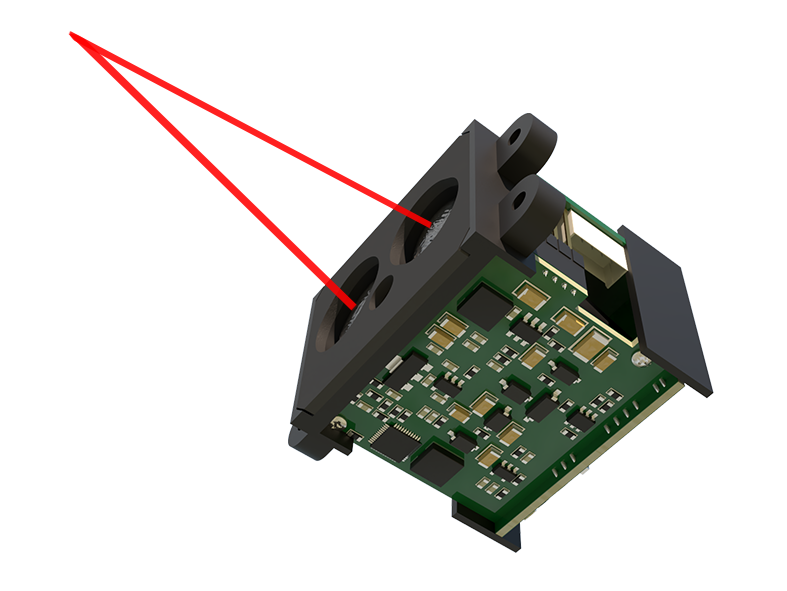
Key technical specifications define a sensor's suitability for a task. The sensing range, or maximum distance between emitter and receiver, is paramount. Laser models typically offer longer ranges than standard LED-based photoelectric sensors. The spot size, or the diameter of the laser beam at the receiver, determines the minimum object size that can be reliably detected. A smaller, more focused spot allows for the detection of very fine objects like wires or thin labels. Response time is another critical factor, especially in high-speed production lines, where sensors must detect objects moving at rapid velocities. Modern laser through-beam sensors offer response times in the microsecond range.
When selecting a laser through-beam sensor, engineers must consider the environmental conditions. While robust, the optical lenses must be kept clean from heavy contamination to maintain performance. The housing material, typically stainless steel or rugged plastics with high IP (Ingress Protection) ratings like IP67, ensures resistance to water, oil, and physical impact. Furthermore, the choice of laser class (usually Class 1 or Class 2, which are safe under normal operating conditions) is important for workplace safety.
Integration into a control system is streamlined through various output options. Common outputs include NPN, PNP (transistor), relay, or analog current/voltage signals. These outputs connect directly to PLCs (Programmable Logic Controllers), robotic controllers, or other automation hardware. Advanced models feature IO-Link communication, enabling digital parameter setting, real-time diagnostics, and condition monitoring, which are key for Industry 4.0 and predictive maintenance strategies.

In practice, installation and alignment are crucial steps. Precise mechanical mounting is required to ensure the emitter's beam strikes the receiver's detection area. Many receivers incorporate alignment indicators, such as LED bargraphs or audible signals, to simplify this process. Once aligned, the system provides highly stable operation with minimal drift over time.
Compared to other sensing modes like retro-reflective or diffuse reflective, through-beam sensors offer the highest performance in terms of range and environmental immunity. However, they require wiring and mounting at two points, which can be a drawback in space-constrained applications. The choice always depends on the specific requirements of accuracy, environmental factors, and mechanical design.

In conclusion, laser through-beam sensors are indispensable tools for precise, long-range, and reliable object detection in industrial settings. Their continued evolution, incorporating smarter diagnostics and connectivity, solidifies their role in building more efficient, safe, and intelligent automated systems. Engineers leverage their robustness and precision to solve complex detection challenges across manufacturing, packaging, material handling, and automotive industries.