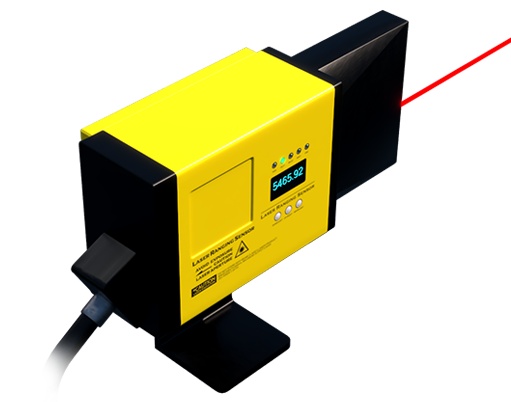
In the rapidly evolving landscape of industrial automation, laser sensor screens have emerged as a pivotal technology, enabling precise detection, measurement, and control in diverse environments. These screens, often integrated into complex systems, utilize laser beams to interact with objects, providing high-accuracy data that drives efficiency and safety. Unlike traditional sensors, laser-based variants offer non-contact operation, reducing wear and tear while maintaining consistent performance in harsh conditions such as extreme temperatures, dust, or vibrations.
The core mechanism of a laser sensor screen involves emitting a focused laser beam toward a target surface. When the beam strikes the object, it reflects back to a receiver within the sensor. By analyzing the time-of-flight, phase shift, or triangulation principles, the screen calculates critical parameters like distance, position, thickness, or presence of materials. This process occurs in milliseconds, allowing real-time monitoring essential for applications in manufacturing, robotics, and quality assurance. For instance, in automotive assembly lines, laser sensors screen components for defects, ensuring each part meets stringent standards without physical contact that could cause damage.
Advancements in laser technology have expanded the capabilities of these screens. Modern versions incorporate features like adaptive focusing, which adjusts the beam intensity based on environmental factors, and multi-point scanning, enabling simultaneous detection across wide areas. Additionally, integration with IoT platforms allows laser sensor screens to transmit data to centralized systems, facilitating predictive maintenance and data-driven decision-making. In logistics, they streamline sorting processes by accurately identifying package dimensions, while in healthcare, they assist in non-invasive diagnostic tools.
Despite their advantages, implementing laser sensor screens requires careful consideration. Factors such as ambient light interference, surface reflectivity, and alignment precision can impact accuracy. Engineers must select appropriate types—like diffuse reflection, retro-reflective, or through-beam sensors—based on specific use cases. Regular calibration and shielding from contaminants are also crucial to sustain long-term reliability. Looking ahead, innovations in miniaturization and AI integration promise to enhance their adaptability, making laser sensor screens even more integral to smart factories and beyond.

Overall, laser sensor screens represent a cornerstone of modern industrial engineering, combining speed, precision, and durability. As industries continue to automate, their role in optimizing processes and ensuring safety will only grow, underscoring the importance of understanding their design and application for professionals in the field.