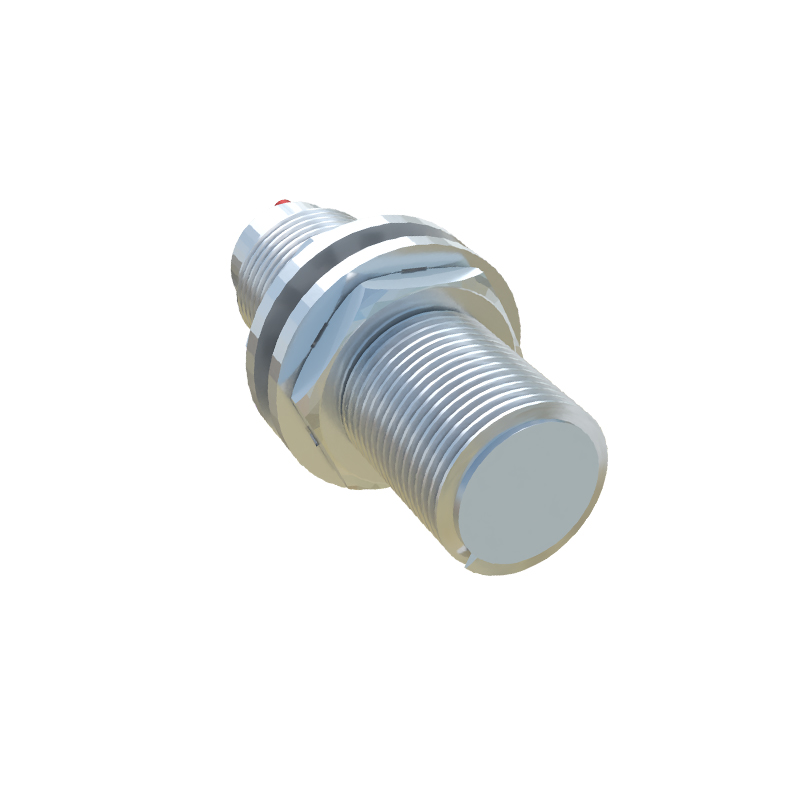
Analog proximity sensors are essential components in modern industrial automation, offering continuous distance measurement for precise control and monitoring. Unlike their digital counterparts that provide simple on/off signals, analog sensors output a varying signal—typically voltage (0-10V) or current (4-20mA)—that is proportional to the distance between the sensor and the target object. This capability makes them invaluable in applications requiring granular feedback, such as position control, thickness measurement, and tension regulation.
When selecting an analog proximity sensor model, engineers must consider several key specifications. Sensing range is paramount; common models offer ranges from 2mm to 60mm, with specialized variants extending further. The output type is another critical factor. Voltage-output models (e.g., 0-10V DC) are suitable for shorter cable runs and simpler interfaces, while current-output models (4-20mA) provide better noise immunity over long distances and are ideal for harsh industrial environments. Additionally, the response time, typically between 0.5ms to 2ms, determines how quickly the sensor can reflect distance changes, impacting high-speed automation systems.
Popular model series, such as the IFM IY5000 or Pepperl+Fuchs NJ2, illustrate advanced features. These models often incorporate temperature compensation to maintain accuracy across operating conditions, high IP ratings (IP67 or IP69K) for durability against dust and water, and embedded diagnostics like IO-Link communication for predictive maintenance. The housing material—stainless steel for corrosive settings or PBT plastic for general use—also defines application suitability.
Installation and calibration practices significantly influence performance. Proper alignment perpendicular to the target, adequate shielding from electrical interference, and stable power supplies are mandatory. Calibration involves setting the measurement span using teach-in buttons or remote commands, ensuring the analog signal corresponds accurately to the minimum and maximum distances. Regular verification against known references prevents drift, especially in precision tasks like robotic arm positioning or roll diameter monitoring in winding machines.
In summary, analog proximity sensors bridge the gap between detection and measurement, enabling sophisticated automation. By matching model specifications—output type, range, and environmental ratings—to application demands, engineers can enhance system accuracy, reliability, and efficiency. As Industry 4.0 evolves, these sensors continue to integrate smarter features, solidifying their role in adaptive manufacturing and quality control processes.