In the realm of modern imaging, the integration of laser technology with camera image sensors represents a significant leap forward in precision, speed, and capability. This synergy is not merely about illumination but involves sophisticated interactions at the photonic and electronic levels, enabling advancements in applications ranging from consumer smartphones to industrial machine vision and scientific instrumentation. This article delves into the technical principles, key applications, and future trends of laser technology as it pertains to image sensors.
Fundamentally, an image sensor, typically a CCD (Charge-Coupled Device) or more commonly today, a CMOS (Complementary Metal-Oxide-Semiconductor) sensor, converts incoming photons into electrical signals. Each photosite, or pixel, on the sensor accumulates charge proportional to the light intensity it receives. The role of laser light in this process is multifaceted and highly controlled.
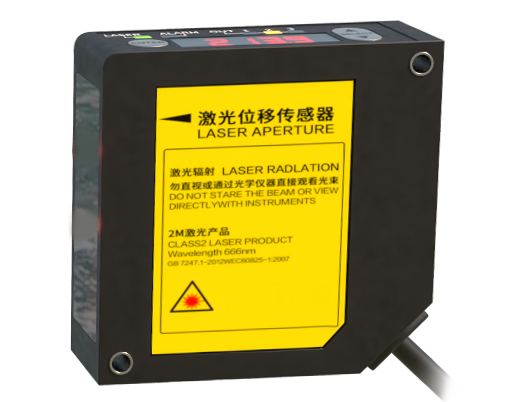
One primary application is in LiDAR (Light Detection and Ranging) systems, particularly for depth sensing and 3D mapping. Here, a laser emitter projects a structured pattern of infrared (IR) laser dots or a modulated laser beam onto a scene. The image sensor, often a specialized SPAD (Single-Photon Avalanche Diode) or ToF (Time-of-Flight) sensor, detects the reflected laser light. By measuring the phase shift or the time delay between the emitted and reflected pulses, the sensor can calculate precise distance information for each point, constructing a detailed depth map. This technology is crucial for facial recognition in smartphones, autonomous vehicle navigation, and augmented reality.
Beyond depth sensing, lasers are employed for autofocus (AF) assistance, especially in low-light conditions. A low-power laser projector can emit a pattern onto the subject. The image sensor analyzes the distortion or position of this pattern to quickly determine subject distance, allowing the lens system to achieve focus rapidly and accurately, a method often superior to traditional contrast-detection AF in challenging lighting.
In industrial and scientific contexts, lasers enable structured light scanning. A known laser grid or line pattern is projected onto an object. The image sensor captures the deformation of this pattern caused by the object's surface contours. Sophisticated algorithms then reconstruct a high-resolution 3D model of the object. This is indispensable for quality control, reverse engineering, and metrology.
The interaction demands specific sensor characteristics. For IR lasers, the sensor must have high quantum efficiency in the near-infrared spectrum (typically around 850nm or 940nm). This often requires removing or modifying the standard IR-cut filter found in color cameras. Furthermore, sensors for ToF applications need extremely fast electronic shutters or specialized pixels capable of capturing light in very narrow time gates, on the order of nanoseconds.
Laser safety is a paramount concern in design. For consumer devices, laser power is strictly regulated (under Class 1 safety limits) to be eye-safe. System design must ensure that even under fault conditions, harmful exposure is prevented. This involves current limiting, monitoring circuits, and robust optical design.
Looking ahead, the convergence continues. Emerging trends include the development of frequency-modulated continuous-wave (FMCW) LiDAR, which uses coherent laser detection to measure both distance and velocity simultaneously with high accuracy. This requires even more sophisticated sensor and laser integration. Another frontier is the use of VCSEL (Vertical-Cavity Surface-Emitting Laser) arrays as the light source. VCSELs are efficient, can be fabricated in dense arrays, and allow for complex pattern projection, making them ideal partners for advanced image sensors.
Furthermore, research into quantum image sensors and single-photon cameras promises to push sensitivity to its ultimate limit, where lasers could be used for imaging with extremely low photon counts, beneficial for biomedical imaging or secure quantum communication.
In conclusion, the marriage of laser technology and camera image sensors is a cornerstone of contemporary electro-optics. It transforms passive sensors into active, measuring instruments capable of perceiving not just color and intensity, but the precise geometry and dynamics of the world in three dimensions. As laser diodes become smaller, more efficient, and less expensive, and as image sensors become faster and more intelligent, this symbiotic relationship will undoubtedly unlock new possibilities across countless industries, driving innovation in how machines see and interact with their environment.