In the realm of industrial automation and precision measurement, laser sensors have become indispensable tools, offering unparalleled accuracy, speed, and reliability. However, the performance and longevity of these sophisticated devices are heavily dependent on a critical yet often overlooked component: the connecting cable. Selecting the correct laser sensor cable model is not merely a matter of connectivity; it is a fundamental engineering decision that impacts signal integrity, system uptime, and overall safety in demanding industrial environments. This guide delves into the key specifications, standards, and selection criteria for laser sensor cables, empowering engineers and system integrators to make informed choices.
The primary function of a laser sensor cable is to transmit power to the sensor and relay data signals—whether digital (e.g., switching signals, serial data) or analog (e.g., 0-10V, 4-20mA)—back to the control system. The cable acts as the sensor's lifeline, and any compromise in its quality can lead to measurement errors, intermittent failures, or complete sensor malfunction. Therefore, understanding cable construction is paramount.
Core Specifications and Construction:
A standard laser sensor cable consists of several key elements. The conductor, typically stranded copper for flexibility, is defined by its gauge (e.g., AWG 22, AWG 24). Thicker gauges offer lower electrical resistance, which is crucial for longer cable runs to prevent voltage drop, especially for sensors with higher power requirements. The number of cores is equally vital. Common configurations include 4-core cables (often for basic power and a switching output) and 5-core or more for sensors with multiple outputs (e.g., PNP and NPN) or analog interfaces.
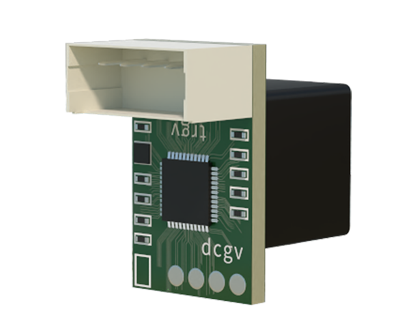
Insulation material around each conductor and the overall jacket material determine the cable's environmental resilience. Polyvinyl Chloride (PVC) is common for general-purpose use, offering good flexibility and cost-effectiveness. For harsh environments involving oils, coolants, or extreme temperatures, polyurethane (PUR) jackets are preferred due to their superior resistance to abrasion, chemicals, and hydrolysis. In high-flex, continuous motion applications (such as on robot arms or cable carriers), cables with specially formulated PUR or thermoplastic elastomer (TPE) jackets are mandatory to withstand millions of flex cycles without failure.
Shielding is non-negotiable for ensuring signal integrity in electrically noisy industrial settings. Effective shielding, typically a braided copper shield or a foil laminate, protects the low-voltage sensor signals from electromagnetic interference (EMI) and radio-frequency interference (RFI) generated by motors, drives, and welding equipment. A proper shield must be grounded at the controller end to drain interference effectively.
Connector Types and Standardization:
The connector interface is a critical part of the cable model. Many industrial laser sensors utilize standardized circular connectors for robustness and secure mating. The M8 and M12 connectors, with their metric threading, are industry staples. M8 connectors, typically with 3 or 4 pins, are common for compact sensors. M12 connectors, with 4, 5, 8, or 12 pins, offer more connections for complex sensors. The pinout (assignment of each wire's function) must strictly match the sensor's requirements. For example, a 5-pin M12 connector might be wired for DC power (pins 1+/2-), a PNP output (pin 3), an NPN output (pin 4), and a teach-in or diagnostic signal (pin 5).
Other connector families include the larger M23 for high-power sensors or specialized rectangular connectors. It is essential to verify not just the connector size and pin count, but also its coding (e.g., A-coded, B-coded for different protocols) and gender (male on cable vs. female on sensor, or vice-versa).
Selection Criteria for Specific Applications:
The application dictates the cable model. For fixed installations in control cabinets with minimal movement, a standard PVC-jacketed, shielded cable is sufficient. For machine tools exposed to cutting oils and coolants, a cable with a PUR jacket and high chemical resistance is mandatory. In food and beverage or pharmaceutical plants, cables may require FDA-compliant or USDA-approved jacket materials that are resistant to frequent washdowns with caustic cleaners.
For dynamic applications, such as sensors mounted on moving gantries or robotic end-effectors, specifying a dedicated "high-flex" or "continuous flex" cable is critical. These cables feature finely stranded conductors, special insulation, and a jacket optimized for tight bending radii and repeated torsion. Using a standard cable in a high-flex application will lead to premature conductor breakage and failure.
Cable length is another practical consideration. While longer cables offer installation flexibility, they increase susceptibility to voltage drop (for power lines) and signal attenuation or noise pickup (for signal lines). Manufacturers often specify maximum recommended cable lengths for their sensors. Using a cable with a larger conductor gauge (e.g., AWG 20 instead of AWG 22) can mitigate voltage drop issues for longer runs.
Industry Standards and Certifications:
Compliance with international standards ensures safety and performance. Look for cables that meet or exceed relevant standards such as UL/CSA for North America, CE for Europe, and specific norms like IEC 61131 for industrial control equipment. Cable ratings, such as IP67 (dust-tight and protected against temporary immersion), are crucial for outdoor or washdown environments. For use in potentially explosive atmospheres (ATEX/IECEx zones), specially certified cables with blue jackets may be required.
In conclusion, the laser sensor cable is a vital link in the measurement chain. Specifying the correct model—considering conductor size, core count, jacket material, shielding, connector type, and application-specific durability—is an engineering task that directly correlates with system reliability and precision. By treating the cable with the same level of scrutiny as the sensor itself, engineers can build robust, maintenance-friendly automation systems that deliver accurate data for years to come. Always consult the sensor manufacturer's datasheet for their recommended or approved cable models as a starting point for selection.