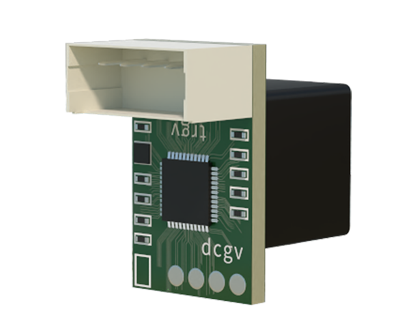
In the world of industrial automation, robotics, and surveying, laser distance sensors stand as pillars of precision. These devices emit a laser beam towards a target and calculate distance by measuring the time it takes for the light to reflect back or through phase-shift analysis. Their applications range from construction layout and warehouse logistics to intricate assembly line quality control. However, the high-performance heart of these sophisticated instruments—the laser diode and processing circuitry—is entirely dependent on a more humble yet equally critical component: the battery. The choice and management of the power source are not mere afterthoughts but fundamental engineering decisions that dictate a sensor's reliability, portability, and overall effectiveness in the field.
For portable and handheld laser distance sensors, the battery is the sole lifeline. The primary considerations revolve around chemistry, capacity, voltage stability, and environmental resilience. Lithium-ion (Li-ion) and Lithium Polymer (Li-Po) batteries are overwhelmingly the dominant choices. Their high energy density provides extended operational time from a compact, lightweight package—a crucial factor for tools used in overhead or prolonged fieldwork. Compared to older Nickel-Metal Hydride (NiMH) cells, lithium-based batteries offer a flatter discharge curve. This means the sensor's laser output and measurement accuracy remain consistent throughout most of the battery's charge cycle, only dropping off sharply near complete depletion. Voltage stability is paramount because the laser diode requires a precise and steady current to maintain its calibrated wavelength and output power; any significant fluctuation can introduce measurement errors.
Beyond basic chemistry, the battery management system (BMS) integrated into modern sensors is a technological marvel in miniature. A robust BMS performs several vital functions: it protects the cells from over-charge and over-discharge (both of which permanently damage lithium batteries), manages safe charging currents and temperatures, and monitors overall cell health. Some advanced systems even provide real-time battery status data to the sensor's main processor, which can then relay estimated remaining runtime to the user via display interfaces. This proactive power management prevents unexpected shutdowns during critical measurements. Furthermore, for sensors deployed in extreme conditions—such as freezing temperatures at a construction site or the heat of a factory floor—the battery's operational temperature range is a key specification. Specialized lithium chemistries or external thermal management may be required to ensure both safety and performance.
The impact of battery choice directly correlates with sensor performance metrics. A high-quality, high-capacity battery ensures longer continuous operation, reducing downtime for recharging or replacement. This directly translates to increased productivity on the job site. More critically, it ensures measurement consistency. As a battery ages and its internal resistance increases, its ability to deliver peak current diminishes. For a laser sensor that may require brief, high-current pulses for its emitter, an aging battery might cause a slight drop in laser intensity. While perhaps imperceptible to the user, this can affect the signal-to-noise ratio of the return beam, potentially reducing the maximum measurable distance or accuracy in low-reflectivity scenarios. Therefore, implementing a disciplined battery maintenance and replacement schedule is part of professional best practices.

Looking forward, battery technology continues to evolve, promising further enhancements for laser measurement tools. Developments in solid-state batteries offer the potential for even greater energy density and safety. Furthermore, the integration of efficient energy harvesting methods, such as small solar panels for outdoor sensors or kinetic energy recovery for handheld devices used in dynamic environments, could supplement primary batteries, pushing operational lifetimes toward near-perpetuity. For now, the relationship remains clear: the laser sensor provides the precision, but the battery provides the possibility. Specifying, maintaining, and understanding the power source is not just about keeping the tool on; it's about ensuring that every single measurement it makes is as accurate and reliable as the first. Engineers and technicians must give power system design equal weight to optical and signal processing design when selecting or deploying these essential instruments. The quest for micron-level accuracy begins with a stable volt.