In the realm of industrial automation and precision measurement, laser through-beam sensors stand as a cornerstone technology. These devices, often simply called through-beam sensors or photoelectric barriers, operate on a fundamental principle: a laser emitter projects a focused beam of light to a separate receiver unit. The receiver continuously monitors the intensity of this received beam. An object passing between the emitter and receiver interrupts the light path, causing a detectable drop in the received signal, which triggers the sensor's output. This straightforward yet highly effective method forms the basis for countless applications requiring reliable object detection, positioning, and counting.
The core advantage of laser through-beam sensors lies in their exceptional sensing range and stability. Unlike diffuse reflection sensors that rely on light bouncing off a target, the through-beam configuration is largely immune to variations in the target's color, surface texture, or reflectivity. Whether detecting a clear glass bottle, a matte black rubber piece, or a shiny metal component, the sensor responds consistently as long as the object is sufficiently opaque to interrupt the beam. This makes them incredibly versatile and reliable. Furthermore, the focused laser beam allows for very precise detection points and enables operation over long distances—often several meters—far exceeding the capabilities of standard LED-based photoelectric sensors.

Modern laser through-beam sensors incorporate advanced features to enhance performance in challenging environments. Many models utilize modulated laser light, meaning the emitted beam is pulsed at a specific frequency. The receiver is tuned to recognize only this specific frequency, effectively filtering out ambient light from factory lighting, sunlight, or other sources. This results in superior immunity to optical interference and stable operation even in brightly lit conditions. Additionally, high-end models offer adjustable sensing windows or time-delay functions, allowing engineers to fine-tune the sensor's response to avoid false triggers from fast-moving debris or to ensure a stable signal is present before switching.
The applications for these sensors are vast and span nearly every industry. In packaging and material handling, they are indispensable for detecting the presence of products on conveyors, ensuring correct box flap closure, or counting items at high speeds. In automotive assembly, they verify the presence of components like pistons or valves within engine blocks. The electronics industry relies on them for precise PCB positioning before placement or soldering operations. In logistics, they form the safety light curtains for automated guided vehicles (AGVs) and robotic cells, ensuring human safety by halting machinery when a beam is broken. Their ability to detect tiny objects, such as thin wires or micro-components, is also critical in precision manufacturing.
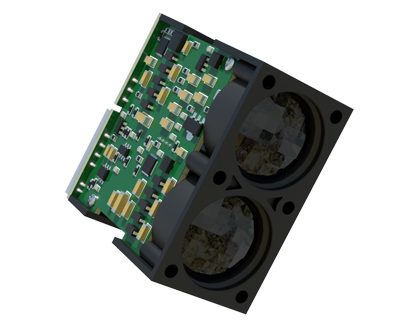
Selecting the right laser through-beam sensor requires careful consideration of several key parameters. First is the required sensing distance, which must be within the sensor's specified range. The size of the object to be detected dictates the necessary beam diameter or spot size; smaller objects require a more focused beam. The response time, often in the microsecond range, must be fast enough to keep up with the application's cycle speed. Environmental factors are crucial: sensors rated with a high IP (Ingress Protection) code, such as IP67 or IP69K, are necessary for washdown areas or dusty environments. The output type (PNP/NPN, relay, analog) must be compatible with the downstream controller (PLC, robot). Finally, mechanical considerations like housing material (stainless steel vs. plastic), mounting options, and the availability of alignment indicators for easy setup play a significant role in long-term reliability.
In conclusion, laser through-beam sensors represent a mature, robust, and essential technology in automated systems. Their principle of operation is simple, but the engineering behind their stability, precision, and environmental robustness is sophisticated. By providing a non-contact, long-range, and material-independent detection solution, they solve a fundamental challenge in automation. When selected and installed correctly, they deliver years of trouble-free service, forming the invisible yet critical sensory network that enables modern manufacturing, packaging, and logistics to function with high efficiency and reliability. As automation evolves towards greater flexibility and intelligence, the foundational role of reliable sensing technologies like the laser through-beam sensor remains unquestioned.