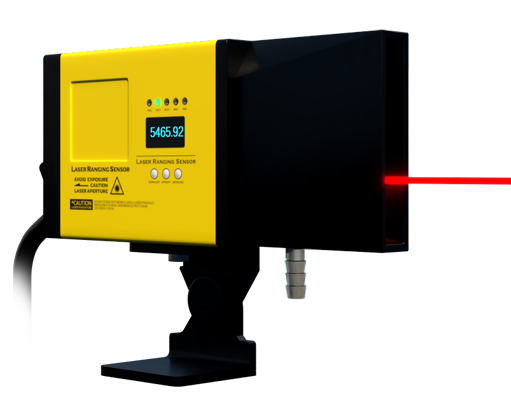
In the realm of precision measurement and industrial automation, laser distance measurement sensors have become indispensable tools. These devices offer a non-contact, high-accuracy method for determining the distance to a target object, revolutionizing processes from quality control to robotics. Unlike traditional mechanical methods, laser sensors provide speed, reliability, and flexibility that are critical in modern manufacturing and research environments.
The fundamental principle behind most laser distance sensors is based on time-of-flight (ToF) or triangulation. In the time-of-flight method, the sensor emits a short pulse of laser light towards the target. A photodetector within the sensor then captures the light reflected back. By precisely measuring the time interval between the emission and the reception of the pulse, and knowing the constant speed of light, the sensor's internal processor calculates the distance to the target with remarkable accuracy. This method is excellent for longer ranges, often up to several hundred meters, with typical accuracies in the millimeter range.
The triangulation method, on the other hand, is often used for shorter ranges and higher precision. Here, a laser diode projects a visible spot onto the target surface. The reflected light is focused onto a position-sensitive detector (like a CCD or CMOS array) at a known angle relative to the laser emitter. As the target distance changes, the position of the reflected spot on the detector shifts. Using trigonometric calculations, the sensor determines the exact distance. This technique can achieve sub-micron resolutions, making it ideal for applications requiring extreme precision.
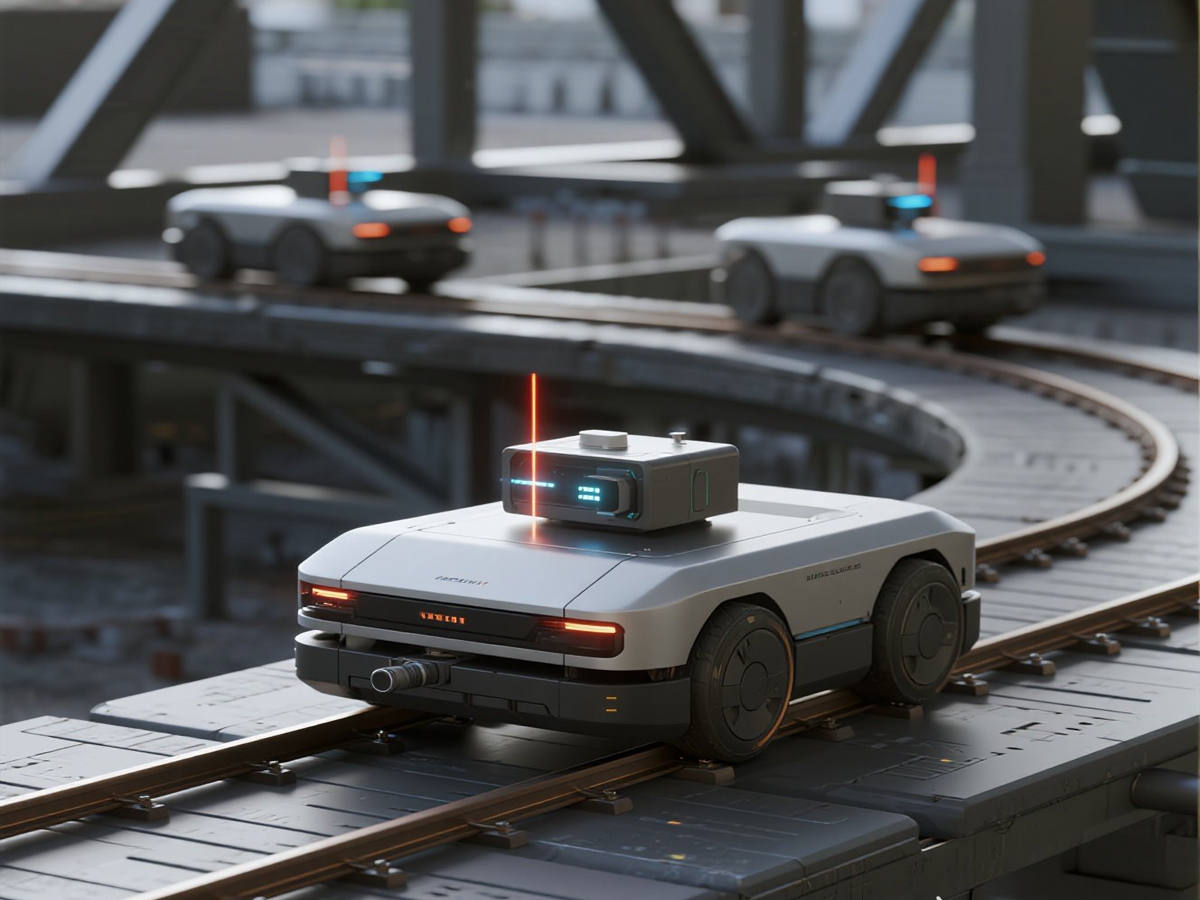
The applications for laser distance sensors are vast and varied. In industrial automation, they are crucial for positioning, profiling, and dimension checking. For instance, on a conveyor belt, sensors can continuously monitor the height or width of products to ensure they meet specifications, triggering reject mechanisms for out-of-tolerance items. In robotics, these sensors provide essential feedback for navigation, object handling, and collision avoidance, enabling autonomous guided vehicles (AGVs) and robotic arms to operate safely and efficiently.
The construction and civil engineering industries heavily rely on long-range laser distance meters, often called laser rangefinders, for surveying, mapping, and volume calculations. In logistics, sensors help manage warehouse inventory by measuring pallet sizes and optimizing storage space. Even in consumer electronics, miniature laser sensors enable features like autofocus in cameras and proximity detection in smartphones.
Selecting the right laser distance sensor requires careful consideration of several key parameters. The measuring range is the first criterion; it must cover the minimum and maximum distances expected in the application. Accuracy and resolution define how precise and repeatable the measurements will be. For dynamic targets or fast processes, the response time or measurement rate, often listed in Hertz (Hz), is critical. The sensor must be able to update its reading fast enough to track changes effectively.
Environmental factors play a significant role. The sensor must withstand ambient conditions such as temperature fluctuations, humidity, dust, and vibration. Industrial-grade sensors typically have an Ingress Protection (IP) rating indicating their resistance to dust and water. The properties of the target surface also matter. Highly reflective, dark, or transparent surfaces can challenge some sensors. Many modern devices feature advanced algorithms and multiple measurement modes to compensate for difficult surfaces.
Output interfaces are another practical consideration. Common options include analog voltage or current signals (e.g., 0-10V, 4-20mA), digital interfaces like RS-232, RS-485, or USB, and industrial network protocols such as PROFINET, EtherCAT, or IO-Link. The choice depends on the existing control system architecture. Finally, physical characteristics like size, mounting options, and the visibility of the laser beam (red or blue laser) must align with the mechanical constraints and safety requirements of the installation.
Laser safety is paramount. Most sensors use Class 2 lasers, which are considered safe because the blink reflex protects the eye, but direct, prolonged exposure should be avoided. Manufacturers provide clear labeling and safety instructions that must be followed.
In conclusion, laser distance measurement sensors are a cornerstone of modern precision engineering. By understanding their operating principles, vast application potential, and key selection criteria, engineers and technicians can harness their power to improve efficiency, ensure quality, and enable innovation across countless fields. As technology advances, these sensors continue to become faster, more accurate, smaller, and more robust, promising even broader adoption in the future.