In the rapidly evolving landscape of industrial automation and precision engineering, laser measurement sensors have become indispensable tools. These devices offer non-contact, high-accuracy, and high-speed measurement capabilities, critical for quality control, robotics, and process monitoring. This guide delves into the key models, technologies, and selection criteria for laser measurement sensors, providing engineers and technical buyers with essential insights.
The core technology behind these sensors is laser triangulation. A laser diode projects a visible or invisible spot or line onto the target surface. The reflected light is focused onto a position-sensitive detector (PSD) or a CMOS/CCD array. The position of the light spot on the detector changes proportionally to the distance of the target, allowing precise calculation of displacement, height, or thickness. Key performance parameters include measuring range, resolution, linearity, spot size, and sampling rate.
Several prominent series and models dominate the market, each tailored for specific applications. For long-range and high-speed applications, models like the *KEYENCE IL Series* and *MICRO-EPSILON optoNCDT* series are renowned. The IL-300, for instance, offers sub-micron resolution over a 300mm range, ideal for vibration analysis or large component inspection. For challenging surfaces—dark, shiny, or transparent—sensors with advanced background suppression and multi-echo technology, such as the *SICK DT50* or *Banner Q4X*, provide reliable performance by filtering out spurious reflections.

In the domain of 2D profile scanning, line laser sensors like the *KEYENCE LJ-V7000* series or *COGNEX DS1000* series capture cross-sectional profiles at high speeds. These are pivotal for inspecting object contours, detecting gaps, or measuring complex geometries in real-time on production lines. For ultra-high precision in microscopic ranges, confocal chromatic sensors, exemplified by the *MICRO-EPSILON IFS2405* series, achieve nanometer-level resolution and are excellent for measuring thin films, smooth surfaces, or small electronic components.
When selecting a laser measurement sensor, engineers must consider the application environment. Factors like ambient light, temperature fluctuations, dust, and vibrations can significantly impact performance. Industrial-grade models typically feature robust IP67 or IP69K housings, integrated temperature compensation, and digital interfaces (EtherCAT, EtherNet/IP, PROFINET, or analog outputs) for seamless integration into control systems. The choice between a compact, self-contained sensor and a sensor head with a separate controller depends on installation space and signal processing needs.
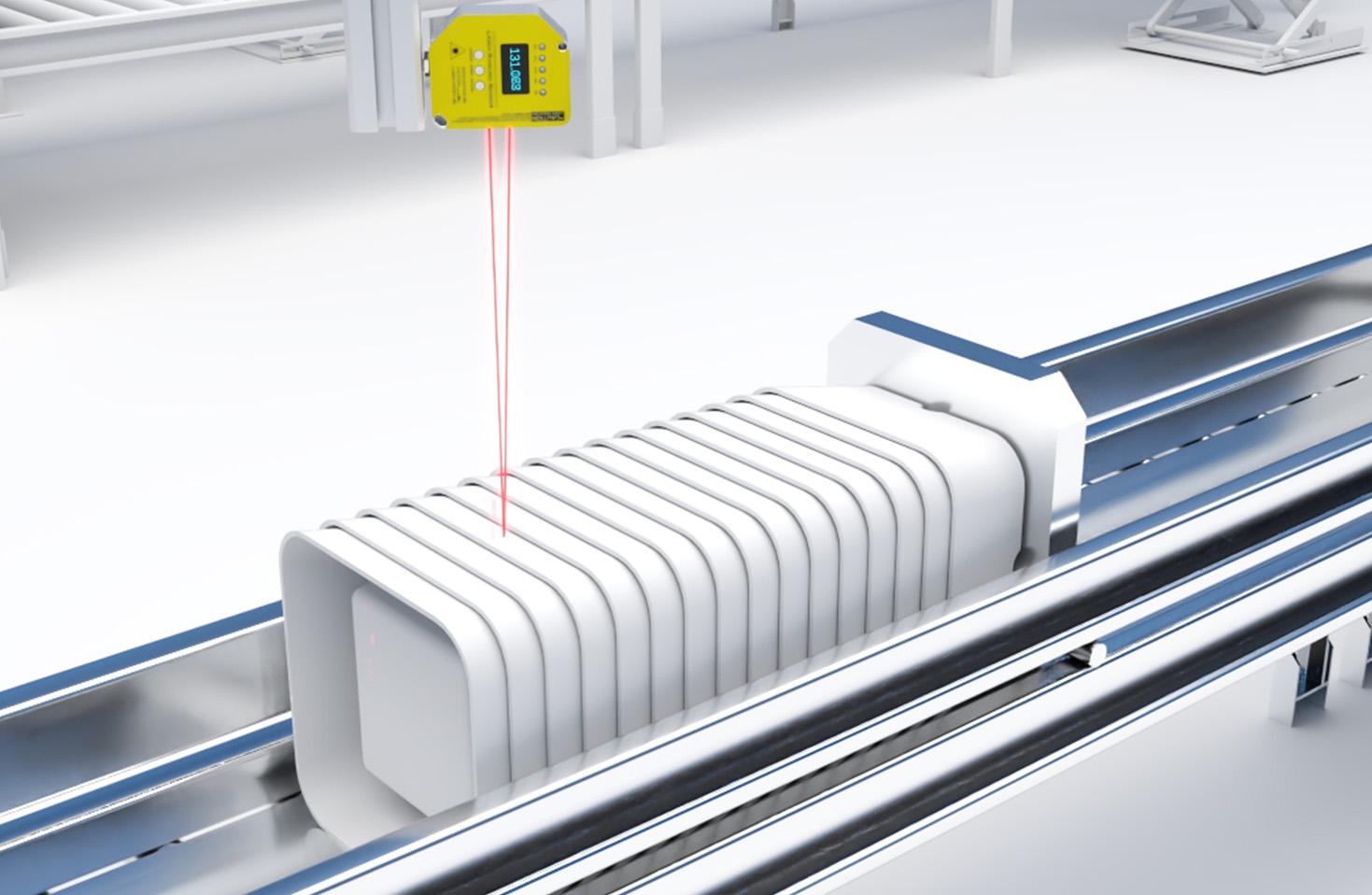
Emerging trends include the integration of IO-Link for advanced parameterization and diagnostics, and the development of blue laser sensors. Blue lasers, with their shorter wavelength, scatter less on rough surfaces, providing more stable measurements on materials like untreated metals or castings, a notable advancement found in newer models from companies like *Panasonic* and *OMRON*.

Ultimately, the optimal model is not merely the one with the highest specifications, but the one that solves the specific measurement problem reliably and cost-effectively. Partnering with suppliers for application testing and leveraging their technical support is a best practice. As Industry 4.0 drives demand for more data and tighter tolerances, laser measurement sensors will continue to advance, offering even greater precision, robustness, and connectivity to power the smart factories of tomorrow.