In the realm of industrial automation, the correct selection of sensors is paramount for ensuring system reliability, efficiency, and safety. Among the most critical components are photoelectric and proximity sensors. While both serve the fundamental purpose of object detection, their operating principles, capabilities, and ideal applications differ significantly. This guide provides a comprehensive overview to aid engineers and system integrators in making informed selection decisions.
Photoelectric sensors operate on the principle of light transmission and reception. They consist of an emitter (light source) and a receiver. Detection occurs when the emitted light beam is interrupted or reflected by a target object. These sensors are categorized primarily by their sensing modes: through-beam, retro-reflective, and diffuse reflective. Through-beam sensors, with separate emitter and receiver units, offer the longest sensing ranges and highest reliability, ideal for precise detection over distances. Retro-reflective types use a single unit and a reflector, providing a good balance of range and ease of installation. Diffuse reflective sensors detect objects by receiving light reflected directly from the target, making them suitable for applications where mounting a reflector or a separate receiver is impractical.
Key selection criteria for photoelectric sensors include sensing range, response time, light source type (e.g., visible red, laser, infrared), and environmental robustness. Factors such as target color, material, surface finish, and ambient light conditions can significantly affect performance. For instance, a laser sensor might be chosen for detecting small objects or precise positioning, while an infrared LED-based sensor could be better for environments with visible light interference.
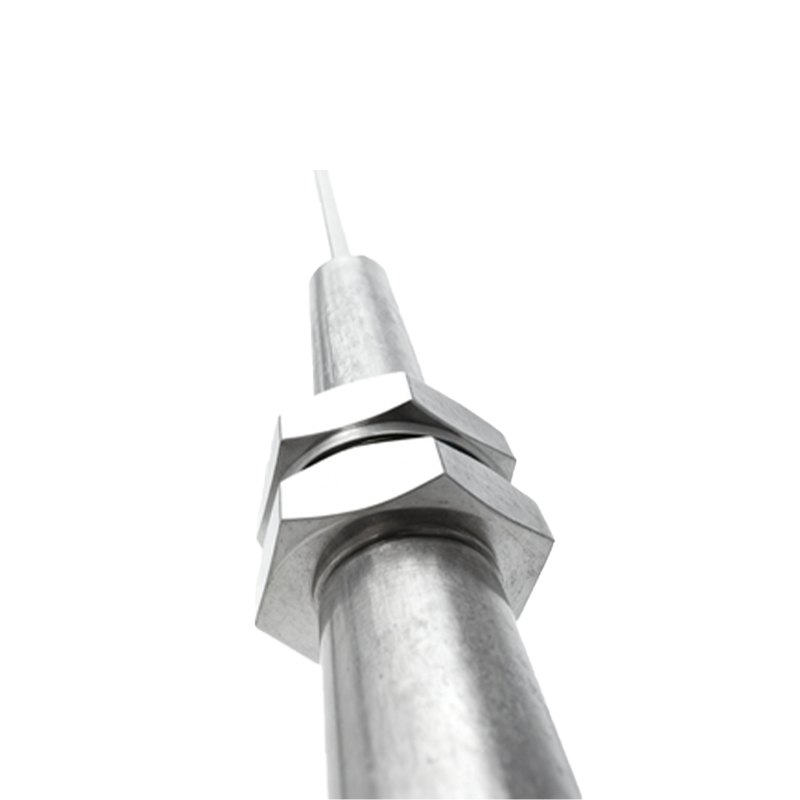
Proximity sensors, in contrast, detect the presence of nearby objects without physical contact, primarily through electromagnetic fields. The most common types are inductive and capacitive. Inductive proximity sensors generate an oscillating electromagnetic field and detect the eddy current losses caused by metallic targets. They are exclusively for detecting metals, with factors like target material (ferrous vs. non-ferrous), shape, and size influencing the effective sensing distance. Their operation is unaffected by dust, oil, or non-metallic debris, making them robust for harsh industrial environments like machining centers.
Capacitive proximity sensors, on the other hand, can detect both metallic and non-metallic materials (plastics, wood, liquids, granules) by sensing changes in capacitance. They are versatile and often used for level detection, material handling, and presence sensing of non-conductive objects. However, they can be susceptible to environmental factors like humidity or contamination.
When selecting a proximity sensor, critical parameters include nominal sensing distance (Sn), the influence factor of different materials, switching frequency, housing style (e.g., cylindrical, rectangular), and output type (PNP/NPN, NO/NC). The operating voltage and protection ratings (IP, NEMA) are also vital for compatibility with control systems and environmental suitability.
The choice between a photoelectric and a proximity sensor often hinges on the application's specific demands. Use photoelectric sensors for long-range detection, sensing non-metallic objects, or when the target's color or transparency is a factor. They excel in packaging, material handling, and assembly lines. Opt for inductive proximity sensors for short-range, high-speed detection of metals in dirty or wet conditions, typical in automotive manufacturing or metalworking. Capacitive sensors fill the niche for detecting non-metals, powders, or liquids where other sensors fail.
Ultimately, a thorough analysis of the target object, required sensing distance, environmental conditions, electrical requirements, and mechanical constraints is essential. Consulting sensor datasheets and leveraging the expertise of technical support from manufacturers can prevent costly errors and ensure optimal system performance. The right sensor not only detects but also enhances the intelligence and resilience of the entire automated process.